How to Use Infant Massage for Better Sleep with Gentle Touch
Infant massage for better sleep works best as a gentle, cue-led part of a calming bedtime routine, not as a way to make every baby sleep on demand. A trained therapist can adapt the touch and timing to your baby’s age and responses, keeping the experience soothing and unhurried.
If you’re tired and hoping for a calmer evening, it can help to know that a session needn’t be long: for babies aged 0-3 months, starting with about five minutes of gentle massage is a practical approach. Your baby’s cues matter throughout; turning away, fussing or seeming uncomfortable are signs to pause rather than continue.
This guide explains how a therapist follows your baby’s cues, how session length can change as your baby grows, and how massage may fit around feeding and bedtime. You’ll also learn what a gentle session can involve, so you can approach this quiet moment with realistic expectations and more confidence.
Key Takeaways
- A therapist can adjust gentle touch to your baby’s responses, making comfort cues more important than completing a full massage.
- A calm, familiar bedtime routine can help make massage a soothing part of settling, without treating it as a promise of uninterrupted sleep.
- Session length and timing can change with your baby’s age, alertness and feeding schedule.
- Learn what to expect from a professional session and how Women’s Wellness Werkz’s Baby Massage may support a gentle, considered experience for your baby.
Following your baby’s cues during a professional massage
A professional session is guided by your baby’s comfort, not by completing every massage stroke. The therapist adjusts the pace, touch and duration in response to your baby.
-
Choose baby-friendly massage oil for your baby’s session
Ask the therapist to use a baby-safe oil or lotion, and avoid products with fragrance or unnecessary additives. A suitable cream or lotion, such as sorbolene, is another option. The therapist can warm a small amount between their palms before applying it, so it feels comfortable against your baby’s skin. A patch test before the session can help you notice a possible skin reaction.
-
Notice how therapists follow your baby’s cues
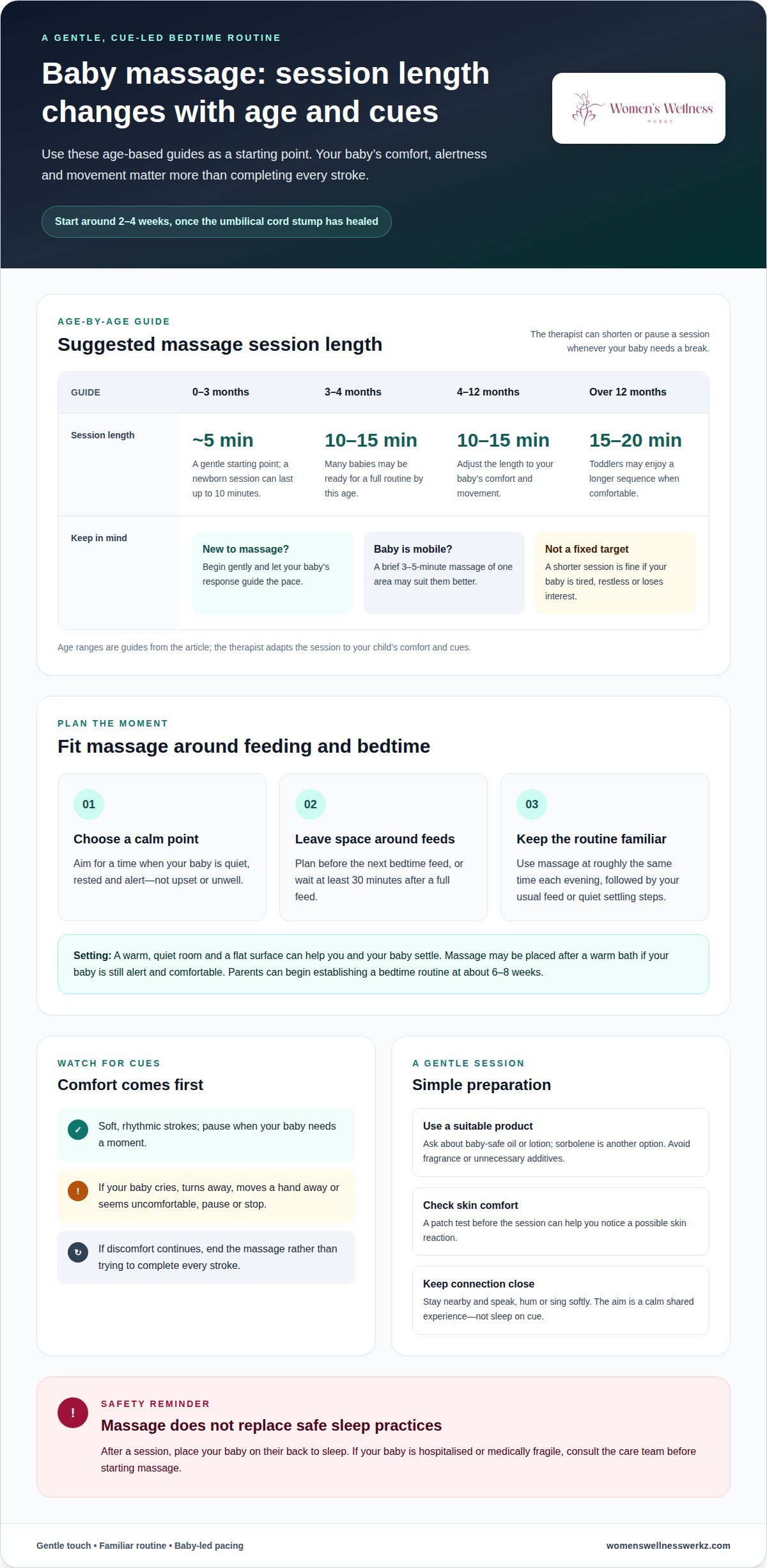
Choose a session when your baby is quiet, rested and alert, rather than upset or unwell. Parents can usually begin massage around 2-4 weeks old, after the umbilical cord stump has healed. For newborns aged 0-3 months, a gentle session can start at about 5 minutes. The therapist uses soft, rhythmic strokes and watches for signs of comfort. If your baby cries, turns away or seems uncomfortable, the therapist pauses or stops instead of continuing.
-
Enjoy massage and bonding
Stay close and speak, hum or sing softly while the therapist massages your baby. These small interactions can support bonding, communication and trust. The aim is a calm shared experience, not getting your baby to sleep on cue. Your baby may enjoy touch one moment and need a break the next. If massage feels difficult for either of you, pause and take a break from the routine. Attending gently to your baby’s responses helps keep this physical contact comfortable and unhurried.
How massage may help babies relax before sleep
Massage can be a calming part of bedtime, but it complements rather than replaces a consistent routine. After the session, place your baby on their back to sleep.
-
Adapt a professional massage for mobile babies
Ask the therapist to follow your baby’s movement instead of trying to hold them still. A mobile baby may prefer a brief massage of 3-5 minutes, with gentle strokes on one area while they remain comfortable. The therapist can pause when your baby wriggles, turns away or becomes upset, then stop if discomfort continues. For a baby who is hospitalised or medically fragile, consult the care team before starting massage.
-
Fit a professional massage into a bedtime routine
Work with the therapist to place massage at a calm point in the bedtime routine. A warm, quiet setting and a flat surface help you and your baby settle. Massage can take place before a bedtime feed or at least 30 minutes after a full feed. The therapist can keep the session gentle and responsive, then leave space for your usual settling steps.
- Keep the sequence familiar: use massage at roughly the same time each evening, followed by your usual feed or quiet settling routine. Parents can begin establishing a bedtime routine at about 6-8 weeks. Gentle touch may help babies relax and offers a quiet moment for emotional connection, but it isn’t a replacement for other sleep strategies. A therapist can adjust the amount of massage to your baby’s alertness and interest; a finger or hand movement away can signal that they need a pause.
For a supported professional session, explore professional baby massage as one way to introduce gentle touch into your baby’s evening.
Best timing and massage session length by age
A therapist plans massage around your baby’s age, alertness and usual bedtime. Parents can usually start around 2-4 weeks after birth, once the umbilical cord stump has healed.
- Share your baby’s age and typical sleep pattern before the session. For newborns aged 0-3 months, begin with about 5 minutes; a newborn massage can last up to 10 minutes. By 3-4 months, many babies may be ready for a full 10-15-minute routine. For babies aged 4-12 months, sessions can last 10-15 minutes. Toddlers over 12 months may enjoy 15-20 minutes. The therapist adjusts the length to your child’s comfort and movement.
-
Plan a professional massage around feeding
Tell the therapist when your baby last had a full feed, then plan the session before the next bedtime feed or at least 30 minutes after feeding. This timing can reduce discomfort or spit-up risk. If your baby seems unsettled after feeding, the therapist can wait until they’re more comfortable rather than beginning massage straight away.
-
Time a professional massage after a bath
Arrange massage after a warm bath if your baby is still alert and comfortable. The therapist can gently dry and settle your baby first, then use soft, flowing techniques as part of the bedtime routine. A warm, quiet room can help keep the transition calm. If your baby becomes drowsy or restless, the therapist can shorten the session rather than trying to complete every stroke.
- Let your baby’s responses guide the timing, rather than relying on the clock alone. A short session may suit a baby who is becoming tired, while an alert baby may welcome a longer sequence. The therapist may use gentle strokes across the forehead or another comfortable area, pausing if your baby turns away or shows discomfort. A small amount of suitable lotion can help hands glide smoothly. These choices make massage easier to fit around your baby’s changing routine without treating it as a fixed sleep schedule.
Massage and infant sleep
Baby massage may offer a soothing transition towards sleep, but it is not a substitute for safe sleep practices. Stop if your baby seems uncomfortable, and seek guidance from the care team before massaging a hospitalised or medically fragile baby.
- Think of massage as one calming cue within a wider bedtime routine. A randomised trial included 123 mothers and babies aged 3 to 18 months, using 15-minute massages for one month alongside bedtime procedures. Research reports differences in sleep latency, night wakings and the longest continuous sleep period. This doesn’t mean massage will settle every baby in the same way.
- Notice whether gentle touch helps your baby relax, rather than judging success by how quickly they fall asleep. A smooth, comfortable stroke can make the session feel soothing. If your baby turns away, cries or remains unsettled, stop. Keep massage separate from sleep itself, and place your baby on their back to sleep after the session.
- Avoid massage when your baby is unwell or showing discomfort. If your baby is hospitalised or medically fragile, speak with the care team before starting. Keep touch gentle, and avoid pressing on soft spots on the head or applying direct pressure to the spine during a back massage.
- Use baby massage alongside, not instead of, other sleep practices. A familiar bedtime routine gives your baby repeated cues, while placing them on their back for sleep helps reduce the risk of sudden infant death syndrome or cot death. These steps serve different purposes: massage may be calming, while safe sleep positioning remains essential.
For gentle, professionally delivered baby massage support, explore a session suited to your baby’s comfort.
Women’s Wellness Werkz
Women’s Wellness Werkz offers massage therapies for women, including the Postnatal Massage Package, for mothers seeking support with their own recovery. Its qualified therapists are trained to deliver the company’s massage protocols and travel to clients’ locations.
If you’re exploring infant massage as part of a calmer bedtime, remember that it is a soothing routine, not a substitute for safe sleep practices or medical care. For your own postnatal wellbeing, a massage session can be a separate way to make space for rest and attentive care. The team also offers a Combo Massage Package, Prenatal Massage Package and Breast Massage.
For information about support for your postnatal wellbeing, contact Women’s Wellness Werkz.
Make space for a calmer next step
Using infant massage for better sleep can be one gentle choice within family life, not another task you need to perfect. Let your routine grow around what feels manageable for you and your baby, and allow quiet moments to matter even when bedtime doesn’t go to plan. Restful evenings are built through care and patience, not pressure.
If you’re also making space for your own wellbeing, Women’s Wellness Werkz’s team brings attentive experience to women’s massage care. Their Postnatal Massage Package, Combo Massage Package and Prenatal Massage Package offer options for different stages of your journey. A conversation can help you consider which form of support feels relevant to you now. Contact Women’s Wellness Werkz to discuss your needs, and take the next step at a pace that feels comfortable.
Frequently Asked Questions
Does infant massage help babies sleep better, and what does research show?
Infant massage for better sleep can form part of a calming routine, but it isn’t a guaranteed way to improve sleep. A bedtime-routine trial involving 123 mothers and babies aged 3 to 18 months used 15-minute massages for one month and reported differences in sleep outcomes, including night wakings. These findings support considering massage as one settling cue, alongside safe sleep practices.
How long before bedtime might a therapist schedule a baby’s massage, and how long may a session last?
A therapist can schedule massage before a bedtime feed or at least 30 minutes after a full feed. The session length depends on age and your baby’s comfort: newborns aged 0-3 months can start with about 5 minutes, while babies aged 4-12 months may have 10-15 minutes. For example, a therapist might plan a shorter session when your baby is already tired.
Which massage techniques may a therapist use for infants, and which should be avoided?
A therapist may use gentle, rhythmic strokes, beginning with a comfortable area such as the feet and adjusting to your baby’s responses. They should stop if your baby cries, turns away or remains unsettled. Avoid pressure on the soft spots on the head, direct pressure on the spine and massage of the genital area. Avoid massaging the navel until the cord stump has healed.
Which oils or lotions might a therapist use for infant massage, including in Singapore’s climate?
A therapist may choose a baby-safe, fragrance-free oil or lotion, or a suitable cream such as sorbolene. In Singapore’s warm, humid climate, the same gentle product-selection principles apply: avoid unnecessary additives and pure, concentrated essential oils. A small amount can be warmed between the palms before use. A patch test can help identify a possible skin reaction before a full session.
Is infant massage safe for premature babies or babies with medical conditions?
For premature or medically fragile babies, speak with the baby’s care team before starting massage. Their health and current condition determine whether touch is suitable and how it should be adapted. Avoid massage when your baby is unwell or upset, and stop if discomfort appears. This keeps the session responsive to your baby rather than tied to a fixed routine.
How does infant massage compare with other evidence-based baby sleep strategies?
Infant massage may help a baby relax as one calming cue in a familiar bedtime routine, but it is not a substitute for other sleep practices. Place babies on their backs for sleep; massage does not guarantee better sleep.