Miscarriage Recovery Massage Package for Gentle Support
Miscarriage massage is gentle, supportive bodywork and should never be painful. Massage is usually not advisable during the first two weeks after a miscarriage. Speak with a healthcare provider before considering a miscarriage recovery massage package, as your recovery and any medical treatment affect when massage may be appropriate.
It’s understandable to want comfort while your body and emotions are carrying so much. Massage is supportive care, not a replacement for medical attention or follow-up, and there’s no need to hurry.
This guide explains what miscarriage massage may involve, how to choose a therapist who listens and responds gently, and when to seek advice from a healthcare provider. You’ll also find practical guidance on activities to avoid while resting and recovering, so you can approach any next step with greater care and confidence.
Key Takeaways
- Choose a therapist who listens carefully, adapts the pressure to your comfort and takes your concerns and medical advice seriously.
- After surgical treatment such as a D&C, wait for your doctor’s clearance before considering massage; recovery needs can differ.
- Gentle bodywork may offer a comforting pause during recovery, but it is supportive care rather than a substitute for medical follow-up.
- Give your body room to rest by avoiding strenuous activity and unnecessary strain while you recover.
Choosing a trained, trauma-informed therapist
A miscarriage recovery massage package differs from standard postnatal massage in its context: it follows pregnancy loss rather than birth. Before adapting the session, a therapist should discuss your recovery, comfort and medical advice. Gentle pressure should not cause pain.
In Singapore, package inclusions vary. Ask what each session covers, how the therapist adapts their touch and whether the plan can change with your needs. For example, you may prefer to avoid a tender area or pause at any time.
Look for a therapist experienced in supporting clients after pregnancy loss, not only in general massage. A trauma-informed approach means explaining each step, asking permission before touch and respecting your request to stop. Before the session, share any painful areas, concerns and advice from your doctor.
Miscarriage massage packages are offered as part of women’s wellness massage services in Singapore. Choose based on the therapist’s relevant experience, communication and respect for your boundaries, rather than the package name alone.
There is no universal session count or duration. These depend on the package and your recovery needs. Ask for the session plan and discuss whether it can be adjusted if your comfort changes.
Techniques and additional services vary by package. Gentle massage should not be painful. Bojin Face Therapy is a separate treatment, so don’t assume it is part of miscarriage massage.
Insurance or subsidy eligibility depends on your policy and the scheme’s criteria, so don’t assume massage is covered. Ask your insurer whether your treatment qualifies before relying on reimbursement.
When discussing a session, be specific about painful areas and any problems you’re experiencing. You can also share your doctor’s advice, in your own words or by referring to it directly. This helps the therapist understand what to consider when discussing your treatment. If something is unclear, say so rather than feeling you need to interpret it yourself. Keep the conversation focused on what hurts, what is troubling you and what your doctor has advised. Raise these points before the massage and return to them if your comfort or concerns change.
Consulting a healthcare provider before massage
When massage may be appropriate after pregnancy loss depends on how the miscarriage was managed and how your recovery is progressing. A healthcare provider can advise whether gentle bodywork may complement medical follow-up.
Timing After Miscarriage
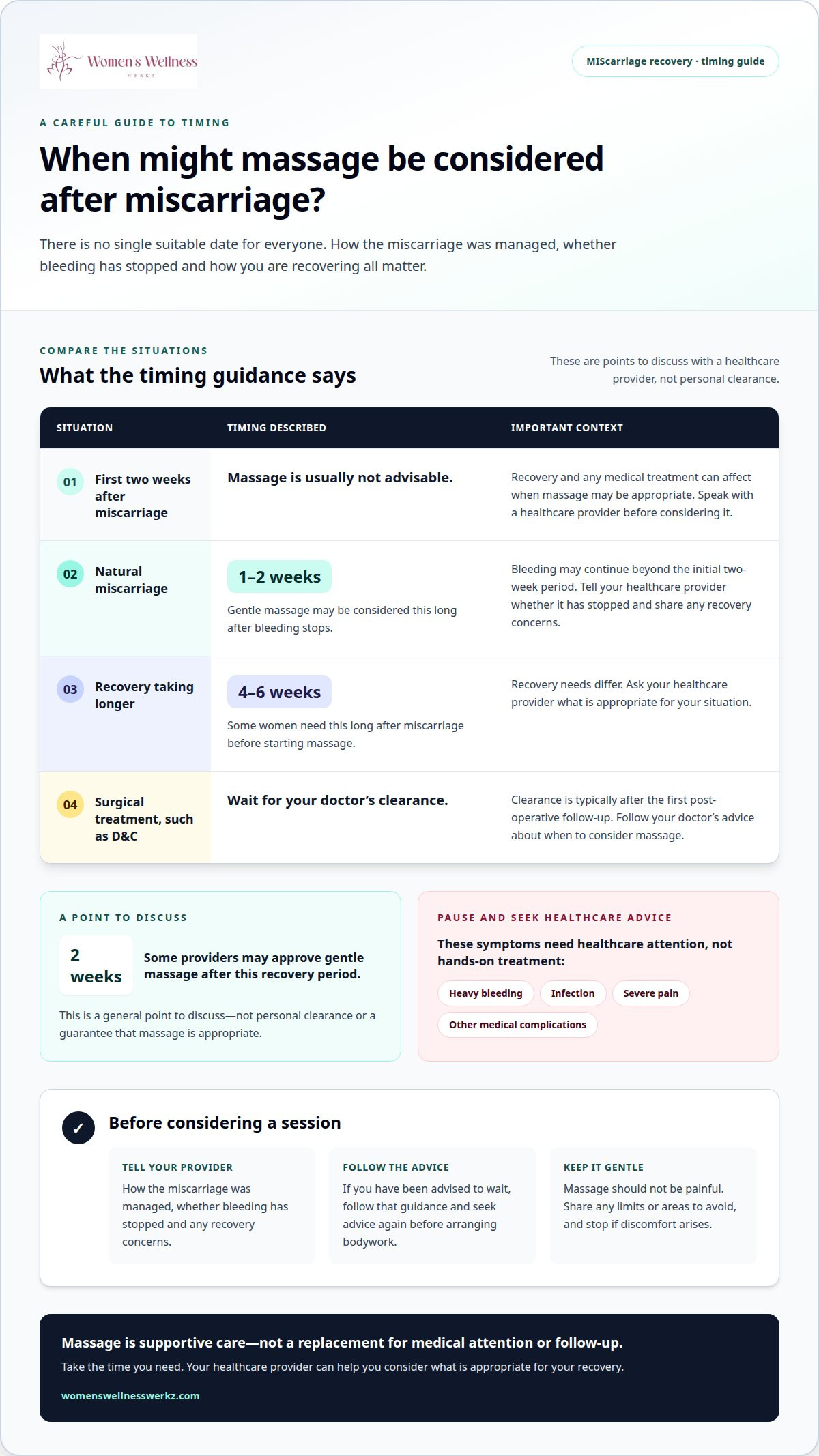
There isn’t one suitable date for everyone. After a natural miscarriage, gentle massage may be considered one to two weeks after bleeding stops. However, massage is usually not advisable during the first two weeks following miscarriage. These timings differ because bleeding may continue beyond that initial period.
Some women need four to six weeks after miscarriage before starting massage. If treatment involved surgery such as D&C, wait for your doctor’s clearance, typically after the first post-operative follow-up. Before booking, describe the treatment, whether bleeding has stopped and any recovery concerns. A miscarriage recovery massage package is supportive therapy, not a replacement for medical care or follow-up.
Massage Risks and Contraindications
Massage may not be suitable if you have heavy bleeding, an infection, severe pain or other medical complications. These symptoms need healthcare attention, not hands-on treatment. Tell your healthcare provider about them and any changes in your symptoms before considering a session.
Hormonal and physical changes can form part of recovery, but they don’t establish that massage is safe for you. Share relevant medical advice with the therapist, including areas to avoid and any pressure limits. A session should remain gentle and should not be painful; stop if discomfort arises. For support that respects these precautions, explore gentle massage support after receiving medical advice.
Some healthcare providers may approve gentle massage after two weeks of recovery following miscarriage. This is a general point to discuss, not personal clearance or a guarantee that a session is appropriate. Tell your provider how the miscarriage was managed, whether bleeding has stopped and any recovery concerns. These details can help guide advice for your situation. If you have been advised to wait, follow that guidance and seek advice again before arranging bodywork. Once cleared, share any limits or areas to avoid with the therapist, and keep the session gentle.
Potential physical and emotional benefits
After healthcare clearance, gentle massage can offer a restful pause during recovery. Slow, light movements, rather than standard firm pressure, are used in lymphatic drainage techniques. The session should respond to your comfort, including your choice to avoid particular areas or pause the touch. This care can make it easier to relax when your emotional energy feels low.
For swelling, lymphatic drainage is sometimes used as supportive bodywork. Swelling may reduce within a day or two after a session, though this is not a substitute for medical assessment. A typical lymphatic drainage session lasts 45 to 90 minutes. The therapist can explain the approach and adjust the pressure, keeping movements gentle and unhurried.
Emotional benefits are personal, not a promise of healing. A calm room, clear explanations and consent before touch can help you feel a sense of choice. You might ask the therapist to describe each movement before beginning or to leave your abdomen untouched. These small decisions let you shape the session around your boundaries.
Clear communication can also help you feel comfortable. Before the session, mention sore areas, positions that feel uncomfortable and any touch you would rather avoid. During the massage, speak up if the pressure feels unpleasant or you want a pause. A trauma-informed therapist listens without rushing, then adjusts the technique or stops as requested.
Afterwards, notice how your body feels and allow time to rest. Check whether tenderness, fatigue or swelling has changed since the session. Share new or worsening symptoms with your healthcare provider rather than treating massage as medical care. Gentle support works best alongside appropriate follow-up and a pace that respects your recovery.
Avoiding strenuous activities
Rest is part of recovery after miscarriage. During mini-confinement, avoid strenuous activities and give your body room to recover. In Singapore, a traditional Chinese medicine mini-confinement typically lasts about two weeks after miscarriage. This is a customary period, not a universal medical timetable, so follow advice suited to your circumstances.
Keep daily demands light where possible. For example, postpone heavy housework, carrying bulky shopping or an intense workout rather than pushing through fatigue. Prioritise rest and avoiding strain. If an ordinary task leaves you feeling worse, pause and ask someone you trust to help.
A practical approach is to plan only essential tasks and take breaks between them. Prepare a simple meal instead of standing for a long cooking session, or spread household jobs across different days. These steps can reduce exertion without requiring a rigid schedule. Let your energy and recovery needs guide the pace.
Mini-confinement traditions may also include advice about the home environment. One commonly shared recommendation is to avoid spending prolonged periods in air-conditioned rooms. This is a traditional practice, not a substitute for medical guidance. Keep your comfort in mind and discuss any concerns about temperature or rest with your healthcare provider.
Confinement herbs are different, and shouldn’t be started without advice. A traditional Chinese medicine practitioner can advise which herbs may be suitable for you. Don’t start taking herbs based on a friend’s experience or an online routine. Your medicines, symptoms and individual recovery all matter.
Gentle massage should fit around rest, not become another demand on your body. Leave space to rest afterwards, and don’t combine a session with strenuous errands. If you’re considering supportive bodywork, explore gentle recovery massage options at a pace that respects your recovery.
Women’s Wellness Werkz: Miscarriage Massage Package
Women’s Wellness Werkz offers a Miscarriage Massage Package for those seeking gentle, personalised support during recovery. It may be a suitable next step after you’ve discussed massage timing with your healthcare provider and feel ready for supportive bodywork.
Share your comfort needs and any advice from your doctor so the massage can be approached with care. This service complements recovery support; it doesn’t replace medical attention or follow-up. Women’s Wellness Werkz also offers a Postnatal Massage Package and Combo Massage Package for other kinds of massage support.
There’s no need to rush. Contact Women’s Wellness Werkz when you feel ready to discuss the Miscarriage Massage Package.
Take your next step gently
There’s no need to make every recovery decision at once. Start with one small step: consider what kind of support feels comfortable now, while leaving room for your needs to change. A miscarriage recovery massage package may be one form of supportive care to explore when the timing feels right for you.
Women’s Wellness Werkz offers a Postnatal Massage Package, Combo Massage Package and Prenatal Massage Package. Each suits a different stage or kind of support, so the most relevant option depends on what you’re seeking.
If you’d like to discuss your options, contact Women’s Wellness Werkz. Take recovery at your own pace, one considered choice at a time.
Frequently Asked Questions
What is Miscarriage Massage?
Miscarriage massage is gentle bodywork intended to offer comfort after pregnancy loss, not to diagnose or treat a medical condition. The session should be shaped around your physical comfort and boundaries. For example, you can ask the therapist to avoid a particular area or pause. Massage is supportive care, not a replacement for medical treatment or follow-up.
What medical clearance is needed before post-miscarriage massage?
Speak with your healthcare provider before booking and follow their advice on whether massage is appropriate for your recovery. Mention how the miscarriage was managed, your current symptoms and any treatment or complications. After surgical treatment such as D&C, wait for your doctor’s clearance, typically after the first post-operative follow-up. Seek medical attention for heavy bleeding, infection or severe pain.
What should you ask a provider before booking a miscarriage recovery massage?
Ask what the session involves, how the therapist adapts touch to your comfort and whether you can pause or stop at any time. You can also ask about their experience supporting people after pregnancy loss, which areas the massage may cover and how long the session lasts. Share any painful areas and relevant medical advice before arranging your appointment.
What massage techniques and other services are included in these packages?
Techniques and additional services vary. Gentle massage should not be painful. Lymphatic drainage may be used as supportive bodywork, while Bojin Face Therapy is a separate treatment and should not be assumed to be included.