Manual Lymphatic Drainage in Malaysia for Swelling Care
Manual lymphatic drainage Singapore searches often lead to general guidance, but treatment suitability depends on the cause of swelling and your health. At Women’s Wellness Werkz, manual lymphatic drainage is provided as a gentle massage technique using light pressure and rhythmic movements. After surgery, the procedure, healing stage and your surgeon’s clearance also matter.
It should feel light rather than forceful. This guide explains how the technique works, when it may be considered for swelling, what affects session timing and when to seek medical advice, so you can decide on a suitable next step.
Key Takeaways
- Understand how light pressure and rhythmic movements distinguish this gentle technique from deeper massage.
- Learn that manual lymphatic drainage is a massage technique offered to address lymphatic drainage.
- Ask your healthcare professional whether massage is suitable after surgery or for your individual needs.
- Seek healthcare advice before massage for sudden or unexplained swelling, infection, fever or other health concerns.
What is Manual Lymphatic Drainage (MLD) Massage?
Manual lymphatic drainage is a light-pressure massage intended to encourage lymph flow. In Singapore, assessment and session planning depend on the swelling’s cause and your health history.
Conditions treated with lymphatic drainage
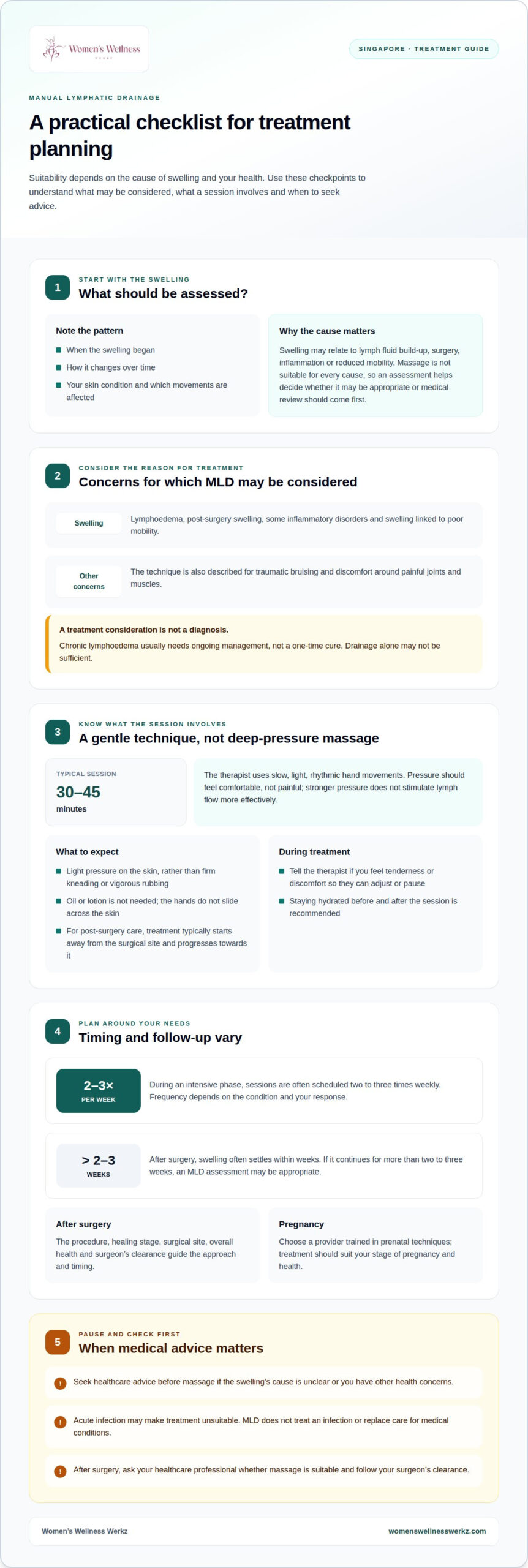
Lymphatic drainage may be considered for lymphoedema, post-surgery swelling, some inflammatory disorders and swelling linked to poor mobility. Lymphoedema develops when lymph fluid builds up in body tissues, often causing swelling in an arm or leg. The technique is also described for traumatic bruising and discomfort around painful joints and muscles.
The cause matters: swelling can have different origins, and massage is not suitable for every one. An assessment considers when swelling began, how it changes, your skin condition and which movements are affected. These details help determine whether lymphatic drainage may be appropriate or medical review should come first.
Treatment procedures and session planning
A typical manual lymphatic drainage session in Singapore lasts 30 to 45 minutes. The therapist uses gentle, rhythmic movements, with pressure light enough to avoid discomfort. Session frequency depends on the condition and your response; during an intensive phase, sessions are often scheduled 2 to 3 times weekly. A course syllabus describes training, while your treatment plan should reflect your assessment and needs.
Before treatment, an assessment reviews your health history, swelling and skin. After surgery, the surgical site, overall health and recovery needs guide the approach; timing depends on the procedure, healing stage and surgeon’s clearance. Ask the practitioner to explain their relevant MLD training and qualifications. In Singapore, post-surgery drainage is typically performed by a trained therapist or certified practitioner.
Insurance coverage depends on your policy and circumstances. Ask your insurer whether your plan covers manual lymphatic drainage and what documents it requires. To find a suitable therapist in Singapore, your healthcare professional can help you consider whether massage is appropriate and what training is relevant to your needs.
Manual lymphatic drainage technique and how it works
Manual lymphatic drainage uses slow, gentle hand movements rather than deep pressure or vigorous rubbing. The technique aims to support lymph flow through the lymphatic system without forcing movement through tender tissue.
Manual lymphatic drainage techniques
A therapist applies light, rhythmic movements to the skin, working with the lymphatic system’s pathways. The touch is gentle, not firm kneading, and the therapist adapts the approach to the area being treated. For post-surgery care, treatment typically begins away from the surgical site and progresses towards it.
Oil or lotion isn’t needed: the hands use light pressure without sliding across the skin. This distinguishes the technique from massage styles that rely on gliding strokes. If you feel tenderness or discomfort, tell the therapist so they can adjust their touch or pause.
Pressure and lymphatic flow
Pressure should remain light, and the movements should feel comfortable, not painful. Stronger pressure does not stimulate lymph flow more effectively; deep or forceful rubbing is not part of this technique. Share how each area feels as the session progresses, particularly where skin is sensitive or recovering.
Manual lymphatic drainage is intended to encourage fluid movement, but it doesn’t treat an infection or replace care for medical conditions. Acute infection may make treatment unsuitable. A gentle approach may also support relaxation, though individual responses can differ.
Session process and duration
A typical manual lymphatic drainage session in Singapore lasts 30 to 45 minutes. The therapist applies gentle movements to the relevant areas, adjusting the treatment to your comfort. For post-surgery care, the procedure and healing stage shape how the session is approached.
Tell the therapist if a movement feels uncomfortable; treatment should not cause pain. Staying hydrated before and after the session is recommended. These steps help you know what to expect, while the therapist can respond to your comfort throughout the treatment.
Swelling, bruising and oedema management
Swelling can reflect lymph fluid building up in tissues, but its cause matters. Manual lymphatic drainage is one part of care for selected swelling concerns.
Swelling symptoms and fluid balance
Lymphoedema occurs when lymph fluid builds up in body tissues, often causing swelling in an arm or leg. Notice where swelling appears, when it began and whether it changes; these details help describe the pattern during an assessment. Fluid balance is not the only consideration, as swelling can also relate to surgery, inflammation or reduced mobility.
A physiotherapy assessment can review swelling changes, skin condition and affected movements to help decide whether lymphatic drainage is appropriate. For example, swelling that affects how comfortably you move calls for an assessment of both the affected area and its impact on daily movement. This helps distinguish a treatment consideration from a symptom that needs medical review first.
Bruising, oedema and lymphoedema
Manual lymphatic drainage may be used for lymphoedema, post-surgery swelling and some inflammatory disorders. It is also described for traumatic bruising, painful joints or muscles, and oedema associated with arthritis or poor mobility. The therapist’s assessment should account for the affected area and your health, rather than treating every kind of swelling alike.
After surgery, swelling often settles within weeks. If it continues for more than 2 to 3 weeks, an MLD assessment may be appropriate. Chronic lymphoedema usually needs ongoing management, not a one-time cure; drainage alone may not be sufficient. A wider plan can include compression, skin care and appropriate movement, guided by your condition and medical instructions.
Pregnancy and postpartum swelling
Pregnancy-related swelling needs care suited to your stage of pregnancy and health. If you’re considering lymphatic drainage massage during pregnancy, choose a provider trained in prenatal techniques. Pregnancy changes how treatment should be approached, so the person providing it needs to adapt the session accordingly.
Postpartum swelling also deserves attention to its cause and recovery context. For example, swelling after a procedure differs from ongoing lymphoedema, so timing and care should reflect your healing progress. Gentle, rhythmic movement and light pressure are features of the technique, but assessment determines whether they suit your circumstances and help you remain comfortable.
Contraindications and healthcare consultation
Manual lymphatic drainage isn’t suitable for every health concern. Avoid treatment during acute cellulitis, an ongoing infection or fever, and seek healthcare advice first if you have health concerns. Your Physio identifies acute cellulitis, acute infection and congestive heart failure as conditions that may make manual lymphatic drainage unsuitable. These precautions help ensure assessment or medical care comes first when needed.
Sudden or unexplained swelling needs assessment before massage, because its cause may need prompt attention. Swelling linked to cardiac, renal or vascular causes may require medical clearance before manual therapy. Tell the healthcare professional when the swelling began, how its appearance has changed, and whether you have an infection or fever. These details help them decide whether massage is appropriate or medical review should come first.
After surgery, timing depends on the procedure, your healing stage and your surgeon’s clearance. A therapist should assess the surgical site, your overall health and individual needs before treatment begins. If the area is still healing, the treatment plan needs to account for that. Gentle strokes should not cause pain; tell the therapist if you feel discomfort, so they can pause rather than work over a sensitive area.
For a safe referral, share relevant medical conditions, recent surgery and any prescribed compression plan with the healthcare professional assessing you. Avoid massage during an acute infection, including cellulitis, until the infection is addressed. If your care team has prescribed compression, follow its instructions and don’t change the plan without medical guidance. This helps align treatment decisions with your health and recovery.
If you’re unsure whether swelling needs medical assessment before massage, speak with a healthcare professional before arranging treatment.
Women’s Wellness Werkz: Manual Lymphatic Drainage Massage
Women’s Wellness Werkz offers Manual Lymphatic Drainage Massage for women seeking gentle massage care to support lymphatic drainage. It may suit those considering this technique for swelling after they have addressed whether massage is appropriate for their circumstances.
Therapists are trained to deliver the business’s massage protocols, and treatment is adapted to your needs. If your swelling is sudden or unexplained, or you’re recovering from surgery, seek healthcare advice before arranging massage. Medical assessment and clearance take priority when the cause of swelling or your stage of healing needs attention.
For pregnancy or postpartum recovery, you can also explore the Prenatal Massage Package or Post-natal Massage Package according to your needs. The Combo Massage Package is another available option.
For a gentle next step, book Manual Lymphatic Drainage Massage with Women’s Wellness Werkz online.
Choose a next step that feels right for you
If you’re considering manual lymphatic drainage in Singapore, let your health needs and comfort guide the conversation. Describe what you hope to address and discuss whether this type of massage suits your circumstances. If you’re pregnant or recovering after childbirth, Women’s Wellness Werkz also offers a Prenatal Massage Package, Post-natal Massage Package and Combo Massage Package.
Women’s Wellness Werkz’s therapists are trained to deliver its massage protocols. A conversation about your priorities can help you understand which massage option may suit your women’s wellness needs. If swelling needs medical assessment, healthcare advice remains the right first step before massage.
When you’re ready to discuss your needs, contact Women’s Wellness Werkz. Take the next step at a pace that feels comfortable for you.
Frequently Asked Questions
Any advice on what should I do before and after treatment?
The treatment description does not provide advice about hydration, clothing or what to do before or after a session. It also does not give guidance about prescribed compression garments or discussing health changes with your therapist. Ask your healthcare team about any care instructions relevant to you.
Contraindications for MLD?
The treatment description does not list contraindications for manual lymphatic drainage (MLD) or explain when to seek healthcare advice. It does not provide guidance about infections, fever, deep vein thrombosis, cancer, heart or kidney conditions, unexplained swelling or treatment after surgery. Ask your healthcare team if you have concerns about whether treatment is suitable for you.
How MLD Works?
Manual lymphatic drainage is a massage technique offered by the business to address lymphatic drainage. The treatment description does not explain the technique, how it works, the pressure used or whether oil or lotion is used. It also does not describe its purpose beyond addressing lymphatic drainage.
How does MLD work?
The treatment description does not explain whether MLD is used alone or as part of a broader management plan. It does not give details about compression, skin care, movement, exercises or self-massage between sessions. Follow your care team’s instructions about any care or activities recommended for you.
How long does a MLD session last?
The treatment description does not state how long a manual lymphatic drainage session lasts. It does not specify whether a session in Singapore takes 30 to 45 minutes, or whether session length varies after surgery. Contact the business to ask about session length and discuss any individual needs with your healthcare team.
How many sessions are usually recommended for MLD?
The treatment description does not specify a recommended number or frequency of MLD sessions. It does not say whether sessions are scheduled 2 to 3 times weekly, or how treatment frequency may relate to a condition, surgery or recovery progress. Ask the business about its treatment plan and your healthcare team for advice relevant to your care.