Detox Lymphatic Drainage Massage: Claimed Effects, Risks and Methods
The word “detox” can overstate what massage can do: lymphatic drainage uses gentle movements intended to encourage lymph flow, but its benefits for an otherwise healthy person may be limited. If you’re drawn to the idea of feeling less puffy or more at ease, that hope is understandable; the massage may help move trapped fluid and reduce swelling, although these effects are different from removing toxins. This guide explains how lymphatic drainage works, what to expect from gentle, rhythmic techniques and named methods, which benefits are claimed and where evidence is limited, and why conditions such as blood clots, infection, heart disease or kidney failure call for caution before treatment.
Key Takeaways
- Learn how gentle, light-pressure movements encourage lymph flow and how this differs from a promise to “flush toxins”.
- Recognise health conditions, including blood clots and infections, that can make lymphatic drainage massage unsafe.
- Compare the Vodder and Földi methods to understand how techniques and compression can differ.
- See when a wellness massage may suit your needs and when swelling calls for medical care instead.
What is lymphatic drainage massage?
Lymphatic drainage massage uses gentle, light-pressure movements to encourage lymph fluid towards lymph nodes. Its purpose differs from ordinary relaxation or deep-tissue massage, which focuses on muscles and tension.
Massage techniques and session process
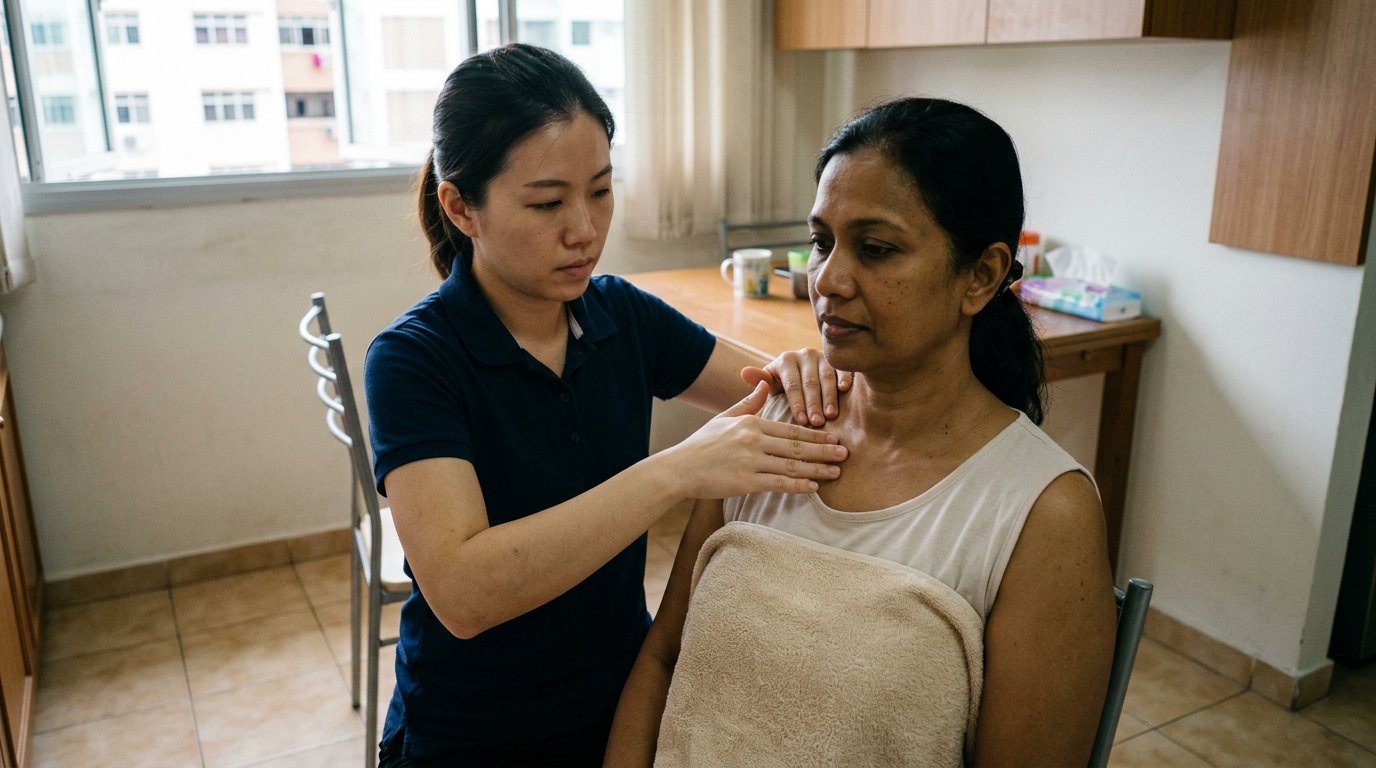
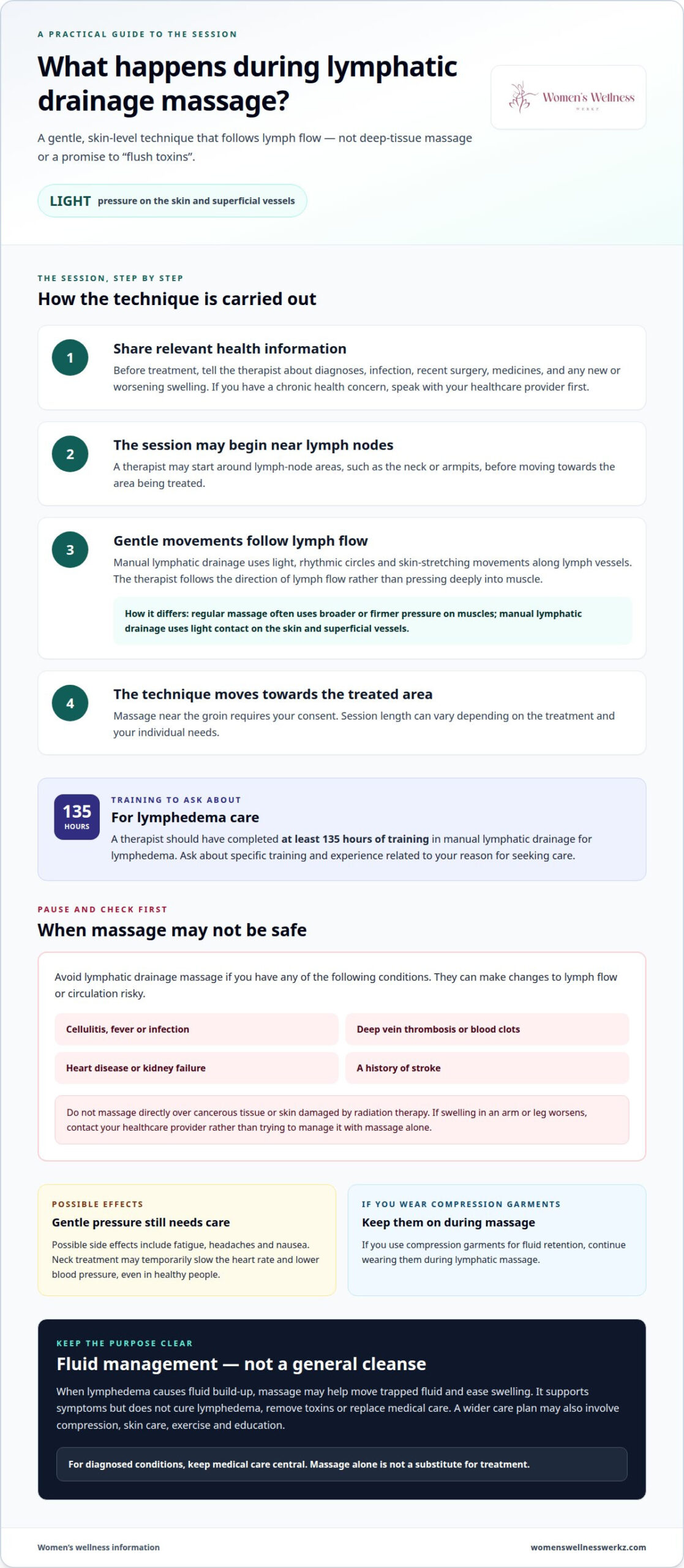
Manual lymphatic drainage uses gentle, rhythmic circles and skin-stretching movements along lymph vessels. Rather than pressing deeply into muscle, the therapist follows the direction of lymph flow. A session may begin near lymph-node areas, such as the neck or armpits, before moving to the area being treated. Massage near the groin requires your consent.
Session length can vary depending on the treatment and individual needs. The Vodder method, developed by Dr Emil Vodder and his wife in the 1930s, uses precise circular and sweeping movements. Classic approaches focus on lymph flow; TCM-inspired wellness treatments may use different traditions and techniques. These labels do not mean the methods are interchangeable or medical treatment.
Differences from regular massage and compression therapy
Regular massage often works on muscles with broader or firmer pressure. Manual lymphatic drainage instead uses light contact on the skin and superficial vessels. Compression therapy applies external pressure through bandages, garments or pneumatic devices. These approaches may be combined as part of lymphedema care, but massage alone is not a substitute for medical treatment.
In Singapore, a treatment’s name alone does not establish a therapist’s medical credentials or answer what licensing rules apply to their role. Before treatment, ask about specific training in manual lymphatic drainage and experience with your reason for seeking care. For lymphedema, a therapist should have completed at least 135 hours of training. This helps you distinguish a wellness massage from care intended to manage a medical condition.
Risks and contraindications
Gentle manual lymphatic drainage is not suitable for everyone. Some health conditions can make it unsafe, so knowing the warning signs can help you decide when to pause and seek medical advice.
Health conditions and contraindications
Contraindications are conditions that make massage unsafe or mean you need medical guidance before treatment. Avoid lymphatic drainage massage if you have cellulitis, a fever, an infection, deep vein thrombosis, blood clots, heart disease, kidney failure or a history of stroke. These conditions can make changes to lymph flow or circulation risky.
If you have a chronic health concern, speak with your healthcare provider before arranging a session. Do not massage directly over cancerous tissue or skin damaged by radiation therapy. If swelling in an arm or leg worsens, contact your healthcare provider rather than trying to manage it with massage alone.
Possible risks and side effects
Possible side effects include fatigue, headaches and nausea. Manual lymphatic drainage on the neck can temporarily slow the heart rate and lower blood pressure, even in healthy people. These effects are a reminder that gentle pressure still needs careful use, especially if you have a condition affecting your heart or blood pressure.
Massage may temporarily increase blood-flow speed in people with chronic venous insufficiency, but the duration and longer-term effect are unclear. It should not be the only treatment for lymphedema, which may need a wider care plan. A wellness treatment is not a way to flush toxins or replace medical care.
Before a session, tell the therapist about relevant diagnoses, infection, recent surgery, medicines and any new or worsening swelling. This helps identify concerns and avoid sensitive areas. If you use compression garments for fluid retention, continue wearing them during lymphatic massage. Seek medical advice before another session if swelling worsens or you develop new symptoms.
If you’re considering a gentle wellness treatment, explore manual lymphatic drainage massage as an option, while keeping medical care central for diagnosed conditions.
Claimed effects on lymph flow and natural detoxification
The lymphatic system has no dedicated pump; nearby muscle movement helps keep lymph fluid moving. Manual lymphatic drainage uses gentle techniques to encourage fluid movement through tissues towards lymph nodes. This can matter when fluid builds up, as with lymphedema affecting an arm or leg. Its purpose is fluid management, not a general cleanse, and it doesn’t replace the body’s normal processes.
A detox lymphatic drainage massage is sometimes promoted as a toxin-clearing treatment, but that wording overstates its role. Manual drainage is not generally needed to support normal immune function or the body’s usual waste-removal processes. Lymph nodes filter lymph fluid as part of normal immune function; massage doesn’t take over that work. Claims of a balanced or “cleansed” body should be distinguished from measurable changes in swelling or comfort.
When lymphedema causes fluid build-up, massage can help move trapped fluid and ease swelling. This supports symptoms but does not cure the condition. Complete decongestive therapy may also involve compression, skin care, exercise and education. Healthcare providers mainly use manual lymphatic drainage to relieve lymphedema after breast cancer surgery. This differs from using massage for general wellness without a swelling-related condition.
Other claimed effects need careful interpretation. Facial drainage may increase blood circulation and reduce puffiness, while reduced fluid can temporarily make skin look slimmer and tighter. Preliminary studies after cosmetic procedures suggest possible improvements in recovery and satisfaction, but more research is needed. Regular movement, balanced nutrition and hydration support lymphatic function; massage isn’t necessary as a detox.
Massage may also reduce swelling or bruising from injuries and surgeries, and ease sore muscles in athletes. These are local effects, not evidence of toxin removal. If your appearance changes after fluid shifts, that doesn’t mean you’ve lost body fat; manual lymphatic drainage has no demonstrated direct weight-loss effect.
Lymphatic drainage massage methods
Methods differ in their hand movements and whether they include compression. The best-known approaches are Vodder and Földi, but their names describe techniques, not guaranteed outcomes. The useful question is whether a method suits your reason for treatment, such as diagnosed lymphedema, rather than simply promising detoxification or recovery.
The Vodder method uses precise circular and sweeping movements to encourage lymph circulation and reduce swelling. The therapist applies light pressure, stretching and moving the skin in the direction of lymph flow. These movements are not deep muscle kneading. Their purpose is to guide fluid through superficial pathways, so stronger pressure doesn’t mean better function.
Földi combines manual techniques with compression therapy to help manage conditions such as lymphedema. Compression may involve bandaging, garments or pneumatic devices, applying pressure to support lymphatic circulation. In complete decongestive therapy, the plan can also include skin care, exercise and education. Each part has a distinct role: exercise encourages muscle movement, while skin care helps reduce wound and infection risks.
A massage therapist may adapt the approach to your health needs and the area being treated. That doesn’t make every variation a named or clinically established method. Evidence also varies by intended use: manual drainage can help move trapped fluid in lymphedema, while claims about detoxification or general wellness shouldn’t be treated as equivalent evidence. Ask what technique will be used and whether compression is included.
For a diagnosed lymphatic condition, massage should fit within appropriate care, not stand alone. A qualified lymphedema therapist, physical therapist or massage therapist trained in manual lymphatic drainage can guide self-massage; avoid copying techniques without that guidance. If your aim is a gentle wellness session, explore manual lymphatic drainage massage as a treatment option.
Women’s Wellness Werkz: Manual Lymphatic Drainage Massage
Women’s Wellness Werkz offers Manual Lymphatic Drainage Massage for women seeking a gentle wellness treatment focused on lymphatic drainage. It may suit you if you’re looking for a soothing massage experience, rather than a treatment to flush toxins or manage diagnosed lymphedema.
If swelling relates to a medical condition, recent surgery or another health concern, speak with your healthcare provider before arranging a massage. Manual lymphatic drainage is not a substitute for medical care or a complete treatment plan for lymphedema. Women’s Wellness Werkz therapists are trained to deliver the company’s massage protocols, with care suited to women’s wellness and recovery.
If this treatment feels like a suitable next step for your wellness needs, contact Women’s Wellness Werkz to arrange a session.
Choose a next step that fits your wellbeing
Before arranging a session, consider what you’d like the experience to offer. You might value quiet time, a chance to focus on a particular area, or simply a gentle pause in a demanding season. Knowing what matters to you can make it easier to explain your preferences and feel comfortable with the treatment you choose.
Women’s Wellness Werkz’s team brings a focus on women’s wellness to that conversation, listening to what you’re looking for and helping you consider a suitable next step. Take the time you need to make your decision.
Contact Women’s Wellness Werkz when you’re ready to talk, and take your next step at a pace that feels right for you.
Frequently Asked Questions
How long will it take for me to feel better?
Some people notice a change within 24 to 48 hours, but the timing depends on why they’re having treatment. To make the change easier to assess, note how the affected area feels before your session and over the following days. If you’re receiving care for a diagnosed condition, share those observations with your healthcare provider as part of your ongoing care.
Who can benefit from lymphatic detox therapy?
Manual lymphatic drainage may be considered for specific concerns rather than as a general wellness requirement. It should not be presented as a treatment for breastfeeding problems such as blocked milk ducts. If that’s your concern, discuss the cause with your healthcare provider before treatment. This helps distinguish a targeted massage goal from symptoms that need medical assessment or other care.
Why Does a Healthy Lymphatic System Matter?
Your lymphatic system supports immune function and helps maintain fluid balance throughout your body. This work happens continuously, without requiring a special massage routine. For day-to-day support, regular movement and staying hydrated are practical habits. If you notice new or worsening swelling, discuss it with a healthcare provider rather than assuming you need a detox treatment.
What is lymphatic drainage massage and how does it work?
Manual lymphatic drainage is a specialised massage using light, directed movements to encourage lymph fluid movement. Before booking, be clear about your reason for seeking treatment, such as swelling or a wellness-focused session. Mention relevant health conditions and any compression garments you use. If you wear them to manage fluid retention, continue wearing them during lymphatic massage.
What are the proven benefits and limitations of lymphatic drainage massage?
The clearest practical use is helping manage lymphedema-related swelling; massage forms part of care rather than a complete treatment on its own. Evidence for fibromyalgia symptoms and quality of life remains limited, and research on recovery after cosmetic procedures is preliminary. If you’re weighing treatment for a particular condition, consider the specific symptom being addressed, not broad claims of improvement.
Can lymphatic drainage massage detox the body or remove toxins?
No. A detox lymphatic drainage massage has no proven toxin-cleansing effect. The word “detox” in a treatment description isn’t evidence that massage removes toxins or replaces the body’s normal processes. If you’re considering a session, focus on a specific concern, such as fluid-related swelling, rather than a general promise to cleanse your body.
The word “detox” can overstate what massage can do: lymphatic drainage uses gentle movements intended to encourage lymph flow, but its benefits for an otherwise healthy person may be limited. If you’re drawn to the idea of feeling less puffy or more at ease, that hope is understandable; the massage may help move trapped fluid and reduce swelling, although these effects are different from removing toxins. This guide explains how lymphatic drainage works, what to expect from gentle, rhythmic techniques and named methods, which benefits are claimed and where evidence is limited, and why conditions such as blood clots, infection, heart disease or kidney failure call for caution before treatment.
Key Takeaways
- Learn how gentle, light-pressure movements encourage lymph flow and how this differs from a promise to “flush toxins”.
- Recognise health conditions, including blood clots and infections, that can make lymphatic drainage massage unsafe.
- Compare the Vodder and Földi methods to understand how techniques and compression can differ.
- See when a wellness massage may suit your needs and when swelling calls for medical care instead.
What is lymphatic drainage massage?
Lymphatic drainage massage uses gentle, light-pressure movements to encourage lymph fluid towards lymph nodes. Its purpose differs from ordinary relaxation or deep-tissue massage, which focuses on muscles and tension.
Massage techniques and session process
Manual lymphatic drainage uses gentle, rhythmic circles and skin-stretching movements along lymph vessels. Rather than pressing deeply into muscle, the therapist follows the direction of lymph flow. A session may begin near lymph-node areas, such as the neck or armpits, before moving to the area being treated. Massage near the groin requires your consent.
Session length can vary depending on the treatment and individual needs. The Vodder method, developed by Dr Emil Vodder and his wife in the 1930s, uses precise circular and sweeping movements. Classic approaches focus on lymph flow; TCM-inspired wellness treatments may use different traditions and techniques. These labels do not mean the methods are interchangeable or medical treatment.
Differences from regular massage and compression therapy
Regular massage often works on muscles with broader or firmer pressure. Manual lymphatic drainage instead uses light contact on the skin and superficial vessels. Compression therapy applies external pressure through bandages, garments or pneumatic devices. These approaches may be combined as part of lymphedema care, but massage alone is not a substitute for medical treatment.
In Singapore, a treatment’s name alone does not establish a therapist’s medical credentials or answer what licensing rules apply to their role. Before treatment, ask about specific training in manual lymphatic drainage and experience with your reason for seeking care. For lymphedema, a therapist should have completed at least 135 hours of training. This helps you distinguish a wellness massage from care intended to manage a medical condition.
Risks and contraindications
Gentle manual lymphatic drainage is not suitable for everyone. Some health conditions can make it unsafe, so knowing the warning signs can help you decide when to pause and seek medical advice.
Health conditions and contraindications
Contraindications are conditions that make massage unsafe or mean you need medical guidance before treatment. Avoid lymphatic drainage massage if you have cellulitis, a fever, an infection, deep vein thrombosis, blood clots, heart disease, kidney failure or a history of stroke. These conditions can make changes to lymph flow or circulation risky.
If you have a chronic health concern, speak with your healthcare provider before arranging a session. Do not massage directly over cancerous tissue or skin damaged by radiation therapy. If swelling in an arm or leg worsens, contact your healthcare provider rather than trying to manage it with massage alone.
Possible risks and side effects
Possible side effects include fatigue, headaches and nausea. Manual lymphatic drainage on the neck can temporarily slow the heart rate and lower blood pressure, even in healthy people. These effects are a reminder that gentle pressure still needs careful use, especially if you have a condition affecting your heart or blood pressure.
Massage may temporarily increase blood-flow speed in people with chronic venous insufficiency, but the duration and longer-term effect are unclear. It should not be the only treatment for lymphedema, which may need a wider care plan. A wellness treatment is not a way to flush toxins or replace medical care.
Before a session, tell the therapist about relevant diagnoses, infection, recent surgery, medicines and any new or worsening swelling. This helps identify concerns and avoid sensitive areas. If you use compression garments for fluid retention, continue wearing them during lymphatic massage. Seek medical advice before another session if swelling worsens or you develop new symptoms.
If you’re considering a gentle wellness treatment, explore manual lymphatic drainage massage as an option, while keeping medical care central for diagnosed conditions.
Claimed effects on lymph flow and natural detoxification
The lymphatic system has no dedicated pump; nearby muscle movement helps keep lymph fluid moving. Manual lymphatic drainage uses gentle techniques to encourage fluid movement through tissues towards lymph nodes. This can matter when fluid builds up, as with lymphedema affecting an arm or leg. Its purpose is fluid management, not a general cleanse, and it doesn’t replace the body’s normal processes.
A detox lymphatic drainage massage is sometimes promoted as a toxin-clearing treatment, but that wording overstates its role. Manual drainage is not generally needed to support normal immune function or the body’s usual waste-removal processes. Lymph nodes filter lymph fluid as part of normal immune function; massage doesn’t take over that work. Claims of a balanced or “cleansed” body should be distinguished from measurable changes in swelling or comfort.
When lymphedema causes fluid build-up, massage can help move trapped fluid and ease swelling. This supports symptoms but does not cure the condition. Complete decongestive therapy may also involve compression, skin care, exercise and education. Healthcare providers mainly use manual lymphatic drainage to relieve lymphedema after breast cancer surgery. This differs from using massage for general wellness without a swelling-related condition.
Other claimed effects need careful interpretation. Facial drainage may increase blood circulation and reduce puffiness, while reduced fluid can temporarily make skin look slimmer and tighter. Preliminary studies after cosmetic procedures suggest possible improvements in recovery and satisfaction, but more research is needed. Regular movement, balanced nutrition and hydration support lymphatic function; massage isn’t necessary as a detox.
Massage may also reduce swelling or bruising from injuries and surgeries, and ease sore muscles in athletes. These are local effects, not evidence of toxin removal. If your appearance changes after fluid shifts, that doesn’t mean you’ve lost body fat; manual lymphatic drainage has no demonstrated direct weight-loss effect.
Lymphatic drainage massage methods
Methods differ in their hand movements and whether they include compression. The best-known approaches are Vodder and Földi, but their names describe techniques, not guaranteed outcomes. The useful question is whether a method suits your reason for treatment, such as diagnosed lymphedema, rather than simply promising detoxification or recovery.
The Vodder method uses precise circular and sweeping movements to encourage lymph circulation and reduce swelling. The therapist applies light pressure, stretching and moving the skin in the direction of lymph flow. These movements are not deep muscle kneading. Their purpose is to guide fluid through superficial pathways, so stronger pressure doesn’t mean better function.
Földi combines manual techniques with compression therapy to help manage conditions such as lymphedema. Compression may involve bandaging, garments or pneumatic devices, applying pressure to support lymphatic circulation. In complete decongestive therapy, the plan can also include skin care, exercise and education. Each part has a distinct role: exercise encourages muscle movement, while skin care helps reduce wound and infection risks.
A massage therapist may adapt the approach to your health needs and the area being treated. That doesn’t make every variation a named or clinically established method. Evidence also varies by intended use: manual drainage can help move trapped fluid in lymphedema, while claims about detoxification or general wellness shouldn’t be treated as equivalent evidence. Ask what technique will be used and whether compression is included.
For a diagnosed lymphatic condition, massage should fit within appropriate care, not stand alone. A qualified lymphedema therapist, physical therapist or massage therapist trained in manual lymphatic drainage can guide self-massage; avoid copying techniques without that guidance. If your aim is a gentle wellness session, explore manual lymphatic drainage massage as a treatment option.
Women’s Wellness Werkz: Manual Lymphatic Drainage Massage
Women’s Wellness Werkz offers Manual Lymphatic Drainage Massage for women seeking a gentle wellness treatment focused on lymphatic drainage. It may suit you if you’re looking for a soothing massage experience, rather than a treatment to flush toxins or manage diagnosed lymphedema.
If swelling relates to a medical condition, recent surgery or another health concern, speak with your healthcare provider before arranging a massage. Manual lymphatic drainage is not a substitute for medical care or a complete treatment plan for lymphedema. Women’s Wellness Werkz therapists are trained to deliver the company’s massage protocols, with care suited to women’s wellness and recovery.
If this treatment feels like a suitable next step for your wellness needs, contact Women’s Wellness Werkz to arrange a session.
Choose a next step that fits your wellbeing
Before arranging a session, consider what you’d like the experience to offer. You might value quiet time, a chance to focus on a particular area, or simply a gentle pause in a demanding season. Knowing what matters to you can make it easier to explain your preferences and feel comfortable with the treatment you choose.
Women’s Wellness Werkz’s team brings a focus on women’s wellness to that conversation, listening to what you’re looking for and helping you consider a suitable next step. Take the time you need to make your decision.
Contact Women’s Wellness Werkz when you’re ready to talk, and take your next step at a pace that feels right for you.
Frequently Asked Questions
How long will it take for me to feel better?
Some people notice a change within 24 to 48 hours, but the timing depends on why they’re having treatment. To make the change easier to assess, note how the affected area feels before your session and over the following days. If you’re receiving care for a diagnosed condition, share those observations with your healthcare provider as part of your ongoing care.
Who can benefit from lymphatic detox therapy?
Manual lymphatic drainage may be considered for specific concerns rather than as a general wellness requirement. It should not be presented as a treatment for breastfeeding problems such as blocked milk ducts. If that’s your concern, discuss the cause with your healthcare provider before treatment. This helps distinguish a targeted massage goal from symptoms that need medical assessment or other care.
Why Does a Healthy Lymphatic System Matter?
Your lymphatic system supports immune function and helps maintain fluid balance throughout your body. This work happens continuously, without requiring a special massage routine. For day-to-day support, regular movement and staying hydrated are practical habits. If you notice new or worsening swelling, discuss it with a healthcare provider rather than assuming you need a detox treatment.
What is lymphatic drainage massage and how does it work?
Manual lymphatic drainage is a specialised massage using light, directed movements to encourage lymph fluid movement. Before booking, be clear about your reason for seeking treatment, such as swelling or a wellness-focused session. Mention relevant health conditions and any compression garments you use. If you wear them to manage fluid retention, continue wearing them during lymphatic massage.
What are the proven benefits and limitations of lymphatic drainage massage?
The clearest practical use is helping manage lymphedema-related swelling; massage forms part of care rather than a complete treatment on its own. Evidence for fibromyalgia symptoms and quality of life remains limited, and research on recovery after cosmetic procedures is preliminary. If you’re weighing treatment for a particular condition, consider the specific symptom being addressed, not broad claims of improvement.
Can lymphatic drainage massage detox the body or remove toxins?
No. A detox lymphatic drainage massage has no proven toxin-cleansing effect. The word “detox” in a treatment description isn’t evidence that massage removes toxins or replaces the body’s normal processes. If you’re considering a session, focus on a specific concern, such as fluid-related swelling, rather than a general promise to cleanse your body.