Lymphatic Drainage for Fluid Retention: Benefits and Risks
Lymphatic drainage for fluid retention is a gentle, light-pressure massage that uses slow, rhythmic movements to encourage lymph fluid to move. It may help ease swelling, but it is not a guaranteed solution for every cause of fluid build-up, nor is it a detox or weight-loss treatment.
Because the strokes are light rather than deep, the treatment should feel gentle. An initial appointment generally includes a discussion of your health history and why you are seeking care. Massage may be used on its own or alongside other care. If lymphoedema is suspected or diagnosed, seek support from an appropriately trained healthcare professional.
This article explains what a session involves, how it may support swelling and circulation, when treatments such as compression matter, and what to know about discomfort and possible side effects. Sudden swelling in one limb, especially with pain, warmth, redness or tenderness, needs prompt medical assessment. Chest pain or shortness of breath requires emergency medical attention.
Key Takeaways
- Understand how gentle, rhythmic strokes encourage lymph fluid to move through the body.
- Learn why massage may be combined with compression and movement, rather than used as a replacement for them.
- See what realistic support for swelling and circulation can look like, and why results vary with its cause.
- Recognise health conditions and symptoms that call for medical advice before massage.
What is lymphatic drainage massage?
Lymphatic drainage massage uses light, deliberate movements to encourage lymph fluid to move through the body. How often you need it depends on the cause and care plan; intensive decongestive treatment for lymphoedema may involve daily sessions for several weeks.
The lymphatic system and drainage treatment
The lymphatic system helps regulate fluid levels, filters bacteria and contains types of white blood cells. If drainage is disrupted, lymph can collect in tissues and cause swelling. Massage uses gentle pressure and specific techniques to encourage fluid movement. Because swelling has different possible causes, suspected lymphoedema needs assessment to determine suitable care.
Massage techniques and treatment areas
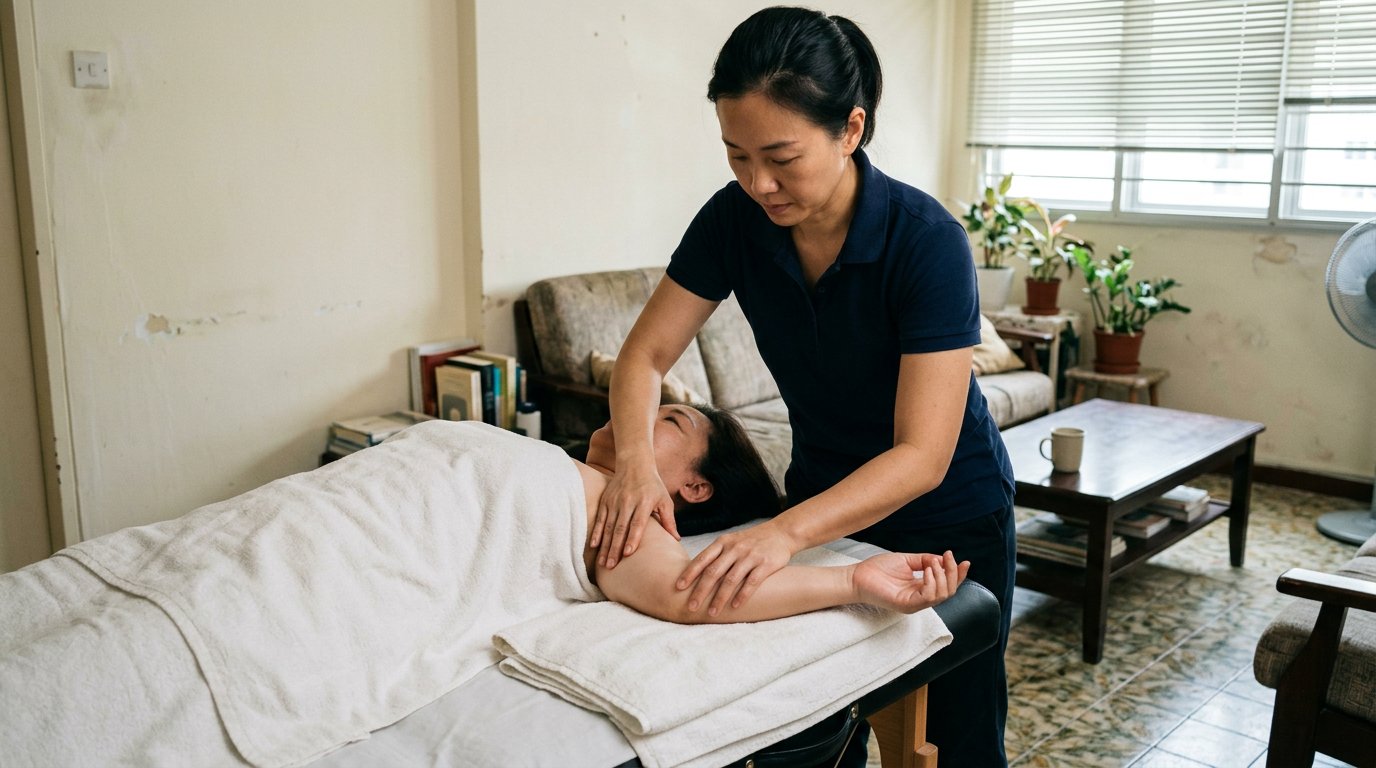
Manual lymphatic drainage uses gentle, rhythmic movements to encourage lymph fluid towards areas where it can be processed and cleared. Unlike deep-tissue massage, the touch is light. A session may include the neck and armpits, and the groin area with your consent. These techniques and treatment areas are intended to guide fluid movement, and the pressure should feel comfortable, not forceful.
The Dr Vodder treatment sequence
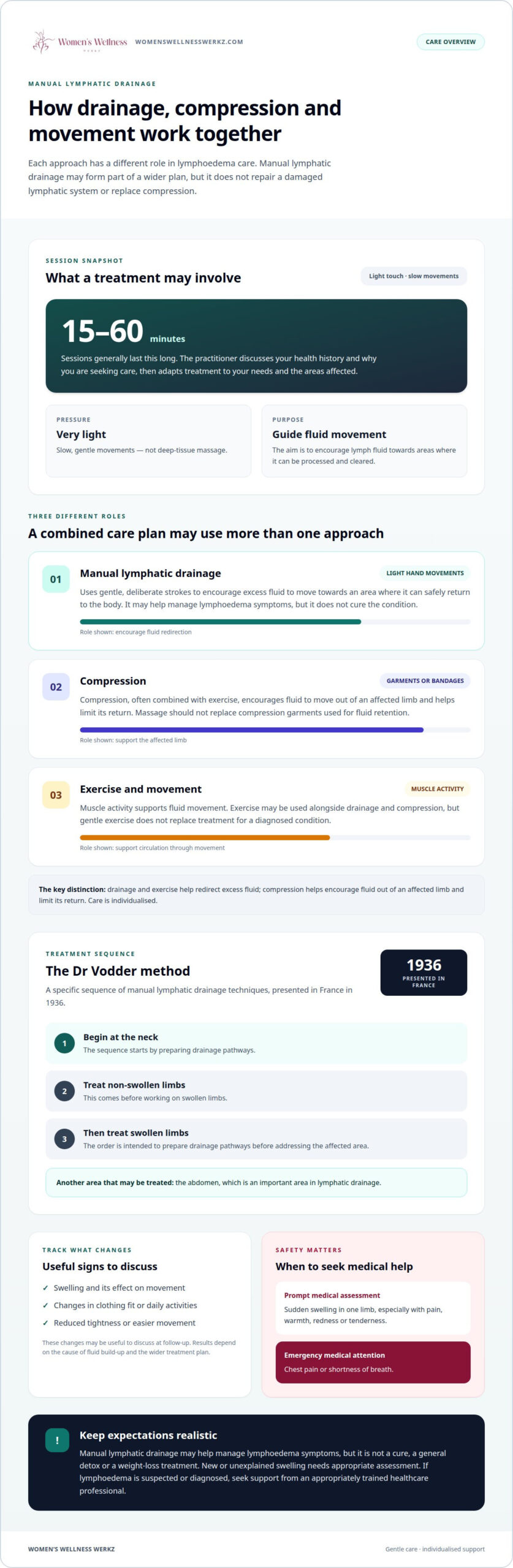
The Dr Vodder method is a specific sequence of manual lymphatic drainage techniques, presented in France by Dr Emil and Astrid Vodder in 1936. It begins at the neck, then treats non-swollen limbs before swollen ones. This order prepares drainage pathways before addressing the affected area. The abdomen may also be treated, as it is an important area in lymphatic drainage.
To assess whether treatment is helping, track swelling and its effect on movement, clothing or daily activities. Reduced tightness or easier movement may be useful changes to discuss at follow-up. Gentle exercise can also support circulation, but it does not replace treatment for a diagnosed condition.
For lymphoedema, surgery may remove fat from an affected limb or restore fluid flow around the damaged part of the lymphatic system. These are different approaches, selected according to the problem being treated.
Using manual lymphatic drainage alone or with other treatments
Manual lymphatic drainage may be used alone or as part of a wider care plan. Unlike compression garments, it uses light hand movements. Exercise supports fluid movement through muscle activity. Cleveland Clinic advises that massage should not replace compression garments used for fluid retention.
Conditions treated with manual lymphatic drainage
Manual lymphatic drainage may be used for lymphoedema and swelling associated with chronic venous insufficiency, fibromyalgia, injury, lipedema or rheumatoid arthritis. For example, healthcare providers may use it to help manage lymphoedema after breast cancer surgery. The cause matters: swelling after an injury differs from fluid build-up linked to a longer-term condition. An individualised plan can account for the affected area, symptoms and other treatments, rather than applying the same routine to everyone.
How manual lymphatic drainage is performed
A session uses very light, slow movements directed towards the torso to encourage fluid movement. The pressure is often compared with stroking a newborn’s head, rather than deep-tissue massage. Sessions generally last 15 to 60 minutes. At an initial appointment, the practitioner discusses your health history and reason for seeking care, helping shape the treatment around your needs and the areas affected.
Comparing drainage, compression and exercise
Manual lymphatic drainage, compression and exercise have different roles in lymphoedema care. UT MD Anderson explains that drainage and exercise both redirect excess fluid towards an area where it can safely return to the body. Compression garments or bandages, combined with exercise, encourage fluid to move out of an affected limb. Care is individualised, and manual drainage does not repair a damaged lymphatic system.
If you have a condition affecting circulation or fluid balance, seek appropriate guidance before starting compression, self-massage or a new exercise programme. A lymphoedema therapist can teach you or a carer simple drainage techniques for ongoing maintenance.
Potential benefits for swelling and circulation
Manual lymphatic drainage is used to help manage swelling linked with lymphoedema. What it can offer depends on the cause of the fluid build-up and the wider treatment plan.
Potential benefits for swelling
For lymphoedema, decongestive lymphatic therapy is a recommended approach to controlling symptoms, not a cure. Gentle drainage techniques aim to move excess fluid away from an affected area. If an arm feels heavy or a leg looks swollen, reducing fluid build-up may ease some discomfort and support everyday movement. The goal is symptom management, not reversing damage to lymphatic vessels.
Circulation and possible benefits
Manual lymphatic drainage focuses on lymph circulation, which is distinct from blood flow. Its gentle movements encourage lymph fluid towards areas where the body can process and return it. For example, someone with swelling after breast cancer surgery may have drainage included in a broader lymphoedema plan. Exercise and compression can also support fluid movement, so a therapist considers how these approaches fit together.
Evidence for oedema and fluid retention
The clearest treatment role described here is lymphoedema management: decongestive lymphatic therapy can help control symptoms, but cannot cure the condition. Drainage and exercise are used to redirect excess fluid, while compression helps limit its return to an affected limb. These approaches address a diagnosed swelling problem; they do not mean that every instance of fluid retention will respond to massage.
This distinction matters if your swelling is new or unexplained. Lymphatic drainage massage is not a general detox or weight-loss treatment, and it does not replace a doctor’s assessment when lymphoedema is suspected. A treatment plan can account for the cause, affected area and symptoms, with progress considered alongside compression, exercise and other care.
Pain and risks of lymphatic drainage
Manual lymphatic drainage uses light pressure, so it should not feel like deep-tissue massage. If a stroke feels uncomfortable, particularly around the underarm, less pressure is appropriate. Tell the practitioner if touch causes discomfort, and pause rather than pushing through pain.
Some effects may appear after treatment. Increased urination is the most common side effect of manual lymph drainage and lymphoedema exercises, particularly during the first 24-48 hours. Fatigue, headaches and nausea are also possible. These effects can affect how you feel after a session, so allow time to notice changes and seek medical advice if symptoms concern you.
Some health conditions make lymphatic massage unsuitable or mean you should seek medical guidance first. Avoid treatment if you have blood clots, deep vein thrombosis, cellulitis, fever, infection, heart disease, kidney failure or stroke. Cancer in the massage area, or skin damaged by radiation therapy, also calls for particular caution. If you have had recent surgery or have an unhealed wound, ask your healthcare provider for advice before massage.
Pay attention to the pattern of swelling in your tissues and limbs. Sudden swelling in one arm or leg, especially with pain, warmth, redness or tenderness, needs prompt medical assessment. Chest pain or shortness of breath requires emergency medical attention. If diagnosed lymphoedema worsens, including increasing swelling in your arms or legs, contact your healthcare provider.
Lymphatic drainage for fluid retention cannot address every cause of swelling, and massage is not a substitute for medical assessment. The lymphatic system and bloodstream are connected, so moving fluid may not be appropriate when infection or a clot is present. A doctor can assess the cause before you begin treatment, particularly if symptoms are unexplained or changing quickly.
If you’re considering a gentle session, explore manual lymphatic drainage massage as a women’s wellness treatment, and discuss any relevant health concerns before proceeding.
Women’s Wellness Werkz: Manual Lymphatic Drainage Massage
Women’s Wellness Werkz offers Manual Lymphatic Drainage Massage for women seeking a gentle massage focused on lymphatic drainage. It may suit you if you want supportive wellness care for a feeling of fluid retention, including during postpartum recovery. It is not a substitute for assessment or treatment of diagnosed lymphoedema or unexplained swelling.
Qualified therapists are trained in Women’s Wellness Werkz massage protocols and travel to clients’ locations. Your health history and reason for seeking care can help guide whether massage is appropriate. If you have sudden swelling, an infection, a blood clot, significant heart or kidney concerns, or recent surgery, seek medical advice before arranging a massage.
If this service suits your wellness needs, book a Manual Lymphatic Drainage Massage with Women’s Wellness Werkz.
Choose support that fits your next step
Start by considering what would make daily life feel more manageable, whether that means greater ease with rest, movement or postpartum routines. If you are considering lymphatic drainage for fluid retention, keep your expectations grounded in the cause of the swelling and the care that suits it. Unexplained swelling needs medical assessment before you choose massage.
Women’s Wellness Werkz supports women at different stages with its Postnatal Massage Package, Combo Massage Package and Prenatal Massage Package. Its therapists are trained to deliver the company’s massage protocols. These options address different stages and needs, helping you focus on the kind of support that suits your circumstances rather than choosing a treatment simply because it is familiar.
When you’re ready to discuss your needs, Contact Women’s Wellness Werkz. A considered conversation can help you take a calm next step towards care that feels right for you.
Frequently Asked Questions
What Is the Lymphatic System?
The lymphatic system is a network that moves lymph fluid through your body. Unlike the heart, it has no central pump; movement in surrounding muscles helps propel fluid along. This is one reason gentle movement features in lymphoedema care. Lymph nodes sit along the network, including in the neck, armpits and groin, and help filter material from lymph.
How does MLD work?
Manual lymphatic drainage (MLD) redirects excess fluid from a swollen limb towards an unaffected area, where it can be processed and excreted. For diagnosed lymphoedema, it forms part of care tailored to the affected area and your needs. The aim is to manage swelling, not to repair damage to the lymphatic system or reverse lymphoedema.
How long will it take for me to feel better?
There is no reliable timeframe for feeling better after MLD. For lymphoedema, intensive decongestive treatment may involve daily sessions for several weeks, followed by reviews every few months to assess progress. Your care team can use these reviews to consider changes in symptoms and whether your management plan needs adjustment.
Is there anything I shouldn’t do with lymphoedema?
Avoid having lymphatic drainage performed directly over cancerous tissue or skin damaged by radiation therapy. This area-specific precaution does not mean avoiding all treatment: the location and condition of your skin matter. If cancer treatment or radiation has affected the area you want treated, discuss the proposed massage with your healthcare team before proceeding.
Is there anything else I should know about managing lymphoedema?
Drinking water does not make lymphoedema worse, and adequate hydration remains important. You do not need to restrict fluids simply because you have swelling. Follow any personal fluid guidance you have received for another health condition, and mention changing symptoms at your regular lymphoedema review so your care plan can account for them.
What Can You Do Between Appointments?
Keep your affected limb elevated whenever possible, as this may help manage swelling. If you take part in athletics and have been advised to wear a compression garment, use it during activity. These measures can complement your prescribed care between appointments. Follow the guidance for your condition rather than adding unfamiliar techniques to your routine.
Lymphatic drainage for fluid retention is a gentle, light-pressure massage that uses slow, rhythmic movements to encourage lymph fluid to move. It may help ease swelling, but it is not a guaranteed solution for every cause of fluid build-up, nor is it a detox or weight-loss treatment.
Because the strokes are light rather than deep, the treatment should feel gentle. An initial appointment generally includes a discussion of your health history and why you are seeking care. Massage may be used on its own or alongside other care. If lymphoedema is suspected or diagnosed, seek support from an appropriately trained healthcare professional.
This article explains what a session involves, how it may support swelling and circulation, when treatments such as compression matter, and what to know about discomfort and possible side effects. Sudden swelling in one limb, especially with pain, warmth, redness or tenderness, needs prompt medical assessment. Chest pain or shortness of breath requires emergency medical attention.
Key Takeaways
- Understand how gentle, rhythmic strokes encourage lymph fluid to move through the body.
- Learn why massage may be combined with compression and movement, rather than used as a replacement for them.
- See what realistic support for swelling and circulation can look like, and why results vary with its cause.
- Recognise health conditions and symptoms that call for medical advice before massage.
What is lymphatic drainage massage?
Lymphatic drainage massage uses light, deliberate movements to encourage lymph fluid to move through the body. How often you need it depends on the cause and care plan; intensive decongestive treatment for lymphoedema may involve daily sessions for several weeks.
The lymphatic system and drainage treatment
The lymphatic system helps regulate fluid levels, filters bacteria and contains types of white blood cells. If drainage is disrupted, lymph can collect in tissues and cause swelling. Massage uses gentle pressure and specific techniques to encourage fluid movement. Because swelling has different possible causes, suspected lymphoedema needs assessment to determine suitable care.
Massage techniques and treatment areas
Manual lymphatic drainage uses gentle, rhythmic movements to encourage lymph fluid towards areas where it can be processed and cleared. Unlike deep-tissue massage, the touch is light. A session may include the neck and armpits, and the groin area with your consent. These techniques and treatment areas are intended to guide fluid movement, and the pressure should feel comfortable, not forceful.
The Dr Vodder treatment sequence
The Dr Vodder method is a specific sequence of manual lymphatic drainage techniques, presented in France by Dr Emil and Astrid Vodder in 1936. It begins at the neck, then treats non-swollen limbs before swollen ones. This order prepares drainage pathways before addressing the affected area. The abdomen may also be treated, as it is an important area in lymphatic drainage.
To assess whether treatment is helping, track swelling and its effect on movement, clothing or daily activities. Reduced tightness or easier movement may be useful changes to discuss at follow-up. Gentle exercise can also support circulation, but it does not replace treatment for a diagnosed condition.
For lymphoedema, surgery may remove fat from an affected limb or restore fluid flow around the damaged part of the lymphatic system. These are different approaches, selected according to the problem being treated.
Using manual lymphatic drainage alone or with other treatments
Manual lymphatic drainage may be used alone or as part of a wider care plan. Unlike compression garments, it uses light hand movements. Exercise supports fluid movement through muscle activity. Cleveland Clinic advises that massage should not replace compression garments used for fluid retention.
Conditions treated with manual lymphatic drainage
Manual lymphatic drainage may be used for lymphoedema and swelling associated with chronic venous insufficiency, fibromyalgia, injury, lipedema or rheumatoid arthritis. For example, healthcare providers may use it to help manage lymphoedema after breast cancer surgery. The cause matters: swelling after an injury differs from fluid build-up linked to a longer-term condition. An individualised plan can account for the affected area, symptoms and other treatments, rather than applying the same routine to everyone.
How manual lymphatic drainage is performed
A session uses very light, slow movements directed towards the torso to encourage fluid movement. The pressure is often compared with stroking a newborn’s head, rather than deep-tissue massage. Sessions generally last 15 to 60 minutes. At an initial appointment, the practitioner discusses your health history and reason for seeking care, helping shape the treatment around your needs and the areas affected.
Comparing drainage, compression and exercise
Manual lymphatic drainage, compression and exercise have different roles in lymphoedema care. UT MD Anderson explains that drainage and exercise both redirect excess fluid towards an area where it can safely return to the body. Compression garments or bandages, combined with exercise, encourage fluid to move out of an affected limb. Care is individualised, and manual drainage does not repair a damaged lymphatic system.
If you have a condition affecting circulation or fluid balance, seek appropriate guidance before starting compression, self-massage or a new exercise programme. A lymphoedema therapist can teach you or a carer simple drainage techniques for ongoing maintenance.
Potential benefits for swelling and circulation
Manual lymphatic drainage is used to help manage swelling linked with lymphoedema. What it can offer depends on the cause of the fluid build-up and the wider treatment plan.
Potential benefits for swelling
For lymphoedema, decongestive lymphatic therapy is a recommended approach to controlling symptoms, not a cure. Gentle drainage techniques aim to move excess fluid away from an affected area. If an arm feels heavy or a leg looks swollen, reducing fluid build-up may ease some discomfort and support everyday movement. The goal is symptom management, not reversing damage to lymphatic vessels.
Circulation and possible benefits
Manual lymphatic drainage focuses on lymph circulation, which is distinct from blood flow. Its gentle movements encourage lymph fluid towards areas where the body can process and return it. For example, someone with swelling after breast cancer surgery may have drainage included in a broader lymphoedema plan. Exercise and compression can also support fluid movement, so a therapist considers how these approaches fit together.
Evidence for oedema and fluid retention
The clearest treatment role described here is lymphoedema management: decongestive lymphatic therapy can help control symptoms, but cannot cure the condition. Drainage and exercise are used to redirect excess fluid, while compression helps limit its return to an affected limb. These approaches address a diagnosed swelling problem; they do not mean that every instance of fluid retention will respond to massage.
This distinction matters if your swelling is new or unexplained. Lymphatic drainage massage is not a general detox or weight-loss treatment, and it does not replace a doctor’s assessment when lymphoedema is suspected. A treatment plan can account for the cause, affected area and symptoms, with progress considered alongside compression, exercise and other care.
Pain and risks of lymphatic drainage
Manual lymphatic drainage uses light pressure, so it should not feel like deep-tissue massage. If a stroke feels uncomfortable, particularly around the underarm, less pressure is appropriate. Tell the practitioner if touch causes discomfort, and pause rather than pushing through pain.
Some effects may appear after treatment. Increased urination is the most common side effect of manual lymph drainage and lymphoedema exercises, particularly during the first 24-48 hours. Fatigue, headaches and nausea are also possible. These effects can affect how you feel after a session, so allow time to notice changes and seek medical advice if symptoms concern you.
Some health conditions make lymphatic massage unsuitable or mean you should seek medical guidance first. Avoid treatment if you have blood clots, deep vein thrombosis, cellulitis, fever, infection, heart disease, kidney failure or stroke. Cancer in the massage area, or skin damaged by radiation therapy, also calls for particular caution. If you have had recent surgery or have an unhealed wound, ask your healthcare provider for advice before massage.
Pay attention to the pattern of swelling in your tissues and limbs. Sudden swelling in one arm or leg, especially with pain, warmth, redness or tenderness, needs prompt medical assessment. Chest pain or shortness of breath requires emergency medical attention. If diagnosed lymphoedema worsens, including increasing swelling in your arms or legs, contact your healthcare provider.
Lymphatic drainage for fluid retention cannot address every cause of swelling, and massage is not a substitute for medical assessment. The lymphatic system and bloodstream are connected, so moving fluid may not be appropriate when infection or a clot is present. A doctor can assess the cause before you begin treatment, particularly if symptoms are unexplained or changing quickly.
If you’re considering a gentle session, explore manual lymphatic drainage massage as a women’s wellness treatment, and discuss any relevant health concerns before proceeding.
Women’s Wellness Werkz: Manual Lymphatic Drainage Massage
Women’s Wellness Werkz offers Manual Lymphatic Drainage Massage for women seeking a gentle massage focused on lymphatic drainage. It may suit you if you want supportive wellness care for a feeling of fluid retention, including during postpartum recovery. It is not a substitute for assessment or treatment of diagnosed lymphoedema or unexplained swelling.
Qualified therapists are trained in Women’s Wellness Werkz massage protocols and travel to clients’ locations. Your health history and reason for seeking care can help guide whether massage is appropriate. If you have sudden swelling, an infection, a blood clot, significant heart or kidney concerns, or recent surgery, seek medical advice before arranging a massage.
If this service suits your wellness needs, book a Manual Lymphatic Drainage Massage with Women’s Wellness Werkz.
Choose support that fits your next step
Start by considering what would make daily life feel more manageable, whether that means greater ease with rest, movement or postpartum routines. If you are considering lymphatic drainage for fluid retention, keep your expectations grounded in the cause of the swelling and the care that suits it. Unexplained swelling needs medical assessment before you choose massage.
Women’s Wellness Werkz supports women at different stages with its Postnatal Massage Package, Combo Massage Package and Prenatal Massage Package. Its therapists are trained to deliver the company’s massage protocols. These options address different stages and needs, helping you focus on the kind of support that suits your circumstances rather than choosing a treatment simply because it is familiar.
When you’re ready to discuss your needs, Contact Women’s Wellness Werkz. A considered conversation can help you take a calm next step towards care that feels right for you.
Frequently Asked Questions
What Is the Lymphatic System?
The lymphatic system is a network that moves lymph fluid through your body. Unlike the heart, it has no central pump; movement in surrounding muscles helps propel fluid along. This is one reason gentle movement features in lymphoedema care. Lymph nodes sit along the network, including in the neck, armpits and groin, and help filter material from lymph.
How does MLD work?
Manual lymphatic drainage (MLD) redirects excess fluid from a swollen limb towards an unaffected area, where it can be processed and excreted. For diagnosed lymphoedema, it forms part of care tailored to the affected area and your needs. The aim is to manage swelling, not to repair damage to the lymphatic system or reverse lymphoedema.
How long will it take for me to feel better?
There is no reliable timeframe for feeling better after MLD. For lymphoedema, intensive decongestive treatment may involve daily sessions for several weeks, followed by reviews every few months to assess progress. Your care team can use these reviews to consider changes in symptoms and whether your management plan needs adjustment.
Is there anything I shouldn’t do with lymphoedema?
Avoid having lymphatic drainage performed directly over cancerous tissue or skin damaged by radiation therapy. This area-specific precaution does not mean avoiding all treatment: the location and condition of your skin matter. If cancer treatment or radiation has affected the area you want treated, discuss the proposed massage with your healthcare team before proceeding.
Is there anything else I should know about managing lymphoedema?
Drinking water does not make lymphoedema worse, and adequate hydration remains important. You do not need to restrict fluids simply because you have swelling. Follow any personal fluid guidance you have received for another health condition, and mention changing symptoms at your regular lymphoedema review so your care plan can account for them.
What Can You Do Between Appointments?
Keep your affected limb elevated whenever possible, as this may help manage swelling. If you take part in athletics and have been advised to wear a compression garment, use it during activity. These measures can complement your prescribed care between appointments. Follow the guidance for your condition rather than adding unfamiliar techniques to your routine.