Safe Pregnancy Massage in Malaysia: A Guide for Mums-to-be
If you’re searching for a safe pregnancy massage in Singapore, it’s natural to wonder whether touch, pressure, positioning or massage oils could affect you or your baby. Your comfort matters, and the right approach depends on your individual pregnancy and how a session is adapted.
It’s sensible to feel cautious. Pregnancy massage is a wellness experience, not medical care, and it can’t prevent or treat pregnancy complications. Speaking with your maternity-care professional before booking can help you understand whether massage feels appropriate for you, particularly if you have health concerns or a higher-risk pregnancy.
This guide covers general safety considerations, what to discuss with your maternity-care professional and therapist, and how to prepare for a more comfortable session. You’ll also learn why gentle, personalised care matters, from finding a supported position to sharing what feels soothing or uncomfortable. Women’s Wellness Werkz offers a Prenatal Massage Package shaped around individual comfort, with attentive care focused on relaxation and wellbeing.
Key Takeaways
- Understand why safe pregnancy massage in Singapore depends on your individual pregnancy, comfort and appropriate guidance, rather than a blanket assurance.
- Consider your pregnancy stage, positioning and preferred touch before deciding whether a session feels right for you.
- Keep expectations realistic: massage may support relaxation and comfort, but it can’t treat complications or guarantee pregnancy or birth outcomes.
- Prepare by sharing relevant pregnancy information, preferences and any guidance from your maternity-care professional.
- Learn how Women’s Wellness Werkz’s Prenatal Massage Package offers personalised care focused on physical and emotional wellbeing.
What does safe pregnancy massage mean for expectant mothers in Singapore?
Could a massage feel soothing during pregnancy without putting your wellbeing at risk? It may be appropriate for some expectant mothers, but no general description can guarantee that it’s right for everyone. Start by considering your own health, comfort and any guidance from your maternity-care professional.
Pregnancy massage is wellness bodywork adapted with pregnancy in mind. Positioning, pressure and other details may be adjusted to support comfort, but the right approach depends on the individual. The purpose is a calm, attentive experience, not diagnosis or treatment.
In brief: pregnancy massage may offer relaxation and comfort through adapted touch, but it isn’t obstetric care and can’t treat pregnancy complications.
How is pregnancy massage different from a standard massage?
A pregnancy-aware session takes account of how you feel when lying down, how much pressure is comfortable and whether anything needs to change. If a position feels strained, for example, ask to try a more comfortable alternative. Pressure and areas of focus should reflect your preferences and circumstances, rather than follow a routine designed for everyone.
These adjustments are intended to support rest and ease. They don’t promise relief from a particular symptom or a clinical result. Pregnancy changes over time, and no single style, pressure level or position suits everyone. You can say what feels comfortable, request an adjustment or pause the session at any point.
When should a pregnant person seek clinical guidance first?
Pregnancy is personal, so speak with your maternity-care team if you have a known complication, a health concern, a pregnancy described as higher risk, or uncertainty about whether massage is suitable for you. They understand your circumstances and can advise whether a wellness session is appropriate. Share relevant guidance with the therapist before the massage so that you can discuss comfort and boundaries with that context in mind.
It’s also important to distinguish a relaxation session from symptoms that need medical attention. If you have new or concerning symptoms, follow your maternity-care team’s advice and seek clinical assessment rather than relying on massage. Urgent symptoms need urgent medical attention. A massage therapist can adapt a wellness experience but cannot assess pregnancy complications or replace antenatal appointments, medical advice or emergency care.
A careful decision needn’t feel overwhelming. Consider whether you feel well, whether your maternity-care professional has raised any concerns and whether you can communicate openly about comfort and preferences. If you’re unsure, pause and seek clinical guidance before booking. That gives you a clearer basis for deciding whether gentle massage feels suitable for your wellbeing routine.
How pregnancy massage safety is shaped by stage, position and touch
There isn’t one position or pressure level that suits every expectant mother. As your body changes, what feels restful one day may feel uncomfortable another, and pregnancy stage is only part of the picture. For safe pregnancy massage malaysia, a thoughtful session should respond to your comfort and individual circumstances, with clinical guidance informing the decision where needed.
Adaptation matters more than a one-size-fits-all rule: a session should be shaped around the person, their comfort and relevant professional advice.
What positioning and pressure may feel more comfortable?
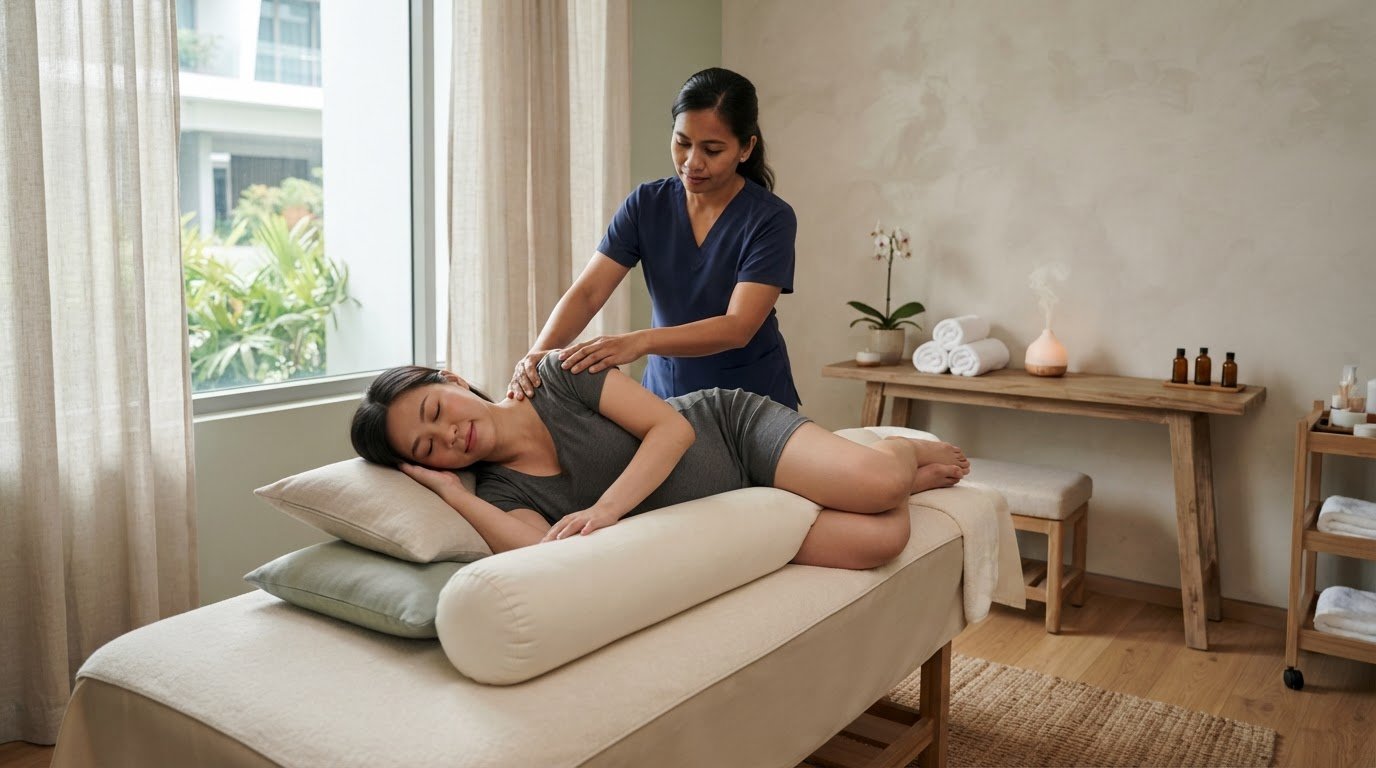
Supported positioning can help you settle without strain. Side-lying may feel comfortable for some people, with cushions or other support adjusted to suit, but it isn’t a universal prescription. The American Pregnancy Association discusses positioning and other benefits and safety considerations for prenatal massage; your own maternity-care guidance and comfort should remain central.
Pressure is personal, too. Gentle touch may feel preferable, and you can ask for lighter pressure, a change of position or a pause at any time. You shouldn’t have to tolerate discomfort. Speak up if you feel pressure, pulling, dizziness, nausea or simply that something doesn’t feel right. Those cues are enough reason to stop and reassess, not something to push through.
Why do pregnancy stage and personal health matter?
Pregnancy stage can influence what feels comfortable and which precautions may be relevant, but it doesn’t determine suitability on its own. Your health history, current symptoms and advice from your maternity-care professional also matter. Recommendations can differ, so avoid relying on a fixed rule about when massage is suitable for everyone. If you’ve received individual guidance, share it with the therapist before the session.
Before settling into a position, notice how your body feels. Is your breathing easy? Do you feel supported, rather than twisted or pressed uncomfortably? Are you comfortable with the proposed touch? Small adjustments can help create a calmer experience, while check-ins during the session keep your preferences in view. You can change your mind as your comfort shifts.
For a gentle, personalised wellness experience, Women’s Wellness Werkz offers a Prenatal Massage Package focused on women’s physical and emotional wellbeing. The intention is attentive care and relaxation, not a medical outcome. Keeping that distinction clear helps you set realistic expectations and decide what to discuss before the session.
Pregnancy massage benefits and limits: what a soothing session can and cannot do
A quiet, comfortable massage may offer a welcome pause in a physically demanding season. You might feel more settled or simply enjoy being cared for, but experiences vary between people and from one session to the next. For safe pregnancy massage malaysia, keep the purpose clear: relaxation and personal comfort, not a promised medical result.
Pregnancy massage may support a sense of comfort and relaxation, but it doesn’t treat or prevent medical conditions or determine pregnancy, labour or birth outcomes. That distinction lets you value gentle wellness care without expecting it to take the place of antenatal care.
Which expectations are realistic for pregnancy massage?
A realistic expectation is that a considerate session may feel calming or give you a little time to rest. It may not feel the same each time, and you may prefer different pressure or focus on different days. These are personal experiences, not guaranteed effects. Massage shouldn’t be presented as changing hormones, treating a pregnancy-related condition or improving a particular clinical measure.
Use the guide below to distinguish a reasonable wellness hope from a claim that needs clinical evidence or advice.
| Reasonable wellness expectation | Unsupported promise | When to seek clinical advice |
|---|---|---|
| You may feel relaxed, cared for or more at ease during or after a session. | A massage will prevent pregnancy complications or guarantee a healthy pregnancy, labour or birth. | Ask your maternity-care professional if you’re unsure whether massage suits your health or pregnancy circumstances. |
| You can share preferences and request changes to help the session feel comfortable. | A massage will induce labour, treat a pregnancy condition or replace antenatal care. | Seek medical advice for symptoms or concerns; urgent symptoms need urgent assessment, not a massage appointment. |
How can readers recognise claims that go too far?
Be cautious of claims that massage can prevent complications, bring on labour or replace advice from your maternity-care team. A soothing experience alone isn’t evidence of a medical effect. You can appreciate the comfort a session may bring while leaving clinical questions with the professionals responsible for your pregnancy care.
Massage isn’t inherently a medical intervention, and this distinction isn’t a reason to feel alarmed. It helps set honest expectations. If a particular outcome is guaranteed, or a session is described as a substitute for clinical care, treat that as a claim rather than a certainty. Discuss health concerns with your maternity-care professional, and don’t delay assessment to try massage instead.
Before a session, decide what you hope to feel, such as having a restful moment or receiving gentle, attentive care. Keep that hope flexible. You’re the best judge of your comfort, and it’s always acceptable to pause or stop if the experience doesn’t feel right.
A gentle pre-session checklist for pregnancy massage in Malaysia
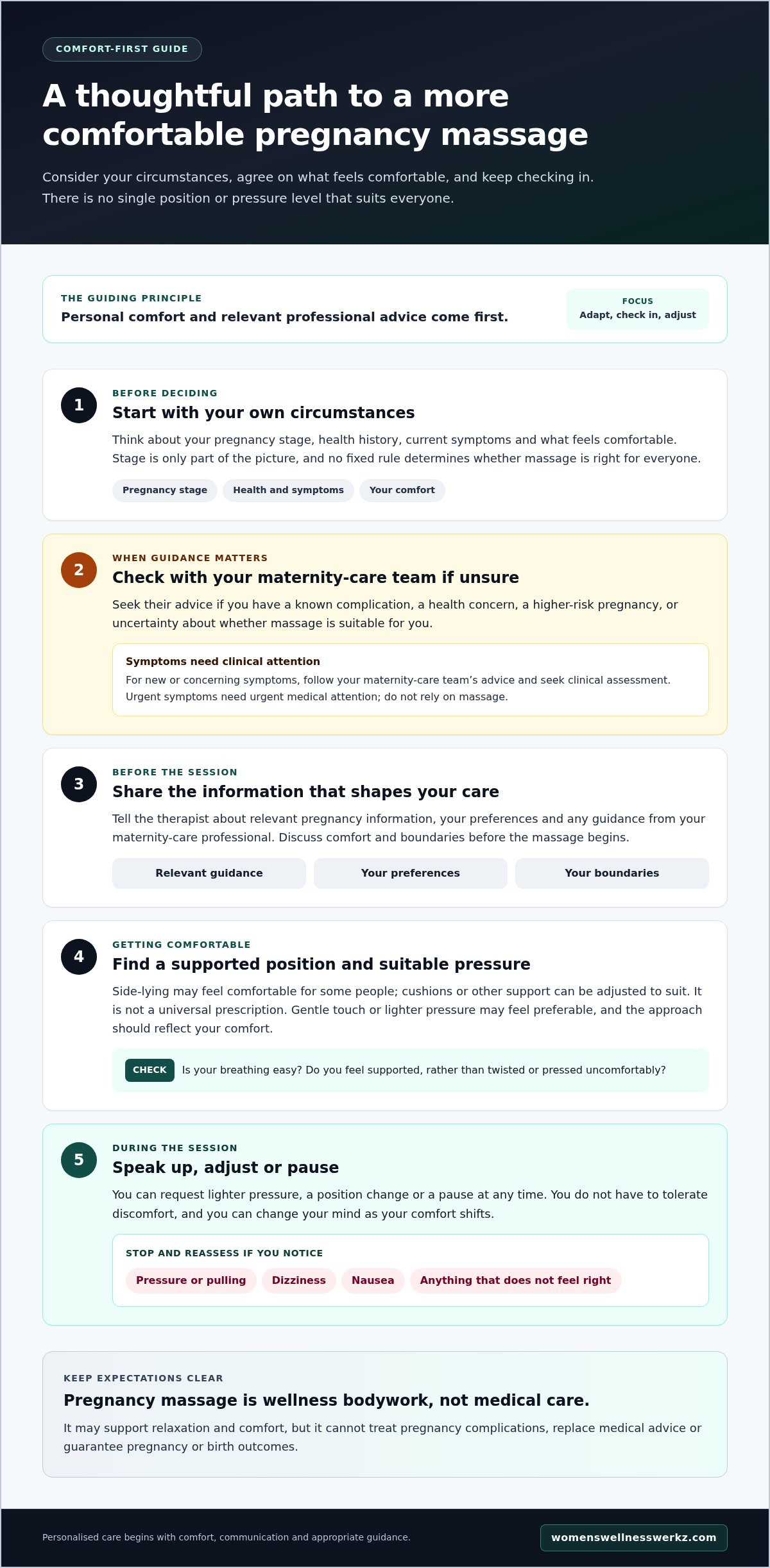
A little preparation can make it easier to settle in and explain what feels right. If you’re considering safe pregnancy massage malaysia, use this checklist to organise information and preferences that can help shape a more comfortable wellness session. It isn’t a medical screening tool; pregnancy concerns belong with your maternity-care professional.
- Check in with yourself. Notice how you’re feeling on the day and whether you have any new concerns. If you’re unwell or unsure whether massage is suitable, seek guidance from your maternity-care team before proceeding.
- Share relevant pregnancy details. Tell the therapist your pregnancy stage and mention health concerns that may affect comfort or session planning. Relevant details help the therapist understand your needs.
- Pass on clinical guidance. If your maternity-care professional has given advice about massage, positioning or activities to avoid, share it before the session. If you’re uncertain about the advice, clarify it with your care team rather than relying on massage in place of clinical guidance.
- Describe what feels comfortable. Explain your pressure preference in everyday terms, such as “very gentle” or “lighter, please”. You can also mention areas you’d prefer to avoid and any position that feels awkward or strained.
- Agree how to communicate. Let the therapist know you may ask for a pause, a position change or lighter touch. You don’t have to wait for a scheduled check-in to speak up.
What should you share before the session?
Keep the conversation focused on your wellbeing: your pregnancy stage, relevant health concerns, advice you’ve received from a clinician and what helps you feel at ease. For example, say that you prefer a softer touch or may need to change position if you become uncomfortable. This gives the therapist useful context without turning a wellness appointment into a medical consultation.
How can you stay comfortable during the session?
Comfort can shift, so check in with yourself as the session unfolds. If you notice pain, dizziness or unusual discomfort, ask the therapist to stop so you can reassess. You can pause, adjust your position or end the session; your needs matter more than completing it. If a symptom concerns you, seek clinical advice rather than relying on massage to assess or resolve it.
If you’re looking for information about pregnancy-related back discomfort or swollen feet, seek symptom-specific guidance from an appropriate clinical source. Those concerns can have different causes and shouldn’t be assessed through massage alone.
With your preferences and any relevant clinical guidance shared, a personalised prenatal massage can be approached as a considered moment of comfort and care. Explore the Prenatal Massage Package at Women’s Wellness Werkz for a gentle wellness experience centred on women’s physical and emotional wellbeing.
How Women’s Wellness Werkz offers gentle prenatal massage care
After considering the safety guidance, you may be wondering what prenatal massage can look like in practice. Women’s Wellness Werkz offers a Prenatal Massage Package with personalised massage care for women, centred on physical and emotional wellbeing. It’s a wellness offering, not obstetric care or treatment for pregnancy concerns, and it doesn’t promise a particular health outcome.
Personalisation matters because pregnancy and comfort are individual. A thoughtful wellness experience leaves space for you to express your preferences and for care to be shaped around your needs. Share what feels soothing, what you’d rather avoid and whether your comfort changes as the session progresses. Clear communication helps keep the experience centred on you.
What does personalised prenatal wellness care mean?
Personalised care means your comfort isn’t treated as an afterthought. Your preferences and wellbeing can guide the experience, rather than assuming one approach suits every expectant mother. Women’s Wellness Werkz’s prenatal massage care is intended to offer a considered moment of relaxation and support for women’s wellbeing. It isn’t a substitute for advice from your maternity-care professional or a way to manage pregnancy complications.
If you’re considering safe pregnancy massage malaysia, remember that suitability depends on your circumstances, not simply on a service description. If you have questions about your health or whether massage is appropriate, discuss them with your maternity-care professional. Their guidance can help you decide what feels right and what to share before a session.
How can you take a calm next step?
There’s no need to make an immediate booking decision simply because you’re learning about prenatal massage. Take time to consider whether the idea feels comfortable. You might note questions for your maternity-care professional, reflect on the touch and positioning that feel reassuring, and plan how you’ll communicate if you want a change or pause.
These principles can help you make a considered choice:
- Personal guidance: Let your maternity-care professional advise you on health-related concerns.
- Comfort: Your preferences matter, and it’s all right to request an adjustment.
- Communication: Share relevant information and speak up if your comfort shifts.
- Realistic expectations: Think of massage as a possible relaxation experience, not medical treatment or a guarantee of outcomes.
When you feel ready, you can explore the Prenatal Massage Package at Women’s Wellness Werkz and learn more about its personalised approach to women’s wellbeing. Let your decision unfold at a pace that feels comfortable for you.
Take your next step at a pace that feels right
Your next step doesn’t have to be a booking. Take time to reflect on what would help you feel at ease, and bring any health questions to your maternity-care professional. A decision about safe pregnancy massage malaysia can be guided by your individual circumstances, preferences and comfort, rather than pressure to proceed.
If a gentle wellness experience feels right for you, Women’s Wellness Werkz offers a Prenatal Massage Package with personalised care focused on women’s wellbeing. It’s an opportunity to explore relaxation and attentive support, not medical treatment. Learn about the package and decide in your own time whether it suits you.
Explore the Prenatal Massage Package at Women’s Wellness Werkz and take the next step when you feel ready. You deserve care that honours your comfort, your questions and your own pace.
Frequently Asked Questions
Is pregnancy massage safe in the first trimester?
There isn’t one answer that applies to everyone, including during the first trimester. Your health, pregnancy circumstances and comfort all matter. If you’re considering safe pregnancy massage malaysia, discuss concerns with your maternity-care professional, who can advise based on your situation. If you decide to proceed, choose pregnancy-aware, comfort-led care and share any guidance you’ve received. There’s no need to follow a fixed trimester rule without individual advice.
Can pregnancy massage cause a miscarriage?
It’s understandable to worry, but miscarriage is not something to blame yourself for. Pregnancy loss can happen for many reasons, and gentle massage isn’t known to cause miscarriage. Massage can’t diagnose the cause of pregnancy loss or prevent it. If you have bleeding, pain or another concerning symptom, contact your maternity-care team promptly for advice rather than trying to assess it through massage.
How much pressure is appropriate during pregnancy massage?
Pressure should feel comfortable to you and remain adjustable, rather than follow a fixed rule. You might prefer lighter touch in one area and a different level elsewhere; tell the therapist what feels soothing. Ask for a change of position, lighter pressure or a pause whenever you need one. If pain or unusual discomfort develops, stop the massage and reassess rather than trying to tolerate it.
Can I have a pregnancy massage if my pregnancy is considered high risk?
Speak with your maternity-care team before arranging a massage if your pregnancy is considered high risk. Advice depends on your individual circumstances, so no general checklist can determine what’s suitable for you. A massage therapist can provide wellness care, but can’t replace your clinician’s assessment or guidance. Follow the medical advice you receive, and postpone the session if your care team recommends waiting.
What should I wear for a pregnancy massage?
Choose whatever helps you feel comfortable and appropriately covered. Before the session begins, discuss clothing, modesty and draping preferences so expectations feel clear and respectful. You can also mention if you tend to feel warm or cool, or if a particular position feels uncomfortable. You don’t need to agree to an arrangement that doesn’t feel right; your comfort and sense of ease matter.
Can essential oils be used during pregnancy massage?
Don’t assume a product is suitable in pregnancy simply because it’s described as natural. Products differ, and sensitivities or allergies can affect what feels appropriate for you. Tell the therapist about allergies, skin sensitivities and advice you’ve received from your maternity-care professional before products are discussed or used. If you’re uncertain about an ingredient, seek clinical guidance rather than relying on a general claim about its safety.
How often can someone have pregnancy massage?
There isn’t a massage schedule that suits everyone. Frequency depends on your comfort, pregnancy circumstances and what you hope to gain from a wellness session. Follow relevant advice from your maternity-care professional, and notice how you feel during the hours and day afterwards. If a session leaves you uncomfortable or raises concerns, pause further appointments and seek guidance before deciding whether or when to have another.
If you’re searching for a safe pregnancy massage in Singapore, it’s natural to wonder whether touch, pressure, positioning or massage oils could affect you or your baby. Your comfort matters, and the right approach depends on your individual pregnancy and how a session is adapted.
It’s sensible to feel cautious. Pregnancy massage is a wellness experience, not medical care, and it can’t prevent or treat pregnancy complications. Speaking with your maternity-care professional before booking can help you understand whether massage feels appropriate for you, particularly if you have health concerns or a higher-risk pregnancy.
This guide covers general safety considerations, what to discuss with your maternity-care professional and therapist, and how to prepare for a more comfortable session. You’ll also learn why gentle, personalised care matters, from finding a supported position to sharing what feels soothing or uncomfortable. Women’s Wellness Werkz offers a Prenatal Massage Package shaped around individual comfort, with attentive care focused on relaxation and wellbeing.
Key Takeaways
- Understand why safe pregnancy massage in Singapore depends on your individual pregnancy, comfort and appropriate guidance, rather than a blanket assurance.
- Consider your pregnancy stage, positioning and preferred touch before deciding whether a session feels right for you.
- Keep expectations realistic: massage may support relaxation and comfort, but it can’t treat complications or guarantee pregnancy or birth outcomes.
- Prepare by sharing relevant pregnancy information, preferences and any guidance from your maternity-care professional.
- Learn how Women’s Wellness Werkz’s Prenatal Massage Package offers personalised care focused on physical and emotional wellbeing.
What does safe pregnancy massage mean for expectant mothers in Singapore?
Could a massage feel soothing during pregnancy without putting your wellbeing at risk? It may be appropriate for some expectant mothers, but no general description can guarantee that it’s right for everyone. Start by considering your own health, comfort and any guidance from your maternity-care professional.
Pregnancy massage is wellness bodywork adapted with pregnancy in mind. Positioning, pressure and other details may be adjusted to support comfort, but the right approach depends on the individual. The purpose is a calm, attentive experience, not diagnosis or treatment.
In brief: pregnancy massage may offer relaxation and comfort through adapted touch, but it isn’t obstetric care and can’t treat pregnancy complications.
How is pregnancy massage different from a standard massage?
A pregnancy-aware session takes account of how you feel when lying down, how much pressure is comfortable and whether anything needs to change. If a position feels strained, for example, ask to try a more comfortable alternative. Pressure and areas of focus should reflect your preferences and circumstances, rather than follow a routine designed for everyone.
These adjustments are intended to support rest and ease. They don’t promise relief from a particular symptom or a clinical result. Pregnancy changes over time, and no single style, pressure level or position suits everyone. You can say what feels comfortable, request an adjustment or pause the session at any point.
When should a pregnant person seek clinical guidance first?
Pregnancy is personal, so speak with your maternity-care team if you have a known complication, a health concern, a pregnancy described as higher risk, or uncertainty about whether massage is suitable for you. They understand your circumstances and can advise whether a wellness session is appropriate. Share relevant guidance with the therapist before the massage so that you can discuss comfort and boundaries with that context in mind.
It’s also important to distinguish a relaxation session from symptoms that need medical attention. If you have new or concerning symptoms, follow your maternity-care team’s advice and seek clinical assessment rather than relying on massage. Urgent symptoms need urgent medical attention. A massage therapist can adapt a wellness experience but cannot assess pregnancy complications or replace antenatal appointments, medical advice or emergency care.
A careful decision needn’t feel overwhelming. Consider whether you feel well, whether your maternity-care professional has raised any concerns and whether you can communicate openly about comfort and preferences. If you’re unsure, pause and seek clinical guidance before booking. That gives you a clearer basis for deciding whether gentle massage feels suitable for your wellbeing routine.
How pregnancy massage safety is shaped by stage, position and touch
There isn’t one position or pressure level that suits every expectant mother. As your body changes, what feels restful one day may feel uncomfortable another, and pregnancy stage is only part of the picture. For safe pregnancy massage malaysia, a thoughtful session should respond to your comfort and individual circumstances, with clinical guidance informing the decision where needed.
Adaptation matters more than a one-size-fits-all rule: a session should be shaped around the person, their comfort and relevant professional advice.
What positioning and pressure may feel more comfortable?
Supported positioning can help you settle without strain. Side-lying may feel comfortable for some people, with cushions or other support adjusted to suit, but it isn’t a universal prescription. The American Pregnancy Association discusses positioning and other benefits and safety considerations for prenatal massage; your own maternity-care guidance and comfort should remain central.
Pressure is personal, too. Gentle touch may feel preferable, and you can ask for lighter pressure, a change of position or a pause at any time. You shouldn’t have to tolerate discomfort. Speak up if you feel pressure, pulling, dizziness, nausea or simply that something doesn’t feel right. Those cues are enough reason to stop and reassess, not something to push through.
Why do pregnancy stage and personal health matter?
Pregnancy stage can influence what feels comfortable and which precautions may be relevant, but it doesn’t determine suitability on its own. Your health history, current symptoms and advice from your maternity-care professional also matter. Recommendations can differ, so avoid relying on a fixed rule about when massage is suitable for everyone. If you’ve received individual guidance, share it with the therapist before the session.
Before settling into a position, notice how your body feels. Is your breathing easy? Do you feel supported, rather than twisted or pressed uncomfortably? Are you comfortable with the proposed touch? Small adjustments can help create a calmer experience, while check-ins during the session keep your preferences in view. You can change your mind as your comfort shifts.
For a gentle, personalised wellness experience, Women’s Wellness Werkz offers a Prenatal Massage Package focused on women’s physical and emotional wellbeing. The intention is attentive care and relaxation, not a medical outcome. Keeping that distinction clear helps you set realistic expectations and decide what to discuss before the session.
Pregnancy massage benefits and limits: what a soothing session can and cannot do
A quiet, comfortable massage may offer a welcome pause in a physically demanding season. You might feel more settled or simply enjoy being cared for, but experiences vary between people and from one session to the next. For safe pregnancy massage malaysia, keep the purpose clear: relaxation and personal comfort, not a promised medical result.
Pregnancy massage may support a sense of comfort and relaxation, but it doesn’t treat or prevent medical conditions or determine pregnancy, labour or birth outcomes. That distinction lets you value gentle wellness care without expecting it to take the place of antenatal care.
Which expectations are realistic for pregnancy massage?
A realistic expectation is that a considerate session may feel calming or give you a little time to rest. It may not feel the same each time, and you may prefer different pressure or focus on different days. These are personal experiences, not guaranteed effects. Massage shouldn’t be presented as changing hormones, treating a pregnancy-related condition or improving a particular clinical measure.
Use the guide below to distinguish a reasonable wellness hope from a claim that needs clinical evidence or advice.
| Reasonable wellness expectation | Unsupported promise | When to seek clinical advice |
|---|---|---|
| You may feel relaxed, cared for or more at ease during or after a session. | A massage will prevent pregnancy complications or guarantee a healthy pregnancy, labour or birth. | Ask your maternity-care professional if you’re unsure whether massage suits your health or pregnancy circumstances. |
| You can share preferences and request changes to help the session feel comfortable. | A massage will induce labour, treat a pregnancy condition or replace antenatal care. | Seek medical advice for symptoms or concerns; urgent symptoms need urgent assessment, not a massage appointment. |
How can readers recognise claims that go too far?
Be cautious of claims that massage can prevent complications, bring on labour or replace advice from your maternity-care team. A soothing experience alone isn’t evidence of a medical effect. You can appreciate the comfort a session may bring while leaving clinical questions with the professionals responsible for your pregnancy care.
Massage isn’t inherently a medical intervention, and this distinction isn’t a reason to feel alarmed. It helps set honest expectations. If a particular outcome is guaranteed, or a session is described as a substitute for clinical care, treat that as a claim rather than a certainty. Discuss health concerns with your maternity-care professional, and don’t delay assessment to try massage instead.
Before a session, decide what you hope to feel, such as having a restful moment or receiving gentle, attentive care. Keep that hope flexible. You’re the best judge of your comfort, and it’s always acceptable to pause or stop if the experience doesn’t feel right.
A gentle pre-session checklist for pregnancy massage in Malaysia
A little preparation can make it easier to settle in and explain what feels right. If you’re considering safe pregnancy massage malaysia, use this checklist to organise information and preferences that can help shape a more comfortable wellness session. It isn’t a medical screening tool; pregnancy concerns belong with your maternity-care professional.
- Check in with yourself. Notice how you’re feeling on the day and whether you have any new concerns. If you’re unwell or unsure whether massage is suitable, seek guidance from your maternity-care team before proceeding.
- Share relevant pregnancy details. Tell the therapist your pregnancy stage and mention health concerns that may affect comfort or session planning. Relevant details help the therapist understand your needs.
- Pass on clinical guidance. If your maternity-care professional has given advice about massage, positioning or activities to avoid, share it before the session. If you’re uncertain about the advice, clarify it with your care team rather than relying on massage in place of clinical guidance.
- Describe what feels comfortable. Explain your pressure preference in everyday terms, such as “very gentle” or “lighter, please”. You can also mention areas you’d prefer to avoid and any position that feels awkward or strained.
- Agree how to communicate. Let the therapist know you may ask for a pause, a position change or lighter touch. You don’t have to wait for a scheduled check-in to speak up.
What should you share before the session?
Keep the conversation focused on your wellbeing: your pregnancy stage, relevant health concerns, advice you’ve received from a clinician and what helps you feel at ease. For example, say that you prefer a softer touch or may need to change position if you become uncomfortable. This gives the therapist useful context without turning a wellness appointment into a medical consultation.
How can you stay comfortable during the session?
Comfort can shift, so check in with yourself as the session unfolds. If you notice pain, dizziness or unusual discomfort, ask the therapist to stop so you can reassess. You can pause, adjust your position or end the session; your needs matter more than completing it. If a symptom concerns you, seek clinical advice rather than relying on massage to assess or resolve it.
If you’re looking for information about pregnancy massage for back pain or swollen feet, seek symptom-specific guidance from an appropriate clinical source. Those concerns can have different causes and shouldn’t be assessed through massage alone.
With your preferences and any relevant clinical guidance shared, a personalised prenatal massage can be approached as a considered moment of comfort and care. Explore the Prenatal Massage Package at Women’s Wellness Werkz for a gentle wellness experience centred on women’s physical and emotional wellbeing.
How Women’s Wellness Werkz offers gentle prenatal massage care
After considering the safety guidance, you may be wondering what prenatal massage can look like in practice. Women’s Wellness Werkz offers a Prenatal Massage Package with personalised massage care for women, centred on physical and emotional wellbeing. It’s a wellness offering, not obstetric care or treatment for pregnancy concerns, and it doesn’t promise a particular health outcome.
Personalisation matters because pregnancy and comfort are individual. A thoughtful wellness experience leaves space for you to express your preferences and for care to be shaped around your needs. Share what feels soothing, what you’d rather avoid and whether your comfort changes as the session progresses. Clear communication helps keep the experience centred on you.
What does personalised prenatal wellness care mean?
Personalised care means your comfort isn’t treated as an afterthought. Your preferences and wellbeing can guide the experience, rather than assuming one approach suits every expectant mother. Women’s Wellness Werkz’s prenatal massage care is intended to offer a considered moment of relaxation and support for women’s wellbeing. It isn’t a substitute for advice from your maternity-care professional or a way to manage pregnancy complications.
If you’re considering safe pregnancy massage malaysia, remember that suitability depends on your circumstances, not simply on a service description. If you have questions about your health or whether massage is appropriate, discuss them with your maternity-care professional. Their guidance can help you decide what feels right and what to share before a session.
How can you take a calm next step?
There’s no need to make an immediate booking decision simply because you’re learning about prenatal massage. Take time to consider whether the idea feels comfortable. You might note questions for your maternity-care professional, reflect on the touch and positioning that feel reassuring, and plan how you’ll communicate if you want a change or pause.
These principles can help you make a considered choice:
- Personal guidance: Let your maternity-care professional advise you on health-related concerns.
- Comfort: Your preferences matter, and it’s all right to request an adjustment.
- Communication: Share relevant information and speak up if your comfort shifts.
- Realistic expectations: Think of massage as a possible relaxation experience, not medical treatment or a guarantee of outcomes.
When you feel ready, you can explore the Prenatal Massage Package at Women’s Wellness Werkz and learn more about its personalised approach to women’s wellbeing. Let your decision unfold at a pace that feels comfortable for you.
Take your next step at a pace that feels right
Your next step doesn’t have to be a booking. Take time to reflect on what would help you feel at ease, and bring any health questions to your maternity-care professional. A decision about safe pregnancy massage malaysia can be guided by your individual circumstances, preferences and comfort, rather than pressure to proceed.
If a gentle wellness experience feels right for you, Women’s Wellness Werkz offers a Prenatal Massage Package with personalised care focused on women’s wellbeing. It’s an opportunity to explore relaxation and attentive support, not medical treatment. Learn about the package and decide in your own time whether it suits you.
Explore the Prenatal Massage Package at Women’s Wellness Werkz and take the next step when you feel ready. You deserve care that honours your comfort, your questions and your own pace.
Frequently Asked Questions
Is pregnancy massage safe in the first trimester?
There isn’t one answer that applies to everyone, including during the first trimester. Your health, pregnancy circumstances and comfort all matter. If you’re considering safe pregnancy massage malaysia, discuss concerns with your maternity-care professional, who can advise based on your situation. If you decide to proceed, choose pregnancy-aware, comfort-led care and share any guidance you’ve received. There’s no need to follow a fixed trimester rule without individual advice.
Can pregnancy massage cause a miscarriage?
It’s understandable to worry, but miscarriage is not something to blame yourself for. Pregnancy loss can happen for many reasons, and gentle massage isn’t known to cause miscarriage. Massage can’t diagnose the cause of pregnancy loss or prevent it. If you have bleeding, pain or another concerning symptom, contact your maternity-care team promptly for advice rather than trying to assess it through massage.
How much pressure is appropriate during pregnancy massage?
Pressure should feel comfortable to you and remain adjustable, rather than follow a fixed rule. You might prefer lighter touch in one area and a different level elsewhere; tell the therapist what feels soothing. Ask for a change of position, lighter pressure or a pause whenever you need one. If pain or unusual discomfort develops, stop the massage and reassess rather than trying to tolerate it.
Can I have a pregnancy massage if my pregnancy is considered high risk?
Speak with your maternity-care team before arranging a massage if your pregnancy is considered high risk. Advice depends on your individual circumstances, so no general checklist can determine what’s suitable for you. A massage therapist can provide wellness care, but can’t replace your clinician’s assessment or guidance. Follow the medical advice you receive, and postpone the session if your care team recommends waiting.
What should I wear for a pregnancy massage?
Choose whatever helps you feel comfortable and appropriately covered. Before the session begins, discuss clothing, modesty and draping preferences so expectations feel clear and respectful. You can also mention if you tend to feel warm or cool, or if a particular position feels uncomfortable. You don’t need to agree to an arrangement that doesn’t feel right; your comfort and sense of ease matter.
Can essential oils be used during pregnancy massage?
Don’t assume a product is suitable in pregnancy simply because it’s described as natural. Products differ, and sensitivities or allergies can affect what feels appropriate for you. Tell the therapist about allergies, skin sensitivities and advice you’ve received from your maternity-care professional before products are discussed or used. If you’re uncertain about an ingredient, seek clinical guidance rather than relying on a general claim about its safety.
How often can someone have pregnancy massage?
There isn’t a massage schedule that suits everyone. Frequency depends on your comfort, pregnancy circumstances and what you hope to gain from a wellness session. Follow relevant advice from your maternity-care professional, and notice how you feel during the hours and day afterwards. If a session leaves you uncomfortable or raises concerns, pause further appointments and seek guidance before deciding whether or when to have another.