How to Prepare for a Newborn Infant Massage Session
For a newborn infant massage session, prepare a comfortable, warm space, a clean blanket and your baby in a nappy or comfortable clothing. Plan around feeds and nappy changes, and tell the therapist about anything that could affect your baby’s comfort.
Massage is generally best when your baby is awake and calm, rather than hungry or overtired. The professional should follow your baby’s cues, pausing if they need soothing, a feed or a change. This guide covers what to prepare, timing and the room, what to expect, and when to avoid massage, such as if your baby has a fever or infection or their umbilical cord has not healed.
Key Takeaways
- Prepare a clean blanket and have your baby comfortably dressed; a calm, warm setting can help the session feel more settled.
- Choose a time when your baby is awake and calm, rather than hungry, overtired or too full.
- Let your baby’s cues guide the pace. Feeding, nappy changes and soothing breaks can be part of the experience.
- Gentle massage may offer a quiet opportunity for comfort and connection, while a professional can guide you on suitable preparation and timing.
What is baby massage?
Baby massage uses gentle, rhythmic strokes on your baby’s body. You can use the time to notice your baby’s responses and keep the experience at a pace that feels comfortable for them.
- Understand what massage involves. Baby massage uses gentle, rhythmic strokes. Your baby’s responses can guide the pace, so keep the focus on their comfort rather than expecting a particular result.
- Choose a calm environment. A quiet, comfortably warm room helps you focus on your baby’s cues. Settle your baby on a comfortable, flat surface and keep them within reach throughout. A peaceful setting also makes it easier for the therapist to pause if your baby becomes unsettled, tired or ready for a feed.
- Use the moment to connect. Look at your baby, speak softly or hum while the therapist demonstrates gentle strokes. Your baby’s expressions, movements and sounds can guide the pace. This shared attention gives you time to focus on your baby, making the experience personal rather than rushed.
- Keep possible benefits in perspective. Each baby responds differently to massage. In Singapore, formal newborn massage classes usually begin when babies are around 4 to 6 weeks old. A newborn infant massage session should suit your baby’s readiness and comfort.
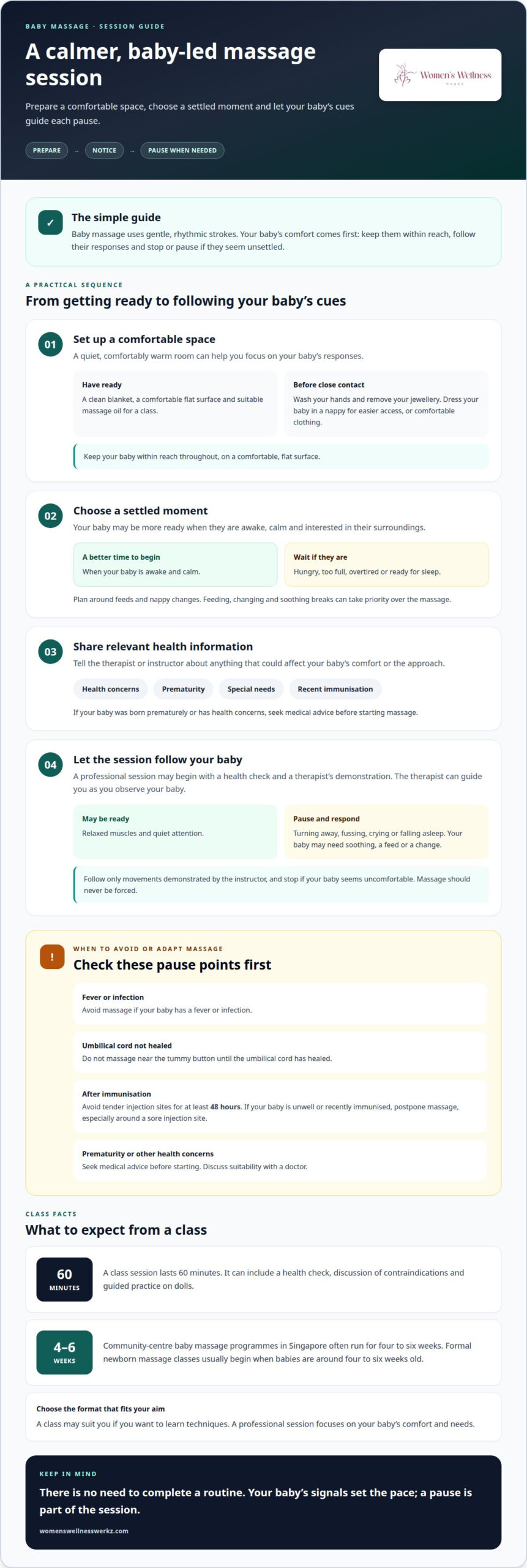
- Recognise when to pause. Avoid massage if your baby has a fever or infection, and don’t massage near the tummy button until the umbilical cord has healed. After immunisation, avoid tender injection sites for at least 48 hours. If your baby was born prematurely or has health concerns, seek medical advice before starting massage.
What to expect on arrival at a baby massage class
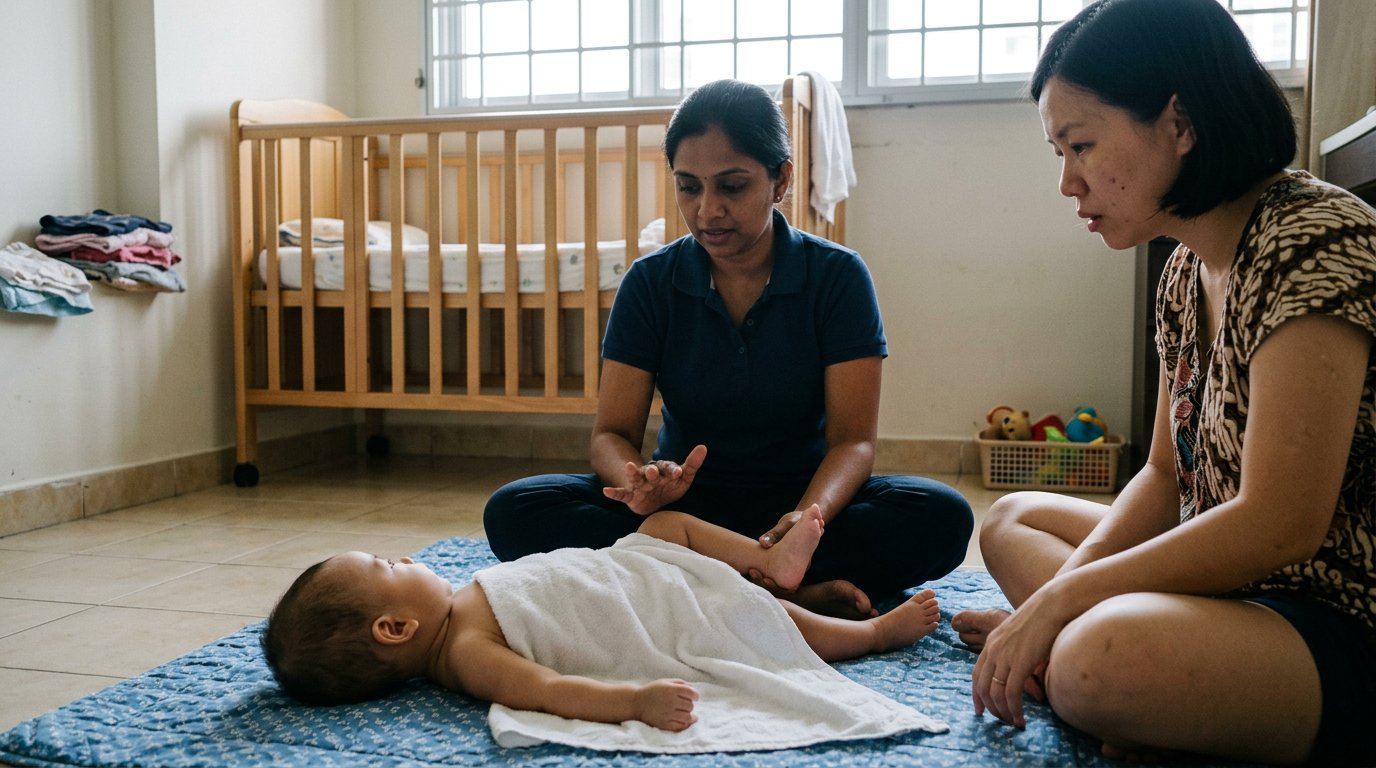
A professional session may begin with a health check, followed by a therapist’s demonstration. The therapist guides you while you observe your baby’s comfort and responses. A class session lasts 60 minutes; bring your baby, a blanket and suitable massage oil.
-
What to Bring and Prepare for a Professional Baby Massage Session
Bring your baby, a blanket and good-quality oil, and dress your baby in a nappy for easier access. Remove your jewellery and wash your hands before close contact. Tell the instructor about health concerns, prematurity or special needs, so the approach can be discussed with appropriate care. If your baby is unwell or recently immunised, postpone massage, especially around a sore injection site.
-
Review class options and duration
Consider the format before choosing: community centres in Singapore offer baby massage programmes that often run for four to six weeks. Each class session lasts 60 minutes. This allows time for a health check, discussion of contraindications and guided practice on dolls. A class may suit you if you want to learn techniques; a professional session focuses on your baby’s comfort and needs.
- Follow your baby’s direction. Notice their face, body and sounds. Relaxed muscles and quiet attention may signal readiness; turning away, fussing or falling asleep means pause. The instructor should soothe a crying baby and never force massage. Feeding and nappy changes can take priority, so allow the session to follow your baby’s needs.
- Ask how movements are adapted. For a baby with special needs, prematurity or health concerns, discuss suitability with a doctor before starting. In class, an instructor may demonstrate strokes on a doll, then guide your practice. Follow only the movements demonstrated by the instructor, and stop if your baby seems uncomfortable.
Bonding between mothers and babies
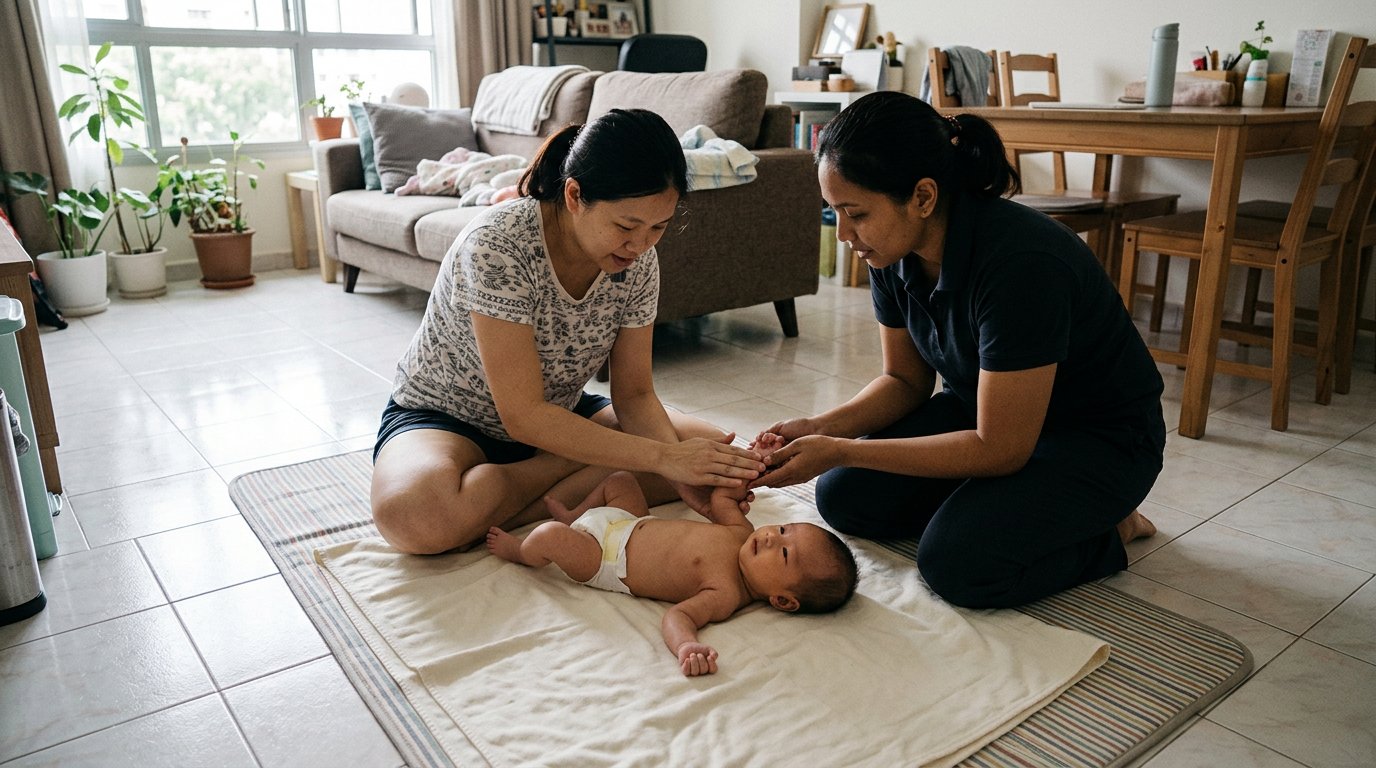
During a professional massage, your attention, voice and gentle touch can help make the experience feel shared. Keep your baby’s responses at the centre, and pause when needed.
- Stay close and attentive. Sit where your baby can see your face during the therapist’s demonstration. Notice whether they look towards you, relax their hands or turn away. These small responses help you understand how your baby is feeling. Your calm presence and the therapist’s gentle guidance make the session a chance to practise attentive communication, not simply watch a sequence of movements.
- Use your voice as part of the interaction. Speak softly, hum or sing while the therapist guides the massage. A familiar lullaby or a few reassuring words can create a gentle rhythm for you and your baby. Pause when your baby looks away or becomes unsettled. Responding to those cues helps your baby experience touch alongside your voice and expressions.
- Let your baby set the pace. Ask the professional to show a movement, then follow their guidance only while your baby seems comfortable. For example, your baby might watch your face during a gentle hand stroke, then need a pause. That pause is part of bonding too: it shows you are responding to your baby’s signals rather than completing a routine.
- Carry the connection into everyday care. After learning with a professional, you can bring the same calm attention to ordinary moments, such as changing or settling your baby. A quiet bedtime cuddle, eye contact and a soft voice can support familiar communication without needing massage. Keep the focus on relaxed interaction; babies vary in how much touch and attention they enjoy.
Massage and infant sleep routines
Gentle massage may become a quiet part of your baby’s routine. Choose a moment when your baby is relaxed and alert, rather than hungry or ready to sleep.
- Choose a settled time. A baby who is awake, calm and interested in their surroundings may be more ready to connect. Avoid starting when your baby is hungry, too full or due for sleep. MAM mentions massage about one hour before or after a meal, or after a bath; treat this as external guidance, not treatment advice, and watch your baby’s responses rather than relying on the clock.
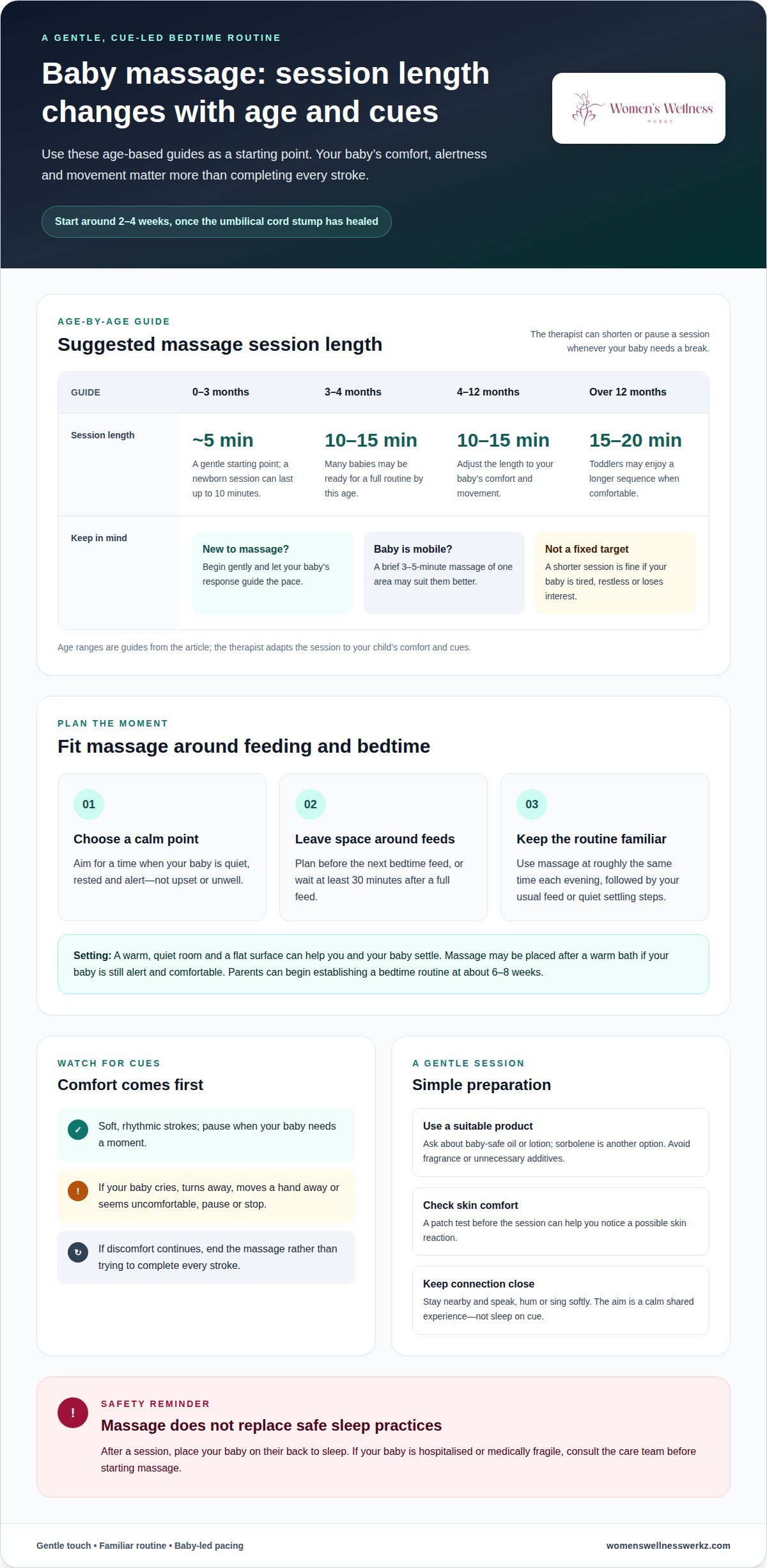
- Keep early practice brief. Begin with two or three minutes once a day, then let your baby’s comfort guide whether to continue. A familiar morning or evening routine can make the movements predictable. Massage is not a replacement for your usual settling routine. Consistency matters more than extending a session when your baby is no longer engaged.
- Allow time after feeding. A 30 to 45-minute wait after a feed is sometimes suggested for babies with reflux, but this is not treatment advice here. If your baby seems unsettled during a session, stop and soothe them instead of continuing the techniques.
- Keep massage separate from bedtime pressure. A gentle session can be part of a relaxed evening, but don’t massage a baby who is already tired or falling asleep. Guidance about combining a bath and massage before 5 months of age, or giving a massage after a bath after 5 months, is not provided here as treatment advice. Follow your baby’s cues, since children respond differently.
Women’s Wellness Werkz
Women’s Wellness Werkz offers massage support for women during pregnancy and after childbirth. If you are preparing for baby massage and also seeking care for your own recovery, its trained therapists deliver established massage protocols at clients’ locations. The Prenatal Massage Package, Post-natal Massage Package and Combo Massage Package may suit your stage of life; Breast Massage is another option for women seeking breast care.
These services focus on your wellbeing and do not replace medical care or infant-specific guidance. Consider them if you want professional support alongside practical preparation for your baby’s session. The team focuses on women’s wellness and recovery, with care tailored to the treatment you choose.
Contact Women’s Wellness Werkz to discuss your needs.
Take the next step at your pace
A newborn infant massage session can be one part of settling into life with your baby. You might start by considering what support would help you as a parent, without expecting every day or routine to go perfectly. A calm conversation can help you think through your needs and what kind of care suits this stage of life.
Women’s Wellness Werkz offers a Post-natal Massage Package, Combo Massage Package and Prenatal Massage Package. Its qualified therapists are trained to deliver the business’s massage protocols, with care tailored to the chosen treatment. These services support women’s wellness during pregnancy and after childbirth, while baby massage remains a separate, infant-focused consideration.
If you’d like to discuss your wellness needs, contact Women’s Wellness Werkz. You can take things one gentle step at a time.
Frequently Asked Questions
When should you start?
Formal baby massage classes in Singapore commonly begin when a baby is around 4 to 6 weeks old. A newborn infant massage session is best planned for a calm, alert moment, rather than when your baby is hungry or overtired. If you’re considering a class, its instructor can explain how demonstrations and practice are paced for young babies.
Why Choose an Infant Massage Therapist in Singapore?
A trained infant massage therapist can guide you through gentle handling and help you recognise when your baby needs a pause. This may be especially helpful before your first massage, when you are still learning how your baby responds to touch. A professional class may also demonstrate techniques on a doll before you practise with your baby.
Are there babies who shouldn’t have massage?
Skip massage when your baby has a fever or infection, and don’t massage near the navel until the umbilical cord has healed. After immunisation, tender injection areas can remain sore, so avoid massaging them for at least 48 hours. If your baby was born prematurely or has health concerns, speak with a doctor before beginning massage.
Do parents need prior experience to attend a class?
You do not need previous massage experience to attend a class. Instructors can demonstrate movements on a baby doll and guide you as you learn. Ask for clarification if a stroke feels unfamiliar, then take time to notice your baby’s response. The aim is to learn at a comfortable pace, not to perform every movement perfectly.
When can a newborn safely start infant massage?
Wait until your baby’s umbilical cord has healed before massaging near the tummy button. Newborns are usually ready for gentle massage from around 4 weeks after birth, provided the navel has healed well. If your baby is unwell, has a fever or has specific health concerns, pause and seek medical advice before starting.
What techniques are used in a newborn massage session?
A newborn infant massage session may include gentle, rhythmic strokes on areas such as the arms, legs, chest and back. For example, chest movements may travel outwards from the centre, then return in a heart shape. The therapist may demonstrate gentle abdominal strokes and adapt the techniques to your baby’s comfort and responses throughout.
For a newborn infant massage session, prepare a comfortable, warm space, a clean blanket and your baby in a nappy or comfortable clothing. Plan around feeds and nappy changes, and tell the therapist about anything that could affect your baby’s comfort.
Massage is generally best when your baby is awake and calm, rather than hungry or overtired. The professional should follow your baby’s cues, pausing if they need soothing, a feed or a change. This guide covers what to prepare, timing and the room, what to expect, and when to avoid massage, such as if your baby has a fever or infection or their umbilical cord has not healed.
Key Takeaways
- Prepare a clean blanket and have your baby comfortably dressed; a calm, warm setting can help the session feel more settled.
- Choose a time when your baby is awake and calm, rather than hungry, overtired or too full.
- Let your baby’s cues guide the pace. Feeding, nappy changes and soothing breaks can be part of the experience.
- Gentle massage may offer a quiet opportunity for comfort and connection, while a professional can guide you on suitable preparation and timing.
What is baby massage?
Baby massage uses gentle, rhythmic strokes on your baby’s body. You can use the time to notice your baby’s responses and keep the experience at a pace that feels comfortable for them.
- Understand what massage involves. Baby massage uses gentle, rhythmic strokes. Your baby’s responses can guide the pace, so keep the focus on their comfort rather than expecting a particular result.
- Choose a calm environment. A quiet, comfortably warm room helps you focus on your baby’s cues. Settle your baby on a comfortable, flat surface and keep them within reach throughout. A peaceful setting also makes it easier for the therapist to pause if your baby becomes unsettled, tired or ready for a feed.
- Use the moment to connect. Look at your baby, speak softly or hum while the therapist demonstrates gentle strokes. Your baby’s expressions, movements and sounds can guide the pace. This shared attention gives you time to focus on your baby, making the experience personal rather than rushed.
- Keep possible benefits in perspective. Each baby responds differently to massage. In Singapore, formal newborn massage classes usually begin when babies are around 4 to 6 weeks old. A newborn infant massage session should suit your baby’s readiness and comfort.
- Recognise when to pause. Avoid massage if your baby has a fever or infection, and don’t massage near the tummy button until the umbilical cord has healed. After immunisation, avoid tender injection sites for at least 48 hours. If your baby was born prematurely or has health concerns, seek medical advice before starting massage.
What to expect on arrival at a baby massage class
A professional session may begin with a health check, followed by a therapist’s demonstration. The therapist guides you while you observe your baby’s comfort and responses. A class session lasts 60 minutes; bring your baby, a blanket and suitable massage oil.
-
What to Bring and Prepare for a Professional Baby Massage Session
Bring your baby, a blanket and good-quality oil, and dress your baby in a nappy for easier access. Remove your jewellery and wash your hands before close contact. Tell the instructor about health concerns, prematurity or special needs, so the approach can be discussed with appropriate care. If your baby is unwell or recently immunised, postpone massage, especially around a sore injection site.
-
Review class options and duration
Consider the format before choosing: community centres in Singapore offer baby massage programmes that often run for four to six weeks. Each class session lasts 60 minutes. This allows time for a health check, discussion of contraindications and guided practice on dolls. A class may suit you if you want to learn techniques; a professional session focuses on your baby’s comfort and needs.
- Follow your baby’s direction. Notice their face, body and sounds. Relaxed muscles and quiet attention may signal readiness; turning away, fussing or falling asleep means pause. The instructor should soothe a crying baby and never force massage. Feeding and nappy changes can take priority, so allow the session to follow your baby’s needs.
- Ask how movements are adapted. For a baby with special needs, prematurity or health concerns, discuss suitability with a doctor before starting. In class, an instructor may demonstrate strokes on a doll, then guide your practice. Follow only the movements demonstrated by the instructor, and stop if your baby seems uncomfortable.
Bonding between mothers and babies
During a professional massage, your attention, voice and gentle touch can help make the experience feel shared. Keep your baby’s responses at the centre, and pause when needed.
- Stay close and attentive. Sit where your baby can see your face during the therapist’s demonstration. Notice whether they look towards you, relax their hands or turn away. These small responses help you understand how your baby is feeling. Your calm presence and the therapist’s gentle guidance make the session a chance to practise attentive communication, not simply watch a sequence of movements.
- Use your voice as part of the interaction. Speak softly, hum or sing while the therapist guides the massage. A familiar lullaby or a few reassuring words can create a gentle rhythm for you and your baby. Pause when your baby looks away or becomes unsettled. Responding to those cues helps your baby experience touch alongside your voice and expressions.
- Let your baby set the pace. Ask the professional to show a movement, then follow their guidance only while your baby seems comfortable. For example, your baby might watch your face during a gentle hand stroke, then need a pause. That pause is part of bonding too: it shows you are responding to your baby’s signals rather than completing a routine.
- Carry the connection into everyday care. After learning with a professional, you can bring the same calm attention to ordinary moments, such as changing or settling your baby. A quiet bedtime cuddle, eye contact and a soft voice can support familiar communication without needing massage. Keep the focus on relaxed interaction; babies vary in how much touch and attention they enjoy.
Massage and infant sleep routines
Gentle massage may become a quiet part of your baby’s routine. Choose a moment when your baby is relaxed and alert, rather than hungry or ready to sleep.
- Choose a settled time. A baby who is awake, calm and interested in their surroundings may be more ready to connect. Avoid starting when your baby is hungry, too full or due for sleep. MAM mentions massage about one hour before or after a meal, or after a bath; treat this as external guidance, not treatment advice, and watch your baby’s responses rather than relying on the clock.
- Keep early practice brief. Begin with two or three minutes once a day, then let your baby’s comfort guide whether to continue. A familiar morning or evening routine can make the movements predictable. Massage is not a replacement for your usual settling routine. Consistency matters more than extending a session when your baby is no longer engaged.
- Allow time after feeding. A 30 to 45-minute wait after a feed is sometimes suggested for babies with reflux, but this is not treatment advice here. If your baby seems unsettled during a session, stop and soothe them instead of continuing the techniques.
- Keep massage separate from bedtime pressure. A gentle session can be part of a relaxed evening, but don’t massage a baby who is already tired or falling asleep. Guidance about combining a bath and massage before 5 months of age, or giving a massage after a bath after 5 months, is not provided here as treatment advice. Follow your baby’s cues, since children respond differently.
Women’s Wellness Werkz
Women’s Wellness Werkz offers massage support for women during pregnancy and after childbirth. If you are preparing for baby massage and also seeking care for your own recovery, its trained therapists deliver established massage protocols at clients’ locations. The Prenatal Massage Package, Post-natal Massage Package and Combo Massage Package may suit your stage of life; Breast Massage is another option for women seeking breast care.
These services focus on your wellbeing and do not replace medical care or infant-specific guidance. Consider them if you want professional support alongside practical preparation for your baby’s session. The team focuses on women’s wellness and recovery, with care tailored to the treatment you choose.
Contact Women’s Wellness Werkz to discuss your needs.
Take the next step at your pace
A newborn infant massage session can be one part of settling into life with your baby. You might start by considering what support would help you as a parent, without expecting every day or routine to go perfectly. A calm conversation can help you think through your needs and what kind of care suits this stage of life.
Women’s Wellness Werkz offers a Post-natal Massage Package, Combo Massage Package and Prenatal Massage Package. Its qualified therapists are trained to deliver the business’s massage protocols, with care tailored to the chosen treatment. These services support women’s wellness during pregnancy and after childbirth, while baby massage remains a separate, infant-focused consideration.
If you’d like to discuss your wellness needs, contact Women’s Wellness Werkz. You can take things one gentle step at a time.
Frequently Asked Questions
When should you start?
Formal baby massage classes in Singapore commonly begin when a baby is around 4 to 6 weeks old. A newborn infant massage session is best planned for a calm, alert moment, rather than when your baby is hungry or overtired. If you’re considering a class, its instructor can explain how demonstrations and practice are paced for young babies.
Why Choose an Infant Massage Therapist in Singapore?
A trained infant massage therapist can guide you through gentle handling and help you recognise when your baby needs a pause. This may be especially helpful before your first massage, when you are still learning how your baby responds to touch. A professional class may also demonstrate techniques on a doll before you practise with your baby.
Are there babies who shouldn’t have massage?
Skip massage when your baby has a fever or infection, and don’t massage near the navel until the umbilical cord has healed. After immunisation, tender injection areas can remain sore, so avoid massaging them for at least 48 hours. If your baby was born prematurely or has health concerns, speak with a doctor before beginning massage.
Do parents need prior experience to attend a class?
You do not need previous massage experience to attend a class. Instructors can demonstrate movements on a baby doll and guide you as you learn. Ask for clarification if a stroke feels unfamiliar, then take time to notice your baby’s response. The aim is to learn at a comfortable pace, not to perform every movement perfectly.
When can a newborn safely start infant massage?
Wait until your baby’s umbilical cord has healed before massaging near the tummy button. Newborns are usually ready for gentle massage from around 4 weeks after birth, provided the navel has healed well. If your baby is unwell, has a fever or has specific health concerns, pause and seek medical advice before starting.
What techniques are used in a newborn massage session?
A newborn infant massage session may include gentle, rhythmic strokes on areas such as the arms, legs, chest and back. For example, chest movements may travel outwards from the centre, then return in a heart shape. The therapist may demonstrate gentle abdominal strokes and adapt the techniques to your baby’s comfort and responses throughout.