Lactation massage uses gentle, controlled hands-on movements to ease the feeling of fullness and support milk movement; it doesn’t increase milk supply on its own or replace regular feeding and effective breast emptying. If you’re looking into lactation massage in Singapore, this guide explains what the treatment involves, how it may help with engorgement, and when you might book after delivery, including why breast massage should feel gentle rather than forceful. You’ll also learn what to expect during a session with Women’s Wellness Werkz and when breast symptoms call for medical attention instead, so you can make a calm, informed choice about the support that feels right for you.
Key Takeaways
- Understand how gentle breast massage may ease fullness, and why it cannot replace regular feeding and effective milk removal.
- Learn when massage may be considered after delivery and what to keep in mind when preparing for breastfeeding.
- Recognise symptoms that need medical attention before massage is considered for breast discomfort.
- See how a session can be adapted to your recovery needs and which Women’s Wellness Werkz massage options may be relevant.
Can Breast Massage Help Increase Milk Supply?
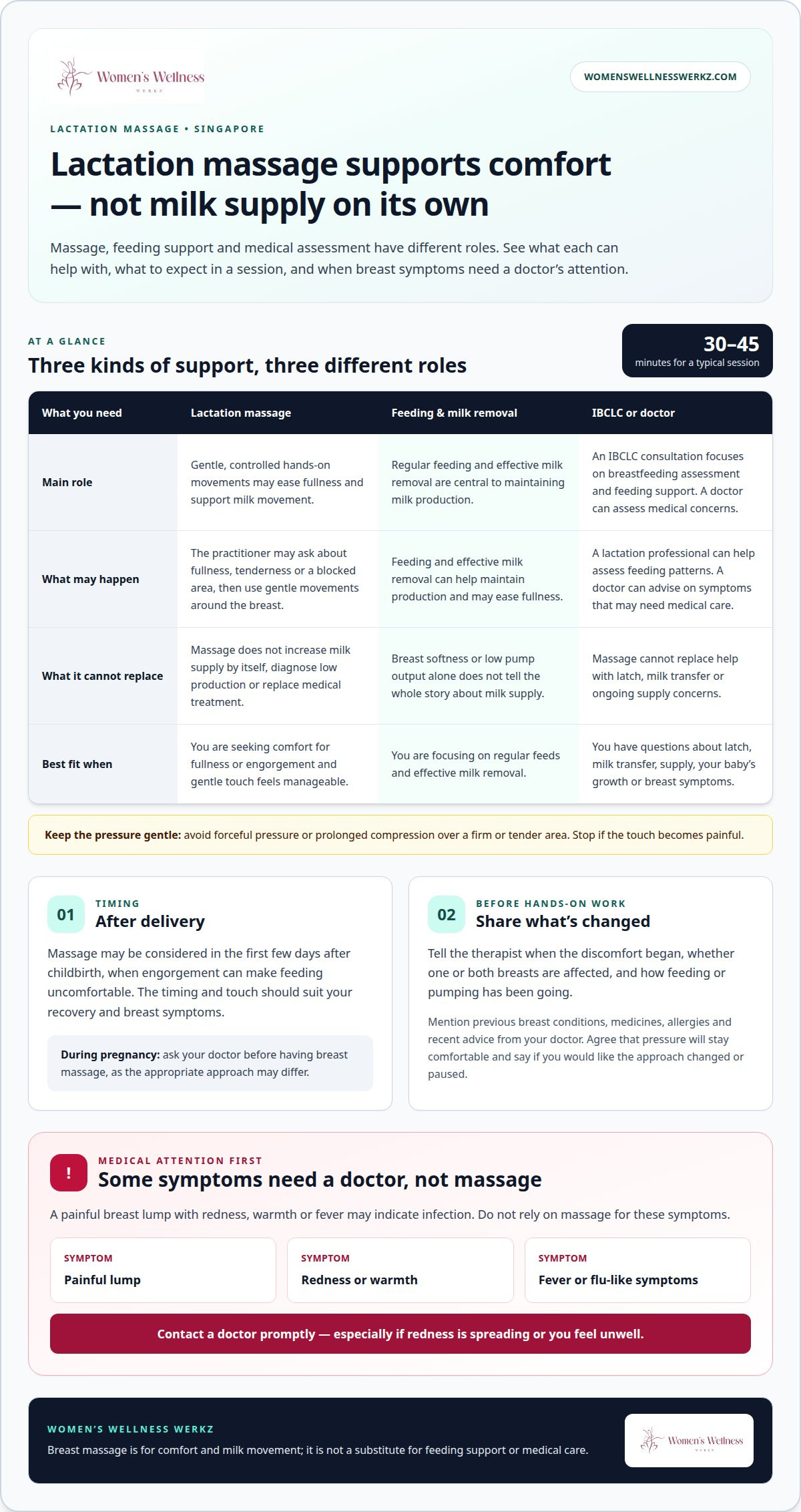
Breast massage may support comfort, but it should not be relied on by itself to address milk-supply concerns. Regular feeding and effective milk removal are central to maintaining production. If your supply feels low, consider whether your baby is latching well and transferring milk during feeds. Milk transfer and your baby’s weight gain offer useful context; breast softness or low output from a pump alone does not tell the whole story. A doctor or lactation professional can assess feeding patterns and your baby’s growth.
For a plugged duct or firm area, gentle, controlled movements may support milk movement. Avoid forceful pressure or prolonged compression. Pressure can compress milk ducts, while prolonged compression may contribute to milk stasis and blocked ducts. Radiofrequency therapy is device-based, not massage. Don’t rely on it to clear plugged ducts or improve milk supply without discussing it with a doctor.
Massage during breastfeeding should remain gentle and should not replace feeding or medical care. During pregnancy, ask your doctor before having breast massage, as the appropriate approach may differ. A painful breast lump with redness, warmth or fever needs medical attention, as these signs may indicate infection. Spreading redness or flu-like symptoms also warrant prompt medical advice.
When choosing a lactation massage therapist, look for recognised training, breastfeeding experience and a gentle approach. The therapist should explain the session, respect your comfort and refer concerns such as possible infection to a doctor. Massage may support comfort, but it cannot replace help with latch, milk transfer or ongoing supply concerns.
How soon after delivery can I book a breast massage for engorgement?
Breast massage may be considered in the first few days after childbirth, when engorgement can make feeding uncomfortable. The timing and touch should suit your recovery and breast symptoms.
Engorgement and Blocked-Duct Support
Engorgement can occur as milk supply rises, leaving breasts overly full or tight. Gentle techniques may ease discomfort and support milk movement, but massage does not increase production by itself. Traditional Malay breast massage may be considered as part of breastfeeding preparation or postpartum care. Ask what movements and pressure will be used, and stop if the touch becomes painful.
Engorgement Prevention and Treatment
Regular feeding and effective milk removal help maintain milk production and may ease fullness. Massage can be used before or during feeding when milk does not release easily. The let-down reflex is the body’s response that releases milk; stress may hinder it. Gentle touch may help you relax, but avoid forceful pressure on a firm area.
Choose a therapist with recognised training in breastfeeding support and gentle breast techniques. Women’s Wellness Werkz offers breast massage for postpartum engorgement in Singapore. Massage is not a substitute for medical assessment when symptoms suggest infection.
Whether Singapore insurance or postnatal care benefits cover lactation massage depends on your policy wording. Review the relevant benefit terms and exclusions, including any requirements for documentation. Coverage cannot be assumed from the treatment name alone.
If a breast becomes red, hot and painful, or you develop a fever or flu-like symptoms, contact a doctor promptly. These signs may need medical attention rather than massage. For a plugged duct, notice whether discomfort changes after feeding and avoid deep pressure that may worsen tenderness.
Pre-session consultation and medical history
Before a session, discuss your postpartum recovery and breast symptoms so the therapist can tailor the touch. Explain when the discomfort began, whether one or both breasts are affected, and how feeding or pumping has been going. Mention previous breast conditions, medicines, allergies and any recent advice from your doctor. These details help shape the session around your needs.
A lactation massage session focuses on hands-on comfort and milk movement; an IBCLC lactation consultation focuses on breastfeeding assessment and feeding support. Massage does not diagnose low milk production, assess your baby’s milk transfer or replace medical treatment. If those are your concerns, a lactation consultation or doctor’s assessment can address needs beyond massage.
A painful lump with redness, warmth or fever can indicate mastitis or infection and needs medical attention. Fever, flu-like symptoms or spreading redness are reasons to see a doctor before relying on massage. Gentle touch may be unsuitable if it causes pain; avoid forceful pressure over blocked or tender areas. Tell the therapist about these symptoms before any hands-on work begins.
Before the session, note your feeding pattern, symptoms and questions about milk production. Tell the therapist if your breasts feel full, lumpy or painful, and agree that pressure should remain comfortable. Session length may vary, so ask the therapist what to expect when booking. Afterwards, notice how your breasts feel during feeding or pumping, and seek further help if symptoms worsen or persist.
Sessions can be adapted to your stage of postnatal recovery, so mention it before treatment begins. Describe what feels manageable today and whether you would prefer the therapist to avoid particular areas or types of touch. Ask how the planned approach can be adjusted for your comfort and agree on a clear way to pause or change it if needed.
Your needs may differ from one visit to another, so explain any changes in comfort or preference before hands-on work starts. A clear conversation about what feels acceptable helps you and the therapist set expectations and keep the approach aligned with your recovery stage.
Lactation massage and hands-on treatment
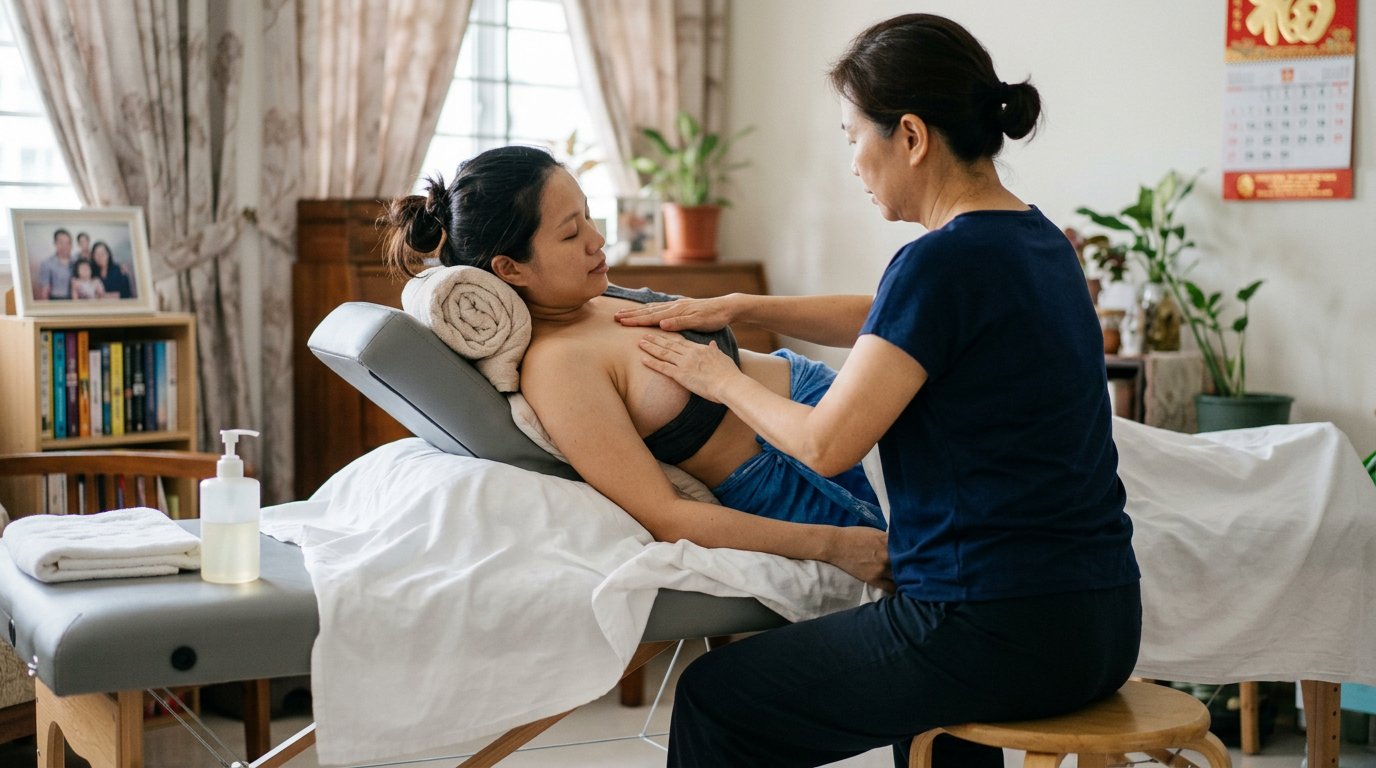
A lactation massage session uses gentle, controlled touch to support comfort and milk movement. The approach should be tailored to your postpartum stage, feeding pattern and comfort.
Hands-On Treatment Components
A typical Singapore session lasts 30 to 45 minutes. The practitioner may discuss fullness, tenderness or a blocked area, then use gentle movements around the breast. The aim is comfort and easier milk movement, not forcefully pushing a blockage through. Pressure should remain comfortable, and you can ask for a pause or change at any point.
Massage may be used before or during feeding or pumping when milk does not release easily. If an area feels painful, avoid deep kneading, as pressure can compress milk ducts. A warm compress beforehand may help relax tissue, while feeding or pumping remains central to milk removal. Ask the practitioner to explain each technique before hands-on care begins.
Session Duration
The 30 to 45 minutes may include a brief discussion and hands-on care. Tell the practitioner whether you want support before a feed, during pumping or for general fullness. A certified title alone does not explain the techniques used, so ask how the approach will be adapted to your symptoms and comfort.
One session may not resolve every breastfeeding concern. Afterwards, notice whether your breast feels more comfortable and whether milk releases during the next feed or pumping session. Worsening pain, redness, fever or flu-like symptoms call for medical advice rather than further massage. This distinction helps keep hands-on support within its role.
If gentle, postpartum breast support suits your needs, book a Breast Massage for attentive hands-on care.
Women’s Wellness Werkz
Women’s Wellness Werkz offers massage support for women during pregnancy and postpartum recovery, including breast massage. You might consider breast massage when fullness feels uncomfortable or when you want hands-on care alongside your usual feeding routine. Massage may support comfort and milk movement, but it cannot increase milk supply on its own or replace effective feeding and medical care.
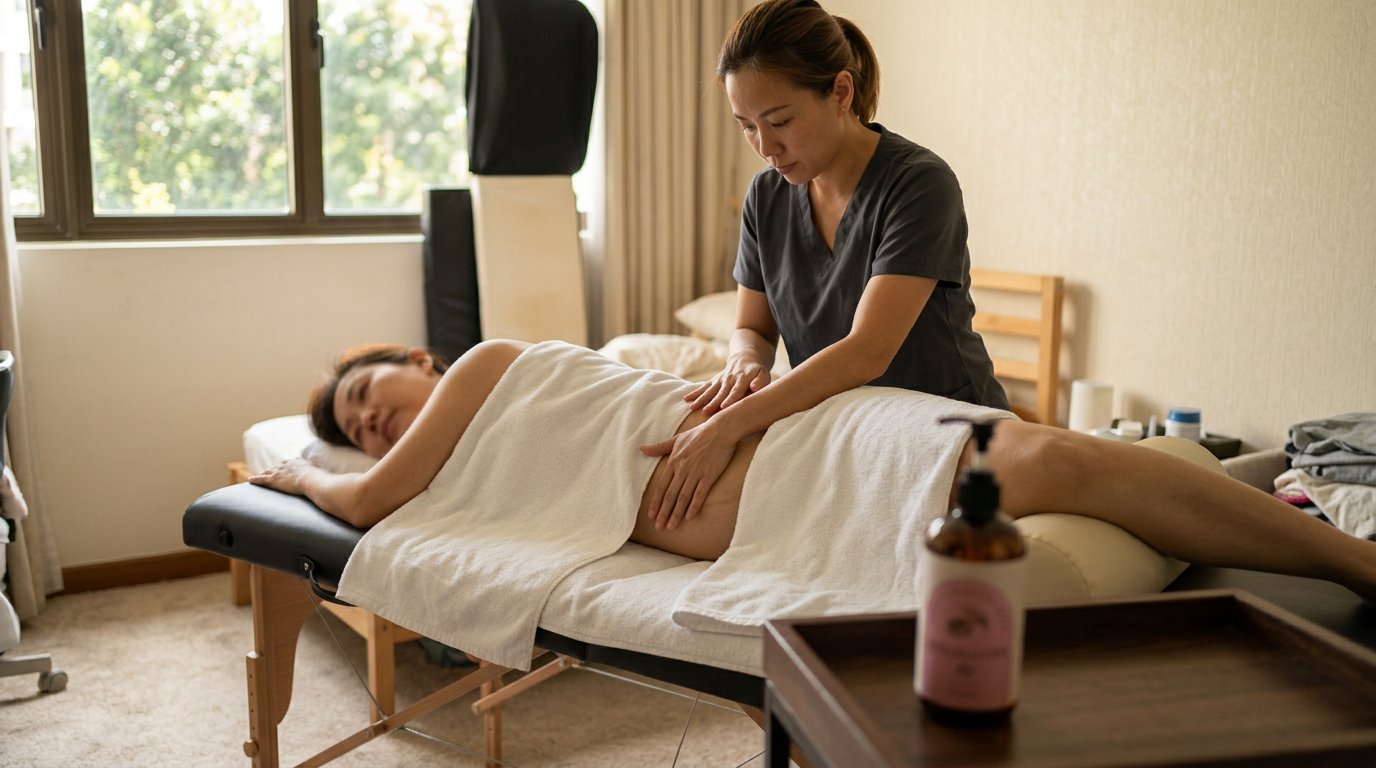
The right support depends on your needs at this stage. Breast Massage focuses on breast comfort, while the Postnatal Massage Package and Combo Massage Package offer other massage options during postpartum recovery. The Prenatal Massage Package is for pregnancy, not post-delivery engorgement. These services address different stages and needs, so choose according to your situation.
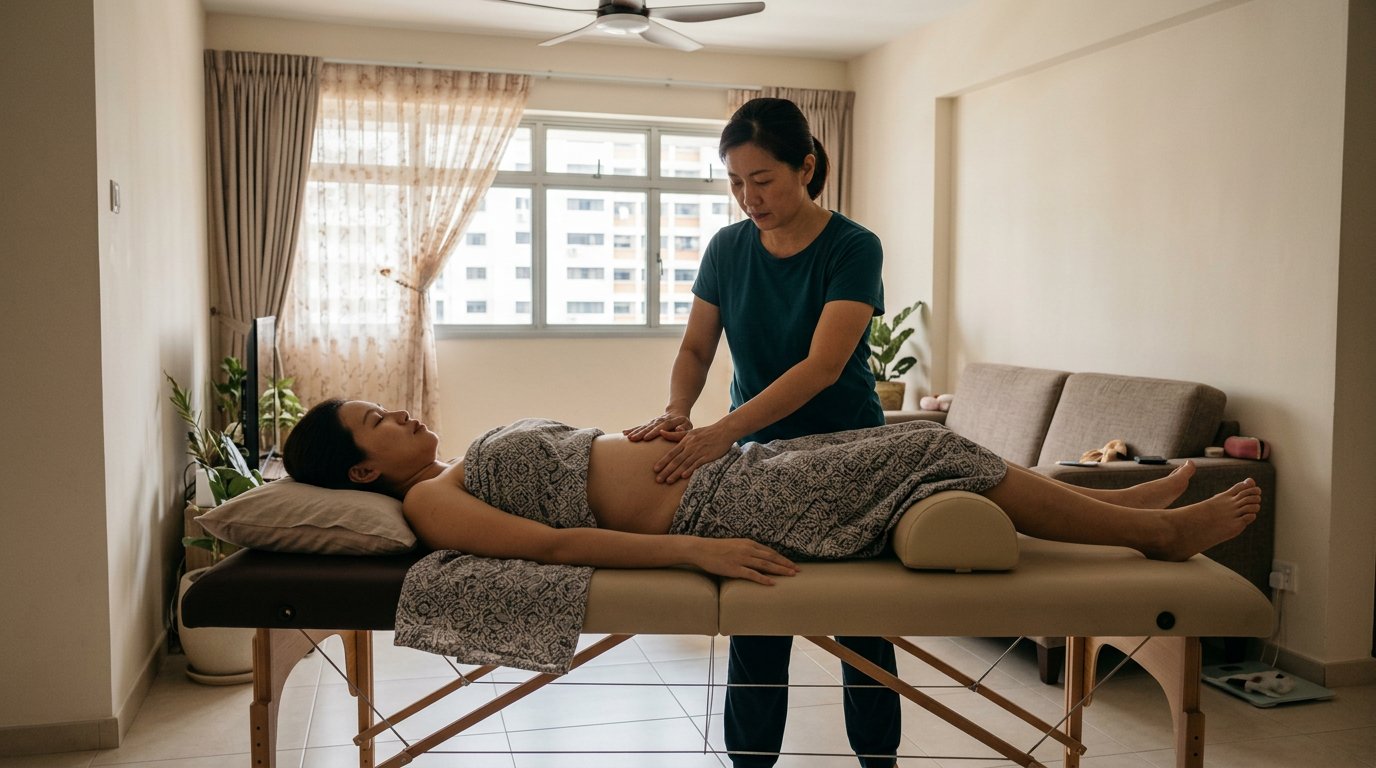
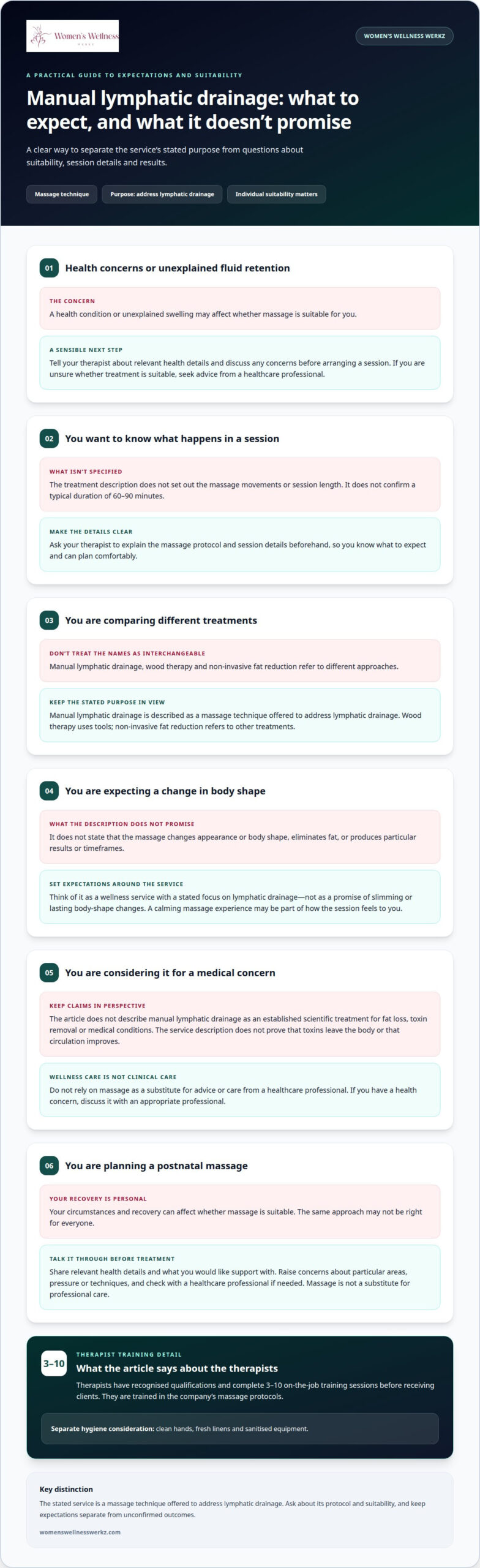
Therapists are qualified and trained to deliver the business’s massage protocols. Their on-the-job training lasts 3-10 sessions before they are assigned clients. Therapists perform massages at clients’ locations, which can make receiving care at home more convenient during a demanding recovery period. The approach can be personalised to your needs and comfort.
Before a session, describe concerns such as tightness, tenderness or difficulty feeling milk release. Explain whether you are breastfeeding or pumping and what kind of touch feels comfortable. Gentle massage may support comfort, but it does not assess milk transfer or diagnose infection. A painful lump with redness, warmth or fever needs medical attention, not massage alone.
If you’re looking for massage support suited to your pregnancy or postpartum needs, Women’s Wellness Werkz offers several relevant options. Discuss your needs with the team to choose a suitable service.
Choose support that fits your next step
If you’re considering lactation massage in Singapore, choose support that suits your stage of recovery. Women’s Wellness Werkz offers Breast Massage alongside the Postnatal Massage Package, Combo Massage Package and Prenatal Massage Package. Its women’s wellness experience can help you consider which option fits your needs and preferences.
Before arranging care, think about what would make a session feel comfortable and useful for you. You might want to discuss your postpartum stage, preferred pressure or how hands-on care fits around feeding. A clear conversation can help you make a considered choice, without adding pressure to an already full season of life. Take the next step at your own pace. Contact Women’s Wellness Werkz to discuss your care options.
Frequently Asked Questions
What is a lactation massage?
Lactation massage is gentle, breast-focused touch intended to support comfort and milk movement during breastfeeding or pumping. For example, a practitioner may adjust the touch if one area feels fuller than the rest. Massage does not increase milk production on its own and does not replace feeding support or medical assessment when symptoms are concerning.
Is engorgement the same as a blocked milk duct?
No. Engorgement usually means broader breast fullness or tightness, while a blocked duct may feel like a more localised firm or lumpy area. The two can be uncomfortable and may overlap. Notice whether the feeling is widespread or concentrated in one spot, but seek medical advice for a painful lump with redness, warmth, fever or flu-like symptoms.
What is lactation massage and how does it work?
It involves gentle, controlled movements around the breasts, sometimes before or during feeding or pumping. Gentle breast massage may help ease discomfort when breasts feel overly full, but it is not a way to increase milk production on its own. The let-down reflex releases milk, and feeling tense can make release harder. A warm compress before feeding may help the breast tissue relax, while effective milk removal remains central.
How do I choose a qualified lactation massage therapist in Singapore?
Look for recognised training, breastfeeding experience and a gentle approach. The therapist should explain the techniques, respect your comfort and refer symptoms that may indicate infection to a doctor.