Womb Care Massage in Singapore for Postpartum Recovery

Womb Care Massage in Singapore for Postpartum Recovery

Womb care massage in Singapore generally refers to focused abdominal massage used in some postpartum wellness practices, whilst full-body postnatal massage works across broader areas of the body. These treatments are not interchangeable: womb massage centres on the abdomen as a focused treatment, while a full-body session is intended to address comfort and tension across the body; neither should be confused with medical uterine massage used after childbirth.

If you’re considering womb care massage Singapore, it helps to understand what the treatment involves and when postpartum massage may be appropriate. This guide explains what womb massage involves, how it differs from full-body postnatal massage, and what to consider before a session, so you can make an informed choice that feels right for your body and recovery.

Key Takeaways

  • Learn how traditional postpartum routines may include daily womb massage in the initial weeks, with frequency easing as recovery progresses.
  • Understand why timing matters: postpartum womb massage is delayed until stitches have healed, bleeding has decreased significantly and you feel physically and emotionally ready.
  • See why traditional use and limited scientific evidence are different considerations when deciding whether this treatment suits you.
  • Compare the timing and focus of womb massage with full-body postnatal massage, which is usually offered 1-2 weeks after delivery with medical clearance.

What is Womb Massage Therapy?

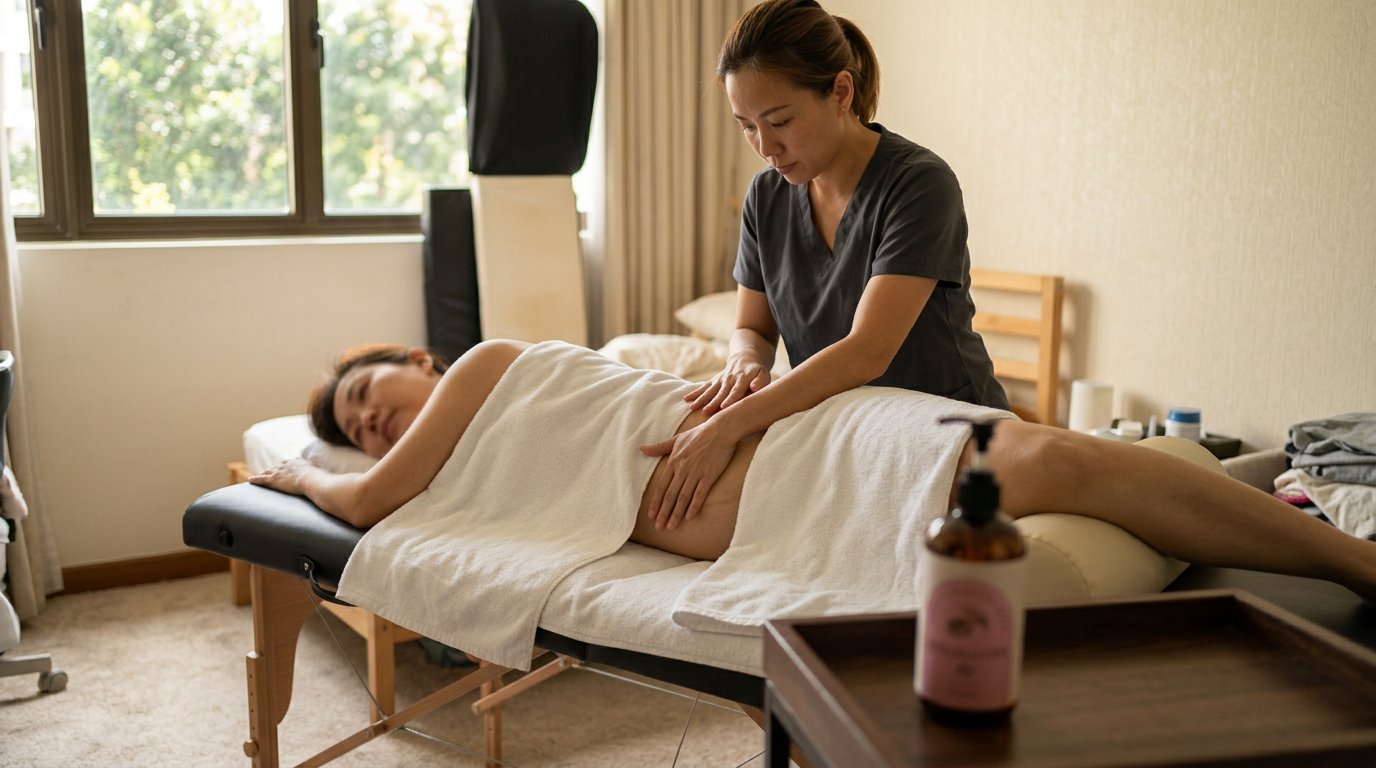
Womb massage is a focused abdominal treatment associated with traditional postpartum care. A practitioner massages around the abdomen to encourage relaxation and ease tension. It is a wellness treatment, not the medical uterine massage used shortly after childbirth to help prevent excessive bleeding.

The treatment description does not set a recommended massage frequency or schedule. If you are considering a session, ask the provider about the approach and discuss what feels comfortable for you. The description does not state when after childbirth you may begin treatment or set eligibility criteria. Ask the provider about these details before booking.

The description does not specify how womb massage relates to fertility treatment or whether it is suitable alongside IVF or IUI. If you are receiving fertility treatment, discuss the proposed massage with your healthcare provider. The description does not say that womb massage is a substitute for medical care.

The treatment description does not list circumstances in which massage should be avoided, or provide information about massage-related risks. Ask the provider about any concerns you have before a session. The description does not give details about practitioner credentials, so you can ask the provider about their training, experience and qualifications.

Providers may work at a wellness centre or offer massage at clients’ locations, so check whether the service focuses on postpartum abdominal care. The treatment description does not set eligibility rules or provide guidance on recovery stage, symptoms or fertility treatment. Share relevant health concerns with the provider before a session, and ask whether the treatment is suitable for you.

Evidence and traditional postpartum practices

Postpartum care may involve different forms of support, including wellness massage. A wellness massage is not a diagnosis or treatment for a reproductive health condition. Claims about abdominal massage restoring the uterus or improving circulation should not be taken as established outcomes. If you are considering massage after childbirth, you can ask what the treatment involves and what it is intended to support.

Medical care and wellness massage are separate. A massage protocol describes the techniques used to deliver a service; it does not establish a medical purpose or outcome. Traditional explanations may also describe postpartum massage in particular ways, but they should not be treated as evidence that massage changes the body. Keeping these distinctions clear can help you assess information about postpartum care and decide what questions to ask.

Traditional postpartum routines and the explanations associated with them can vary. If you are considering a practice because of a family custom or personal preference, ask the provider to explain what the session involves. Do not assume that massage affects fertility, hormones or blood flow. If you have a symptom, fertility concern or postpartum complication, discuss it with a healthcare professional before deciding whether massage is appropriate for you.

Vaginal fumigation is the process of directing herb-infused steam or heat through the vagina. It is a separate practice from massage, and the terms should not be used interchangeably. Do not assume that Vaginal fumigation improves reproductive health. If a symptom, fertility concern or postpartum complication is why you are considering a treatment, discuss it with a healthcare professional.
Womb Care Massage in Singapore for Postpartum Recovery

What postpartum womb massage involves

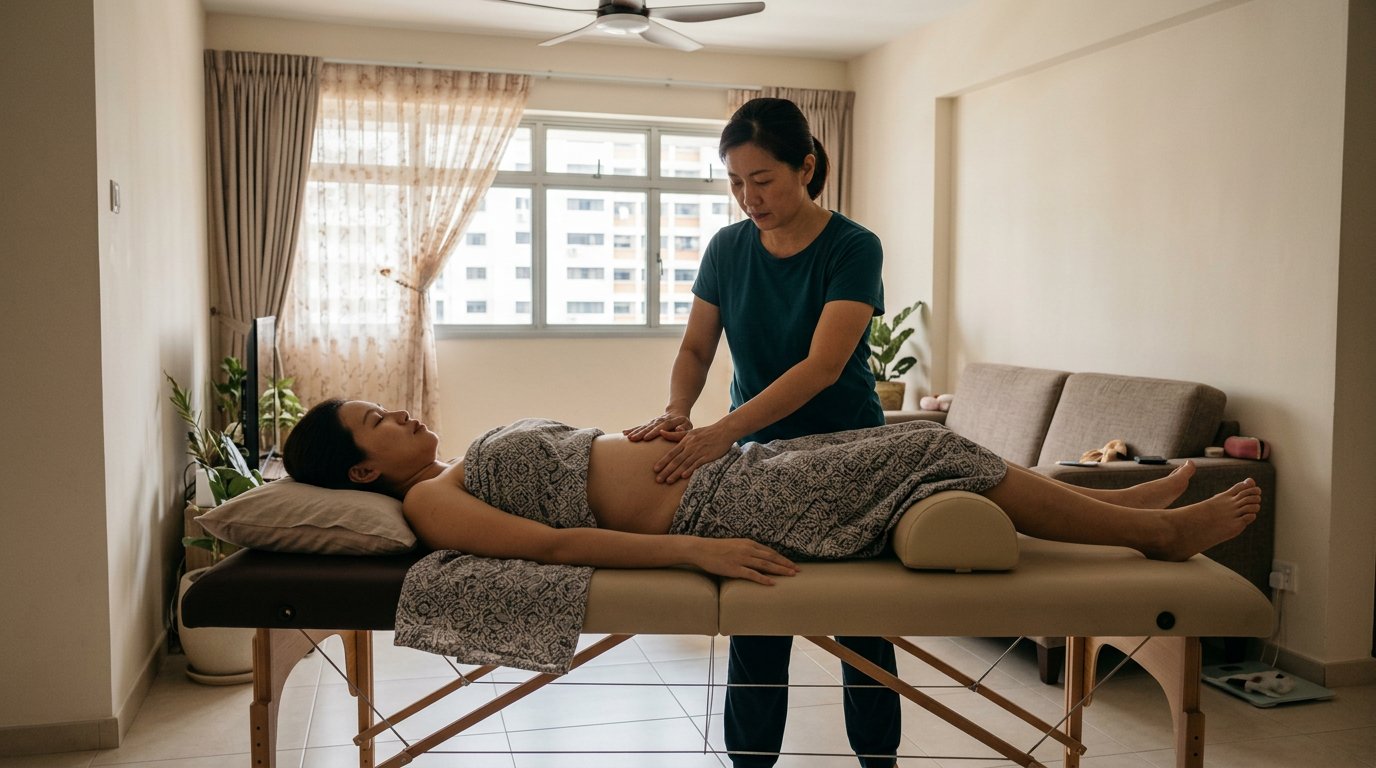
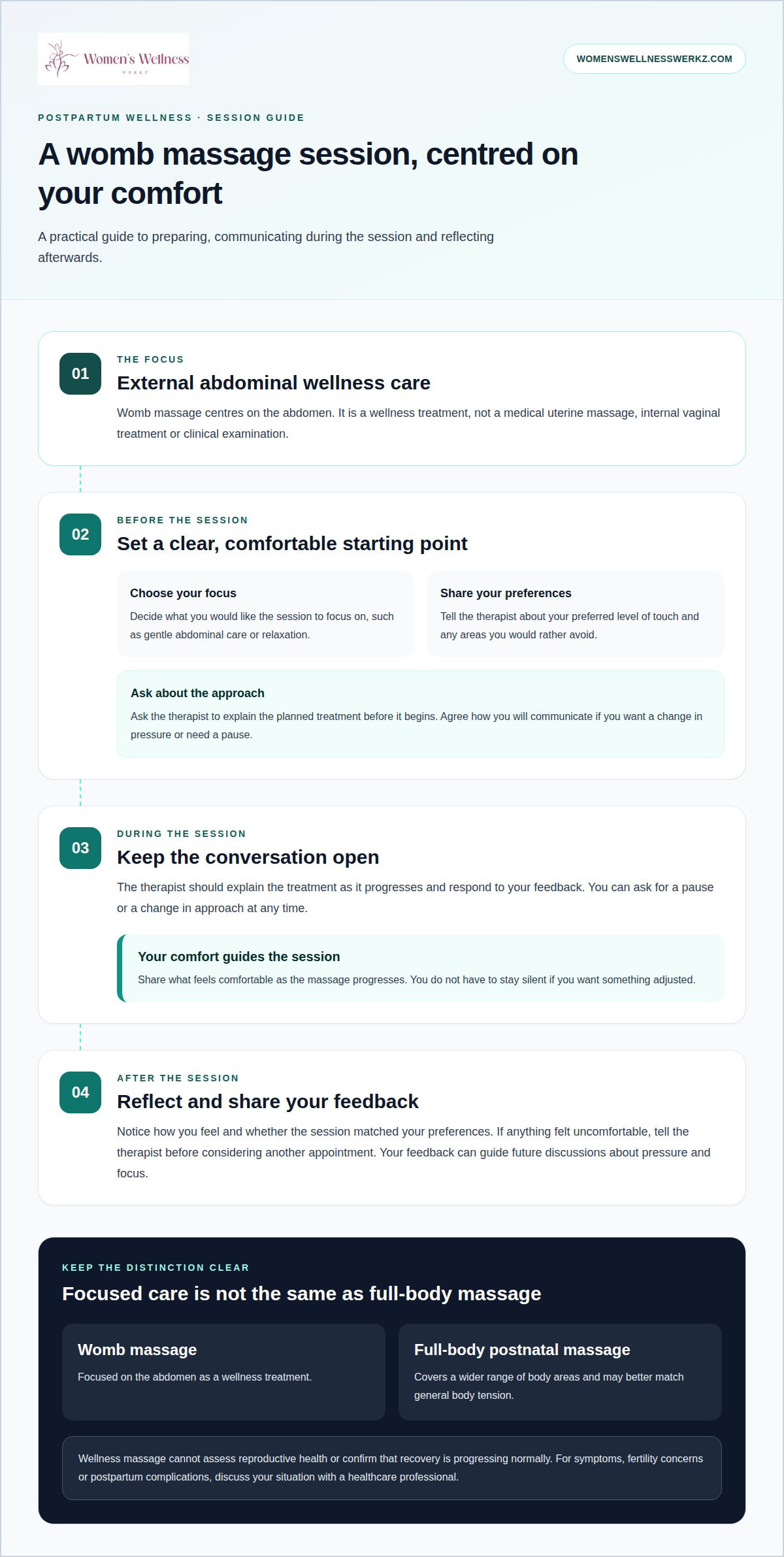
A postpartum womb massage session centres on abdominal wellness care. You can discuss your comfort, priorities and preferred level of touch with the therapist.

Preparing for a Session

Before your appointment, decide what you hope the session will focus on, such as gentle abdominal care or relaxation. Tell the therapist about your preferences and any areas you would rather avoid. This gives you both a clear starting point and keeps the treatment centred on your comfort.

Ask the therapist to explain the planned approach before the session begins. Agree on how you’ll communicate if you want the pressure changed or need a pause. Clear expectations help you take part in decisions about your care, rather than having to guess what will happen next.

During the session, the therapist should explain the treatment as it progresses and respond to your feedback. You can ask for a pause or a change in approach at any time. The focus is external abdominal massage, not an internal vaginal treatment or clinical examination. The session should be a conversation about comfort, not something you have to endure in silence.

After the Session

Afterwards, take a moment to notice how you feel and whether the session matched your preferences. If anything felt uncomfortable, tell the therapist before considering another appointment. Your feedback can guide future discussions about pressure and treatment focus. Keep expectations grounded: wellness massage cannot assess reproductive health or confirm that recovery is progressing normally.

You can discuss the session’s focus and your preferred level of touch with the therapist. The massage is external abdominal care, and you can ask for a pause or change in approach at any time.

Womb massage compared with full-body postnatal massage

The main difference is the area receiving attention. Womb massage focuses on the abdomen, while full-body postnatal massage covers a wider range of body areas. This distinction can help you decide what to discuss with a therapist. Focused abdominal care may suit your priorities; a broader session may better match general body tension.

Think about where you feel tension rather than choosing by the treatment name alone. If you mainly want attention around your abdomen, a focused approach better matches that priority. If discomfort spans your shoulders, back and legs, a full-body treatment covers a broader area. Describing your needs helps set a useful focus for the session.

The experience also differs in how much of the body is addressed. Abdominal massage concentrates touch in one area, while a full-body session distributes attention across several areas. Neither approach is automatically more suitable. Your comfort with abdominal touch, the areas you want addressed and your recovery needs all shape the decision.

Before deciding, state your main goal plainly: focused abdominal care, or wider relaxation and attention to body tension. Note which areas feel sensitive and which you would like included. This gives the therapist practical guidance for discussing the treatment focus, instead of relying on assumptions about what either massage can achieve.

Choose the approach that best matches your current priority. A full-body session is not simply a longer version of abdominal massage, and focused care does not address every area of tension. The useful distinction is the treatment area and your comfort with it. Clear expectations help you decide which type of postnatal massage feels more appropriate.

Women’s Wellness Werkz

Women’s Wellness Werkz offers postnatal massage to support your wider recovery, with care shaped around your comfort and needs. Its Postnatal Massage Package and Combo Massage Package are options to consider if you want massage support after childbirth. These are wellness services, not treatments for reproductive health conditions.

Your conversation with a therapist can cover what you’re hoping to address, such as general body tension or the kind of relaxation you need. Share your recovery stage, any areas of discomfort, and relevant health concerns before the session. This helps the therapist understand your priorities and deliver the company’s massage protocols with appropriate attention to your comfort.

Therapists are qualified and trained to deliver these protocols. Their therapist training includes 3-10 on-the-job sessions before they are assigned clients. Massage sessions take place at clients’ locations, which may make it easier to receive care in a familiar setting while you’re adjusting to life after birth.

Massage is wellness support, not medical obstetric or gynaecological care. If you have ongoing bleeding, uterine concerns or another medical issue, seek medical guidance before arranging postnatal massage. When you’re ready to consider a session, explain your needs and recovery clearly so the therapist can keep your comfort in mind. The right choice is one that fits your current needs without promising a particular recovery result.

Contact Women’s Wellness Werkz to discuss postpartum massage options.

Frequently Asked Questions

How it works?

A therapist-led session is shaped around your stated comfort and recovery priorities. Before the massage begins, agree on the area in focus and how you’ll signal if you want the pressure changed. You can ask for a pause if a movement feels uncomfortable. This shared approach keeps your preferences clear throughout the session, rather than treating it as a fixed routine.

How many sessions are recommended?

There isn’t one session count that applies to every woman. Women’s Wellness Werkz offers a three-session Postnatal Massage Package; this is a package format, not a medical recommendation for womb massage. When considering a plan, distinguish between choosing a package and deciding how many sessions suit your recovery. Your comfort and changing needs matter more than completing a set number.

Should You Eat or Drink Beforehand?

Choose familiar food and drink that leave you comfortable before the appointment. If you take medication with food, follow its instructions rather than changing your routine for massage. Let the practitioner know if nausea or abdominal sensitivity affects your comfort. That gives them useful context for discussing the session without asking you to follow a special diet or skip a meal.

What is womb care massage in Singapore, and what does it involve?

The term describes a wellness approach to abdominal massage after childbirth, rather than a formal medical procedure. The phrase alone doesn’t define the exact sequence or pressure used. For a practical understanding, focus on the treatment area and whether the approach reflects your comfort. Women’s Wellness Werkz offers postnatal massage options, separate from medical reproductive care.

How much does womb care massage cost in Singapore, and what packages are available?

Women’s Wellness Werkz offers a Postnatal Massage Package and a Combo Massage Package. The package names describe service formats, not guaranteed results or medical treatment. If you’re considering womb-related wellness care, discuss which massage support matches your priorities, and keep wellness massage separate from assessment or treatment of reproductive health conditions.

How long is a womb care massage session, and how many sessions are recommended?

Each massage appointment requires an uninterrupted 1.5 hour block. Allow the full period when planning around childcare or other commitments. The length of one appointment and the number of visits are separate considerations: a package may group appointments, but that doesn’t establish a universal session count for womb massage. Your recovery and comfort inform that decision.
Postnatal Jamu Massage Package for New Mothers

Postnatal Jamu Massage Package for New Mothers

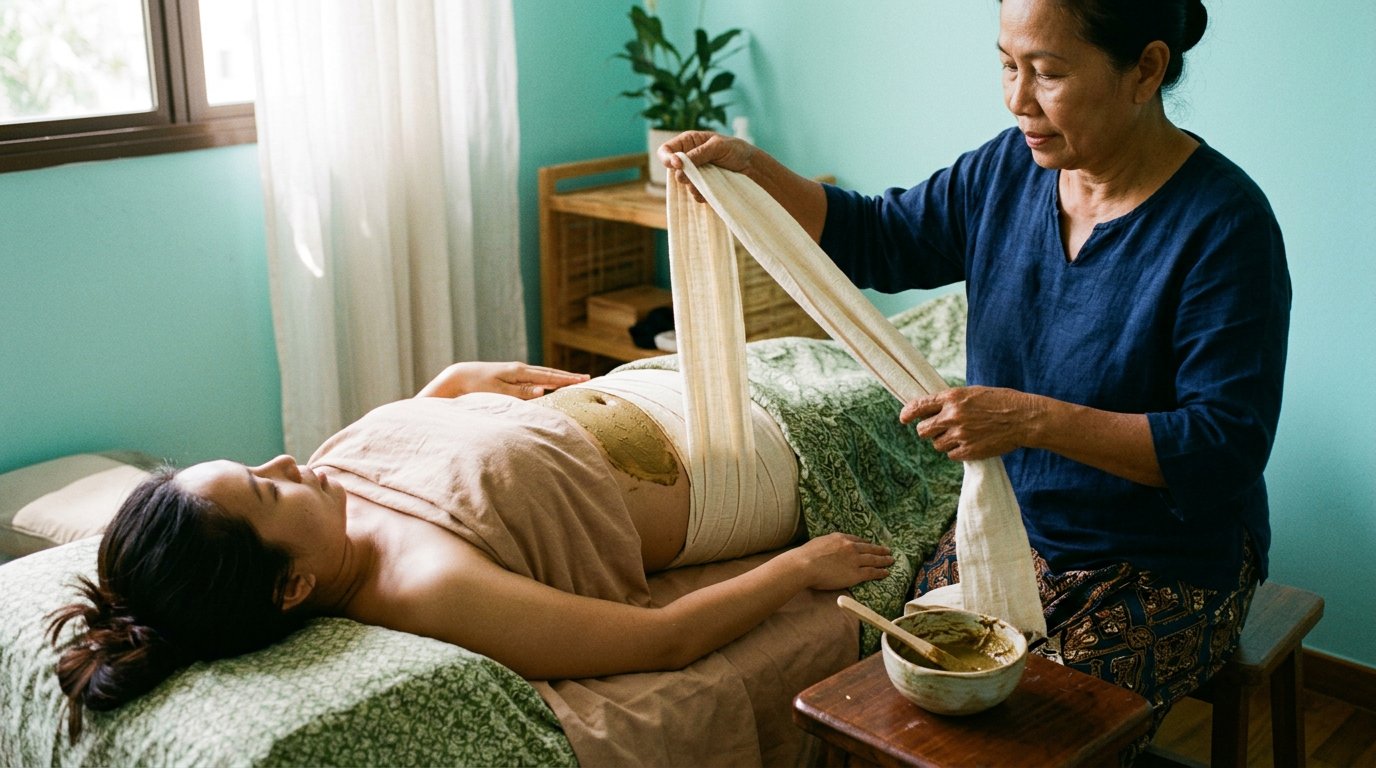
Postnatal Jamu massage is a traditional practice that may combine massage with herbal paste and bengkung binding, a cloth wrap around the abdomen. A postnatal jamu massage package brings selected elements together, with the treatment plan and timing shaped around the service and your recovery.

It’s understandable to want a little clarity before making space for a treatment while caring for a new baby. This guide explains how the massage, paste and binding fit together, what session lengths and home visits may involve, and how package length and your type of birth can shape when to begin.

You’ll also find a gentle overview of what to expect, so you can consider whether this traditional approach feels comfortable for you and suits this stage of recovery.

Key Takeaways

  • Understand how herbal paste and bengkung binding may be incorporated into a Jamu treatment, and what to consider for comfort.
  • See how session length and home visits can shape a treatment plan around life with a newborn.
  • Learn what postnatal massage is intended to support, while keeping expectations grounded in your own recovery.
  • Use your type of birth and recovery stage to think through when to begin and what package length may suit you.

Jamu paste and abdominal bengkung binding

In a Jamu routine, herbal paste may be applied to the abdomen, followed by bengkung binding, a long cloth wrapped around the torso. These are separate techniques, so ask the practitioner to explain when each will be used and how the wrap should feel. Traditional bengkung is made from breathable pure cotton rather than plastic or elastic polyester. The cloth allows for a snug, adjustable wrap without stretchy material.

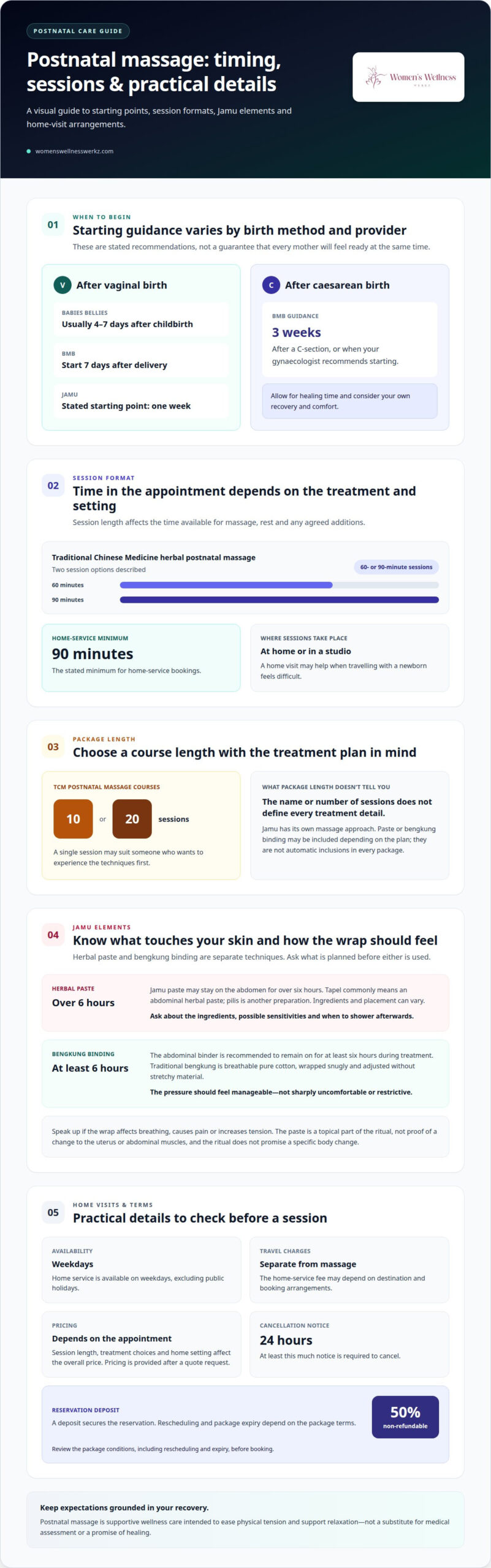
Jamu paste may stay on for over six hours, and the abdominal binder is recommended to remain on for at least six hours during treatment. Before application, identify the paste’s herbs and ingredients, as sensitivities or allergies may affect whether it feels suitable. The paste is a topical part of the ritual, not proof that massage changes the uterus or abdominal muscles. Pressure and wrapping should feel manageable, not sharply uncomfortable.

Tapel commonly refers to an herbal paste used on the abdomen; pilis is another preparation named in Jamu traditions. Ingredients and placement can vary, so the practitioner should explain each preparation before use. This helps you understand what will touch your skin and where. Mention any ingredient that has caused a reaction before the session begins.

If paste is part of the treatment, ask the practitioner when to shower afterward. This gives the paste time to remain on the skin as intended, if it is part of your treatment. Ease into the binding and speak up if it restricts your breathing, causes pain or increases tension. A calm, step-by-step explanation can also make the experience feel less emotionally overwhelming. The aim is a traditional comfort ritual, not pressure to stimulate the uterus or a promise of a specific body change.

Massage duration and home-visit add-ons

Postnatal massage appointments may take place at home or in a studio. Session length affects how much time is available for massage, rest and any agreed additions. Javanese Jamu and traditional Chinese postnatal treatments may differ, so the treatment name alone doesn’t tell you what a package includes. Ask the practitioner to explain the session plan before treatment begins.

A Traditional Chinese Medicine herbal postnatal massage is offered in 60-minute and 90-minute sessions. Home-service bookings have a 90-minute minimum, allowing time for treatment in your home. Massage after pregnancy also differs from prenatal care, so these session details relate to postnatal treatment.

A home visit can be helpful when travelling with a newborn feels difficult. Home service is available on weekdays, excluding public holidays. Transport charges are separate from the massage, and the home-service fee may depend on the destination and booking arrangements. The overall price depends on session length, treatment choices and whether the appointment is at home; Women’s Wellness Werkz provides pricing after a quote request.

A postnatal Jamu massage package may combine massage with traditional elements such as herbal paste or bengkung binding, depending on the treatment plan. These aren’t automatic inclusions in every package. The practitioner explains the planned steps before treatment begins.

To cancel, at least 24 hours’ notice is required, and a 50% non-refundable deposit secures a reservation. Rescheduling and package expiry depend on the package terms, so review those conditions before booking.

Choose a setting that suits your recovery and daily routine, then explore postnatal massage options to consider the care available.

What is Post-natal Massage?

Postnatal massage is a hands-on wellness treatment during postpartum recovery. Its techniques and pressure should be adapted to your comfort and the areas being treated.

Massage Benefits and Claimed Effects

Postnatal massage is intended to ease physical tension and support relaxation after pregnancy. Jamu and traditional Chinese approaches use different techniques, so their intended effects vary. Some treatments aim to support blood circulation and relieve discomfort, but massage cannot promise healing or prevent fluid retention. Treat it as supportive care, not a substitute for medical assessment.

In Singapore, ask about the therapist’s postnatal training and Jamu experience, and how pressure is adapted. A massage certificate alone does not make someone a medical professional. Clear explanations help you understand the treatment and speak up if a technique feels uncomfortable.

Massage and Treatment Steps

A session can begin with a conversation about your birth, recovery and comfort. The therapist explains the planned areas and pressure before starting, then adjusts the techniques as needed. You can describe any tenderness or tension and agree on a gentler approach.

Massage follows the treatment plan, with pauses for comfort. If Jamu elements such as paste or bengkung binding are included, the practitioner explains their use before applying them. After the session, follow the agreed aftercare instructions and note any unusual discomfort. These steps clarify what to expect without treating massage as a way to reposition the uterus or guarantee a particular recovery outcome.

Postnatal Jamu Massage Package for New Mothers

In Singapore, Traditional Chinese Medicine postnatal massage packages are commonly structured as courses of 10 or 20 sessions. A course gives repeated appointments, while a single session may suit someone wanting to experience the techniques first. Traditional Jamu focuses on its own massage approach, so package length alone doesn’t tell you what each treatment covers. Consider your recovery, comfort and preferred pace before choosing.

Timing depends partly on birth method. Babies Bellies says mothers after a normal delivery can usually begin massage 4 to 7 days after childbirth; BMB recommends starting 7 days after delivery. For Jamu specifically, the stated starting point after vaginal birth is one week. These recommendations offer a guide, but they don’t mean every mother feels ready on the same day.

After a caesarean birth, recommendations allow more healing time. BMB advises starting postnatal massage 3 weeks after a C-section, or when the gynaecologist recommends it. For Jamu, the stated wait is at least one month after birth, subject to gynaecologist advice. The incision’s healing and your comfort matter when considering abdominal techniques around the stomach.

Use the first appointment to discuss your birth and recovery, then decide whether a course feels manageable. If you’re considering 10 or 20 sessions, think about travel, newborn care and the time needed for each visit. Massage may offer comfort and relief from tension, but it shouldn’t be treated as a guaranteed way to reduce water retention or restore your pre-pregnancy shape.

Choose a start point that respects your recovery rather than a calendar target. Explore postnatal massage options as you consider the approach and session plan that feel right for you.

Women’s Wellness Werkz: Postnatal Massage Package

Women’s Wellness Werkz offers a Postnatal Massage Package for mothers considering massage as part of their postpartum wellbeing. For traditional Jamu techniques, the Jamu Massage is another option; a Combo Massage Package may suit those considering a combined approach.

Choose a treatment after considering your birth and recovery, and share your comfort preferences so care can be tailored. Massage can offer a restorative pause, but it isn’t a substitute for medical care or a guarantee of a particular recovery outcome. For questions about which massage offering best matches your needs, contact Women’s Wellness Werkz.

Make space for care that suits your next step

Shape postpartum care around what feels comfortable now, rather than an idealised timetable. If you’re considering a postnatal jamu massage package, think about the support you want from each session and a pace that feels manageable alongside caring for your baby. A clear conversation about your preferences can help you approach treatment with more ease.

Women’s Wellness Werkz offers a Postnatal Massage Package and a Combo Massage Package for women considering postnatal massage. Its Prenatal Massage Package supports care during pregnancy. These offerings let you explore massage at different stages of your journey, without assuming one approach suits every need.

When you feel ready to discuss your next step, contact Women’s Wellness Werkz. You can take the conversation at your own pace and choose what feels right for you.

Frequently Asked Questions

What is Jamu Massage?

Jamu massage is a traditional Malay bodywork practice associated with postpartum care. A session may combine hands-on massage with Jamu preparations, depending on the treatment plan. Techniques and sequence can vary, so the name alone doesn’t describe every session. Think of it as a traditional wellness treatment, not medical care or a substitute for assessment of a health concern.

How is a postnatal massage different from a regular massage?

Postnatal massage is planned around recovery after childbirth, rather than general relaxation alone. For example, the practitioner can take abdominal tenderness, your delivery method and comfortable positions into account. Pressure and treated areas may be adapted to your needs. A regular massage may not focus on postpartum comfort, so the treatment plan and your recovery context matter.

How much does a postnatal Jamu massage package cost in Singapore?

The cost of a postnatal Jamu massage package depends on the treatment type, session length, package structure and whether the appointment is at home or in a studio. Women’s Wellness Werkz provides pricing after a quote request, rather than quoting one figure for every treatment plan. The quoted amount reflects the selected service and arrangements, without implying that one package price suits all mothers.

How many sessions are included and how long does each session last?

Singapore postnatal massage courses are commonly structured as 10 or 20 sessions, while session length varies by treatment. For example, Traditional Chinese Medicine herbal postnatal massage is offered in 60-minute and 90-minute appointments. Those figures describe that treatment format, not every Jamu package. A single appointment and a course are different options, so the session count and duration depend on the plan selected.

When can you start postnatal Jamu massage after a vaginal birth or C-section?

After a vaginal birth, Jamu massage may start a week after childbirth. After a C-section, the stated wait is at least one month, subject to advice from your gynaecologist. This difference allows for incision healing and recovery before abdominal treatment. For example, if you still have incision discomfort, prioritise recovery over a preferred massage start date.

Are home visits, transport fees, or add-on treatments included in Singapore packages?

Home visits and add-on treatments depend on the selected arrangement, and transport charges may be separate from treatment. Home-service bookings have a 90-minute minimum, and home service is available on weekdays, excluding public holidays. Packages may combine specialised Malay bodywork, Jamu wraps and targeted body care, but combinations vary. Check the written package details to understand which treatments and travel arrangements the quoted plan covers.

Brazilian Body Contouring Massage Benefits and Suitability

Brazilian Body Contouring Massage Benefits and Suitability

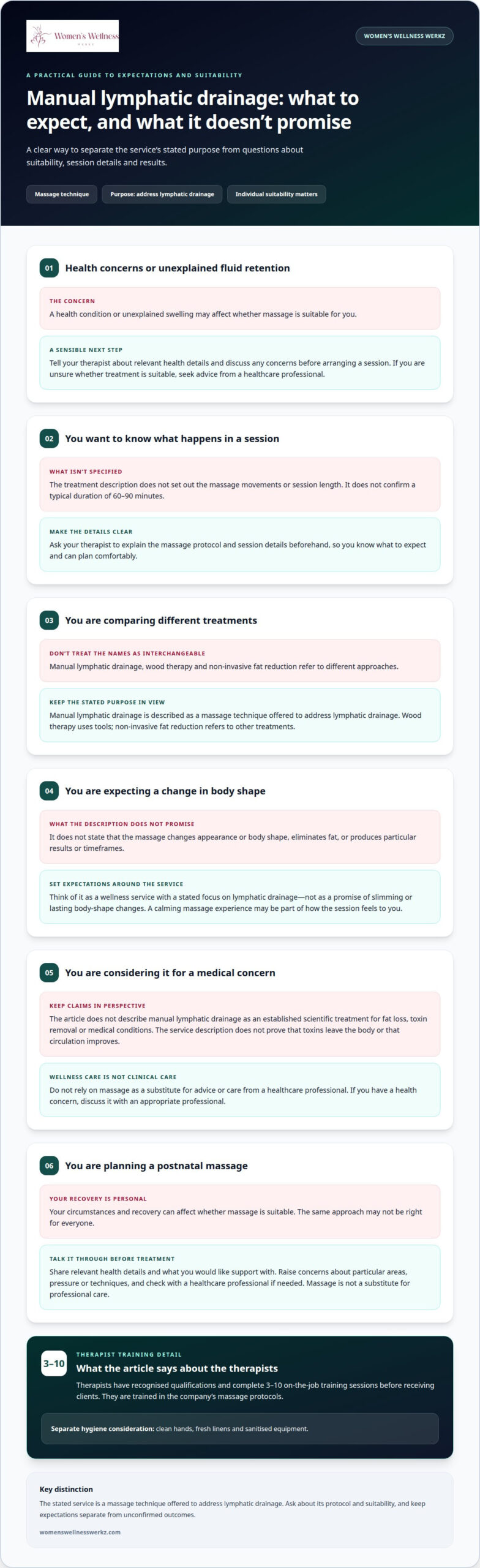
Manual lymphatic drainage is a massage technique offered to address lymphatic drainage. Your health conditions or unexplained fluid retention may affect whether massage is suitable for you, so discuss any concerns with the therapist before booking. This guide explains what the treatment involves, how it fits within women’s wellness and recovery, and what to consider before arranging a session.

Key Takeaways

  • Learn what manual lymphatic drainage is and what a session may feel like.
  • Understand why health conditions or unexplained swelling can affect whether treatment is suitable for you.
  • Set realistic expectations about the massage and its role in your wellness and recovery.
  • Find out when Women’s Wellness Werkz’s manual lymphatic drainage massage may be a relevant option for your wellness goals.

Medical conditions that may make treatment unsuitable

Your health history matters when considering postpartum belly binding. This involves wrapping the abdomen after childbirth with a belly binder to provide support. The page describes spine realignment and helping to prevent or relieve lower back strain as potential support functions. Tell your therapist about any diagnosis, recent procedure or medicine that could affect your comfort, and seek advice from a healthcare professional if you are unsure whether binding is suitable.

Before the session, share relevant details and let your therapist know if anything feels uncomfortable. A soft cotton cloth is placed around the abdomen before applying the traditional binder. The therapist can explain the process and check that you are comfortable. Binding should not feel painful or overwhelming, so speak up if you feel discomfort. The binder provides support; it is not a way to investigate or treat an unexplained health concern.

The figures 5-10, 1-2, 3-4, 2 and 6-12 are not a recommended schedule for postpartum belly binding. The page describes potential support functions, not a required number or frequency of sessions. Your comfort and individual circumstances matter when considering the service. If you have concerns about your recovery, ask a healthcare professional for advice before proceeding.

Follow any aftercare advice given by your healthcare professional. Do not treat belly binding as a substitute for clinical care or as a way to address a medical cause of discomfort. If you notice new or worsening symptoms, seek clinical advice before arranging a session.

Therapists are trained in the company’s massage protocols, but belly binding is a separate service. Ask the team about the service and what to expect before booking.

What manual lymphatic drainage involves

Manual lymphatic drainage is a massage technique offered by the business to address lymphatic drainage. Your therapist can explain the massage protocol and what to expect during your session.

This service is distinct from wood therapy, which uses tools, and non-invasive fat reduction, which refers to different treatments. These approaches aren’t interchangeable. In Singapore, the massage label alone doesn’t establish a particular regulatory status or guarantee consumer protection. Therapists have recognised qualifications and complete 3-10 on-the-job training sessions before receiving clients; hygiene is a separate consideration, including clean hands, fresh linens and sanitised equipment.

Massage movements and treatment duration

The business describes manual lymphatic drainage as a massage technique, but does not specify its movements or session length. The information provided also does not confirm a typical duration of 60 to 90 minutes. You can ask your therapist about the massage protocol and session details before booking, so you know what to expect and can plan comfortably.

What to expect from treatment

The treatment description does not state that manual lymphatic drainage changes your appearance or body shape. It also does not confirm a temporary slimming effect or claim that massage eliminates fat. This can help you distinguish the service’s stated purpose, addressing lymphatic drainage, from claims about body contouring.

The information provided does not specify visible changes after 3-5 sessions or results after 8-10 sessions. It also does not state that effects last 2 to 7 days or that body-sculpting results last several weeks to months. Your therapist can explain the service and its massage protocol, without promising particular outcomes or timeframes.

After childbirth, you may be considering postnatal massage as part of your recovery. Before your session, tell your therapist about your recovery and any concerns you have. This helps you discuss whether the massage is suitable for you.

Discussing your recovery

Your recovery is personal, so share any relevant health details with your therapist before treatment. If you have questions about whether massage is suitable for you, raise them before your session. A massage is not a substitute for care from a healthcare professional.

For example, if you are unsure whether a particular area should be massaged, explain your concern and ask your therapist about the massage protocol. Therapists are qualified and trained to deliver the company’s massage protocols. Clear communication helps you understand what the session involves and decide whether it meets your needs.

Planning a postnatal massage

Postnatal massage is intended for women after childbirth. Before booking a session, consider what you would like support with and let your therapist know. They perform massages at clients’ locations, so you can discuss the session arrangements with them.

If you have a health condition or concerns about your recovery, share these before treatment and check with a healthcare professional if needed. Your circumstances can affect whether massage is suitable, so avoid assuming that the same approach is right for everyone.

During your session, tell your therapist if you feel uncomfortable or want to discuss the pressure or techniques being used. A clear conversation helps you decide whether postnatal massage feels appropriate for your recovery, rather than expecting it to address every concern after childbirth.

Brazilian Body Contouring Massage Benefits and Suitability

Potential lymphatic drainage and wellness benefits

Manual lymphatic drainage is a massage technique offered to address lymphatic drainage. It may also provide a calming massage experience, depending on how the session feels to you. This treatment should not be presented as proof of fat loss or a lasting change in body composition. It is best viewed as a wellness service, not a way to transform your body overnight.

Manual lymphatic drainage is not an established scientific treatment for fat loss, toxin removal or medical conditions. Its massage techniques address lymphatic drainage, but that doesn’t prove toxins leave the body or circulation improves. Treat “detoxification” claims carefully, and distinguish the purpose of the service from medical outcomes.

For your wellbeing, lymphatic drainage and fat reduction are different goals. A massage service offered to address lymphatic drainage does not remove fat as a surgical procedure aims to do. You may see references to 3-5 sessions or 8-10 sessions, but these timeframes don’t establish that massage permanently reshapes the body or guarantee a particular result.

The treatment experience may also support wellbeing. Attentive massage can offer a quiet pause from daily demands, while pressure and rhythm shape how a session feels. Comfort is personal: a stroke that feels soothing on your legs may feel too firm around your abdomen. Clear communication lets the therapist adjust the pressure and focus.

Before choosing, consider whether your priority is relaxation or a massage technique that addresses lymphatic drainage. After treatment, notice how you feel rather than expecting toxins to “flush out”. If this approach fits your goals, explore manual lymphatic drainage massage as an option.

Women’s Wellness Werkz: Postnatal Massage

Women’s Wellness Werkz offers a Postnatal Massage Package for women after childbirth. If you’re considering postnatal massage, contact the team to discuss whether the service suits your needs and recovery.

Before your appointment, share your comfort preferences and relevant health concerns. Women’s Wellness Werkz therapists are trained in the company’s massage protocols and travel to your location. If you’re pregnant, the Prenatal Massage Package is available for this stage of women’s wellness. You can ask about the massage protocol and what to expect during the appointment.

Contact Women’s Wellness Werkz to discuss whether this treatment suits your needs.

Choose a next step that feels right for you

Start by considering what you want from a treatment: a restful wellness experience, support during pregnancy or care after childbirth. Women’s Wellness Werkz offers a Prenatal Massage Package, Postnatal Massage Package and Combo Massage Package for different stages of women’s wellness.

If you’re considering a postnatal massage, think about whether it fits your needs and comfort preferences. Women’s Wellness Werkz offers a Postnatal Massage Package, and you can discuss your preferences with the team before deciding. Share your questions about postnatal massage with Women’s Wellness Werkz and discuss the service at your own pace.

Contact Women’s Wellness Werkz to ask about your options. Take the next step when it feels right for you.

Frequently Asked Questions

What Makes Brazilian Massage Unique?

The treatment blends lymphatic-style movements with firmer, contour-focused hand strokes. Compared with slower, traditional lymphatic drainage massage, it may feel more active and have a stronger cosmetic focus. For example, a session may target areas where you notice puffiness. The approach aims to shape appearance temporarily, rather than replace exercise, medical care or fat-reduction procedures.

How many sessions will I need?

A suggested starting course is 5-10 sessions, often scheduled 1-2 times weekly, followed by maintenance every 3-4 weeks. These are suggested timings, not a fixed prescription. Your goals matter: someone seeking a temporary change in puffiness may choose differently from someone pursuing ongoing contouring. Review how you feel and what changes you notice as sessions progress, rather than booking a course based on promises.

Is it painful?

The strokes can feel brisk or firm, but the treatment should remain comfortable. Sensitivity varies by area, so pressure that feels manageable on your legs may feel too strong on your abdomen. Tell the therapist promptly if you feel pain, sharp discomfort or distress. You can ask for lighter pressure or a pause; enduring pain isn’t necessary.

What are the main risks I should be aware of?

Possible concerns include discomfort, skin irritation or an allergic reaction to massage oil. If you know you react to an ingredient, tell the therapist before treatment and discuss using your own oil. Rashes are not common, but one such as PUPPP may occur during pregnancy. If a rash appears, wash the area and inform the therapist. Seek medical advice if hives or other symptoms persist.

What should I do after the treatment?

Drink water after your session unless a healthcare professional has advised you to limit fluids. Aftercare guidance also suggests avoiding alcohol and salty foods. Keep expectations grounded: puffiness may return, and hydration doesn’t make a temporary effect permanent. If you feel unwell or notice new, unusual swelling afterwards, seek appropriate medical advice instead of arranging another massage straight away.

What is Brazilian body contouring massage and how does it work?

A Brazilian body contouring massage is a hands-on treatment combining rhythmic strokes and contouring movements. These techniques aim to encourage lymphatic fluid movement and temporarily change the appearance of puffiness. The treatment is not surgery and doesn’t remove fat. The active strokes may feel different from a relaxation massage, so discuss your comfort, health history and areas of focus before the session begins.

Manual lymphatic drainage is a massage technique offered to address lymphatic drainage. Your health conditions or unexplained fluid retention may affect whether massage is suitable for you, so discuss any concerns with the therapist before booking. This guide explains what the treatment involves, how it fits within women’s wellness and recovery, and what to consider before arranging a session.

Key Takeaways

  • Learn what manual lymphatic drainage is and what a session may feel like.
  • Understand why health conditions or unexplained swelling can affect whether treatment is suitable for you.
  • Set realistic expectations about the massage and its role in your wellness and recovery.
  • Find out when Women’s Wellness Werkz’s manual lymphatic drainage massage may be a relevant option for your wellness goals.

Medical conditions that may make treatment unsuitable

Your health history matters when considering postpartum belly binding. This involves wrapping the abdomen after childbirth with a belly binder to provide support. The page describes spine realignment and helping to prevent or relieve lower back strain as potential support functions. Tell your therapist about any diagnosis, recent procedure or medicine that could affect your comfort, and seek advice from a healthcare professional if you are unsure whether binding is suitable.

Before the session, share relevant details and let your therapist know if anything feels uncomfortable. A soft cotton cloth is placed around the abdomen before applying the traditional binder. The therapist can explain the process and check that you are comfortable. Binding should not feel painful or overwhelming, so speak up if you feel discomfort. The binder provides support; it is not a way to investigate or treat an unexplained health concern.

The figures 5-10, 1-2, 3-4, 2 and 6-12 are not a recommended schedule for postpartum belly binding. The page describes potential support functions, not a required number or frequency of sessions. Your comfort and individual circumstances matter when considering the service. If you have concerns about your recovery, ask a healthcare professional for advice before proceeding.

Follow any aftercare advice given by your healthcare professional. Do not treat belly binding as a substitute for clinical care or as a way to address a medical cause of discomfort. If you notice new or worsening symptoms, seek clinical advice before arranging a session.

Therapists are trained in the company’s massage protocols, but belly binding is a separate service. Ask the team about the service and what to expect before booking.

What manual lymphatic drainage involves

Manual lymphatic drainage is a massage technique offered by the business to address lymphatic drainage. Your therapist can explain the massage protocol and what to expect during your session. For guidance on manual lymphatic drainage in Malaysia for swelling care, including when swelling warrants medical advice, see the related guide.

This service is distinct from wood therapy, which uses tools, and non-invasive fat reduction, which refers to different treatments. These approaches aren’t interchangeable. In Singapore, the massage label alone doesn’t establish a particular regulatory status or guarantee consumer protection. Therapists have recognised qualifications and complete 3-10 on-the-job training sessions before receiving clients; hygiene is a separate consideration, including clean hands, fresh linens and sanitised equipment.

Massage movements and treatment duration

The business describes manual lymphatic drainage as a massage technique, but does not specify its movements or session length. The information provided also does not confirm a typical duration of 60 to 90 minutes. You can ask your therapist about the massage protocol and session details before booking, so you know what to expect and can plan comfortably.

What to expect from treatment

The treatment description does not state that manual lymphatic drainage changes your appearance or body shape. It also does not confirm a temporary slimming effect or claim that massage eliminates fat. This can help you distinguish the service’s stated purpose, addressing lymphatic drainage, from claims about body contouring.

The information provided does not specify visible changes after 3-5 sessions or results after 8-10 sessions. It also does not state that effects last 2 to 7 days or that body-sculpting results last several weeks to months. Your therapist can explain the service and its massage protocol, without promising particular outcomes or timeframes.

After childbirth, you may be considering postnatal massage as part of your recovery. Before your session, tell your therapist about your recovery and any concerns you have. This helps you discuss whether the massage is suitable for you.

Discussing your recovery

Your recovery is personal, so share any relevant health details with your therapist before treatment. If you have questions about whether massage is suitable for you, raise them before your session. A massage is not a substitute for care from a healthcare professional.

For example, if you are unsure whether a particular area should be massaged, explain your concern and ask your therapist about the massage protocol. Therapists are qualified and trained to deliver the company’s massage protocols. Clear communication helps you understand what the session involves and decide whether it meets your needs.

Planning a postnatal massage

Postnatal massage is intended for women after childbirth. Before booking a session, consider what you would like support with and let your therapist know. They perform massages at clients’ locations, so you can discuss the session arrangements with them.

If you have a health condition or concerns about your recovery, share these before treatment and check with a healthcare professional if needed. Your circumstances can affect whether massage is suitable, so avoid assuming that the same approach is right for everyone.

During your session, tell your therapist if you feel uncomfortable or want to discuss the pressure or techniques being used. A clear conversation helps you decide whether postnatal massage feels appropriate for your recovery, rather than expecting it to address every concern after childbirth.

Brazilian Body Contouring Massage Benefits and Suitability

Potential lymphatic drainage and wellness benefits

Manual lymphatic drainage is a massage technique offered to address lymphatic drainage. It may also provide a calming massage experience, depending on how the session feels to you. This treatment should not be presented as proof of fat loss or a lasting change in body composition. It is best viewed as a wellness service, not a way to transform your body overnight.

Manual lymphatic drainage is not an established scientific treatment for fat loss, toxin removal or medical conditions. Its massage techniques address lymphatic drainage, but that doesn’t prove toxins leave the body or circulation improves. Treat “detoxification” claims carefully, and distinguish the purpose of the service from medical outcomes.

For your wellbeing, lymphatic drainage and fat reduction are different goals. A massage service offered to address lymphatic drainage does not remove fat as a surgical procedure aims to do. You may see references to 3-5 sessions or 8-10 sessions, but these timeframes don’t establish that massage permanently reshapes the body or guarantee a particular result.

The treatment experience may also support wellbeing. Attentive massage can offer a quiet pause from daily demands, while pressure and rhythm shape how a session feels. Comfort is personal: a stroke that feels soothing on your legs may feel too firm around your abdomen. Clear communication lets the therapist adjust the pressure and focus.

Before choosing, consider whether your priority is relaxation or a massage technique that addresses lymphatic drainage. After treatment, notice how you feel rather than expecting toxins to “flush out”. If this approach fits your goals, explore manual lymphatic drainage massage as an option.

Women’s Wellness Werkz: Postnatal Massage

Women’s Wellness Werkz offers a Postnatal Massage Package for women after childbirth. If you’re considering postnatal massage, contact the team to discuss whether the service suits your needs and recovery.

Before your appointment, share your comfort preferences and relevant health concerns. Women’s Wellness Werkz therapists are trained in the company’s massage protocols and travel to your location. If you’re pregnant, the Prenatal Massage Package is available for this stage of women’s wellness. You can ask about the massage protocol and what to expect during the appointment.

Contact Women’s Wellness Werkz to discuss whether this treatment suits your needs.

Choose a next step that feels right for you

Start by considering what you want from a treatment: a restful wellness experience, support during pregnancy or care after childbirth. Women’s Wellness Werkz offers a Prenatal Massage Package, Postnatal Massage Package and Combo Massage Package for different stages of women’s wellness.

If you’re considering a postnatal massage, think about whether it fits your needs and comfort preferences. Women’s Wellness Werkz offers a Postnatal Massage Package, and you can discuss your preferences with the team before deciding. Share your questions about postnatal massage with Women’s Wellness Werkz and discuss the service at your own pace.

Contact Women’s Wellness Werkz to ask about your options. Take the next step when it feels right for you.

Frequently Asked Questions

What Makes Brazilian Massage Unique?

The treatment blends lymphatic-style movements with firmer, contour-focused hand strokes. Compared with slower, traditional lymphatic drainage massage, it may feel more active and have a stronger cosmetic focus. For example, a session may target areas where you notice puffiness. The approach aims to shape appearance temporarily, rather than replace exercise, medical care or fat-reduction procedures.

How many sessions will I need?

A suggested starting course is 5-10 sessions, often scheduled 1-2 times weekly, followed by maintenance every 3-4 weeks. These are suggested timings, not a fixed prescription. Your goals matter: someone seeking a temporary change in puffiness may choose differently from someone pursuing ongoing contouring. Review how you feel and what changes you notice as sessions progress, rather than booking a course based on promises.

Is it painful?

The strokes can feel brisk or firm, but the treatment should remain comfortable. Sensitivity varies by area, so pressure that feels manageable on your legs may feel too strong on your abdomen. Tell the therapist promptly if you feel pain, sharp discomfort or distress. You can ask for lighter pressure or a pause; enduring pain isn’t necessary.

What are the main risks I should be aware of?

Possible concerns include discomfort, skin irritation or an allergic reaction to massage oil. If you know you react to an ingredient, tell the therapist before treatment and discuss using your own oil. Rashes are not common, but one such as PUPPP may occur during pregnancy. If a rash appears, wash the area and inform the therapist. Seek medical advice if hives or other symptoms persist.

What should I do after the treatment?

Drink water after your session unless a healthcare professional has advised you to limit fluids. Aftercare guidance also suggests avoiding alcohol and salty foods. Keep expectations grounded: puffiness may return, and hydration doesn’t make a temporary effect permanent. If you feel unwell or notice new, unusual swelling afterwards, seek appropriate medical advice instead of arranging another massage straight away.

What is Brazilian body contouring massage and how does it work?

A Brazilian body contouring massage is a hands-on treatment combining rhythmic strokes and contouring movements. These techniques aim to encourage lymphatic fluid movement and temporarily change the appearance of puffiness. The treatment is not surgery and doesn’t remove fat. The active strokes may feel different from a relaxation massage, so discuss your comfort, health history and areas of focus before the session begins.