How to Use Pregnancy Massage for Back Pain Safely
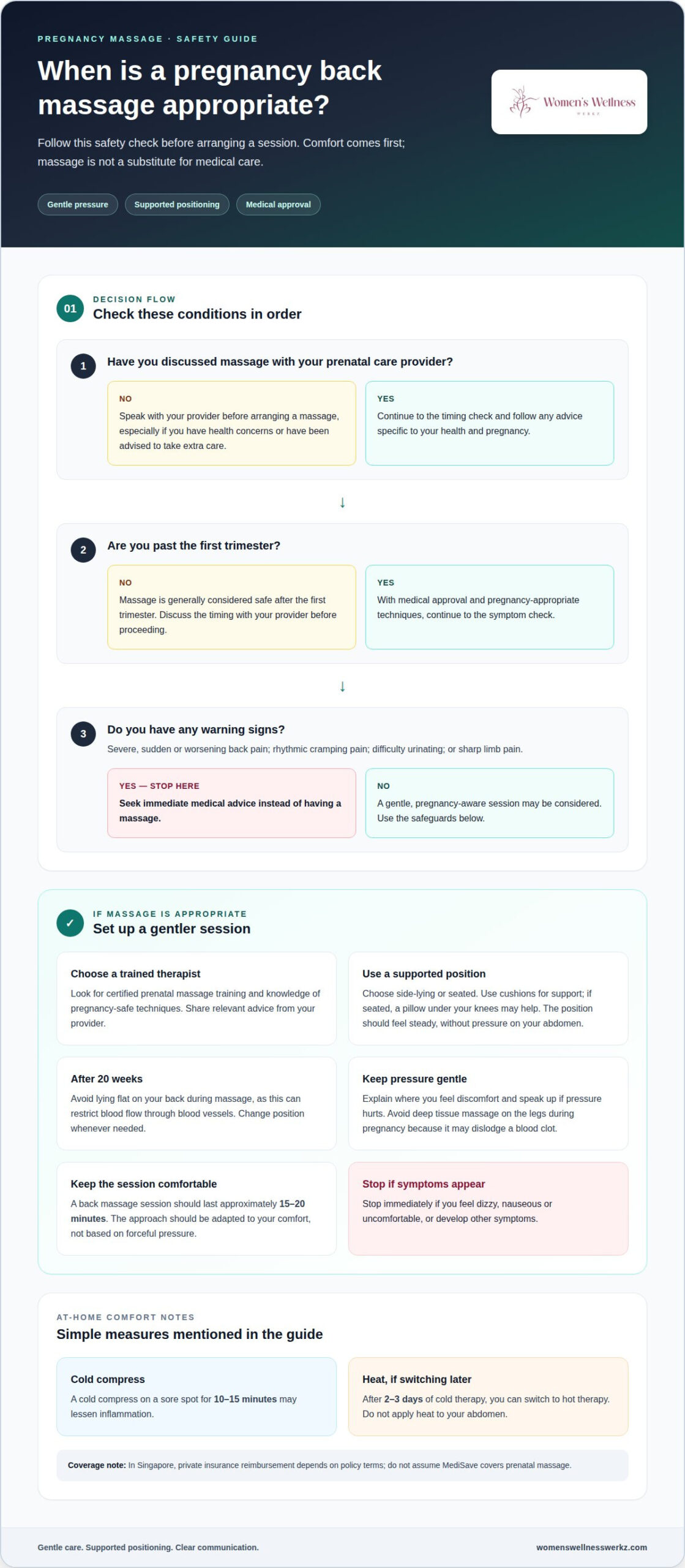
Gentle pregnancy massage for back pain is generally considered safe after the first trimester when it uses pregnancy-appropriate techniques and has medical approval. A careful session may provide a welcome pause from aching, but safety comes first: speak with your prenatal care provider before arranging a massage, especially if you have health concerns. The aim is comfort, not deep pressure or pushing through discomfort.
It’s understandable to want relief while also protecting your changing body. This guide explains how massage may ease pregnancy-related back discomfort, which positioning and pressure precautions matter, and when back pain calls for prompt medical attention rather than massage. You’ll also find practical steps to prepare for a gentler session and recognise when to stop. Small adjustments to your position and clear communication about how you feel can make the experience more comfortable.
Key Takeaways
- Discuss massage with your prenatal care provider first, particularly if you have health concerns, and choose a therapist trained in pregnancy-safe techniques.
- Use a supported side-lying or seated position; after 20 weeks, avoid lying flat on your back during a massage.
- Keep touch gentle and speak up if you feel uncomfortable. Stop the massage if you become dizzy or nauseous.
- Gentle massage may ease back and leg discomfort and help you relax, but severe, sudden or worsening back pain needs prompt medical advice.
Precautions for prenatal massage?
Use supported positions, gentle pressure and regular comfort checks throughout a prenatal massage. In Singapore, private insurance reimbursement depends on your policy terms; don’t assume MediSave covers prenatal massage.
-
Choose a supported side-lying position
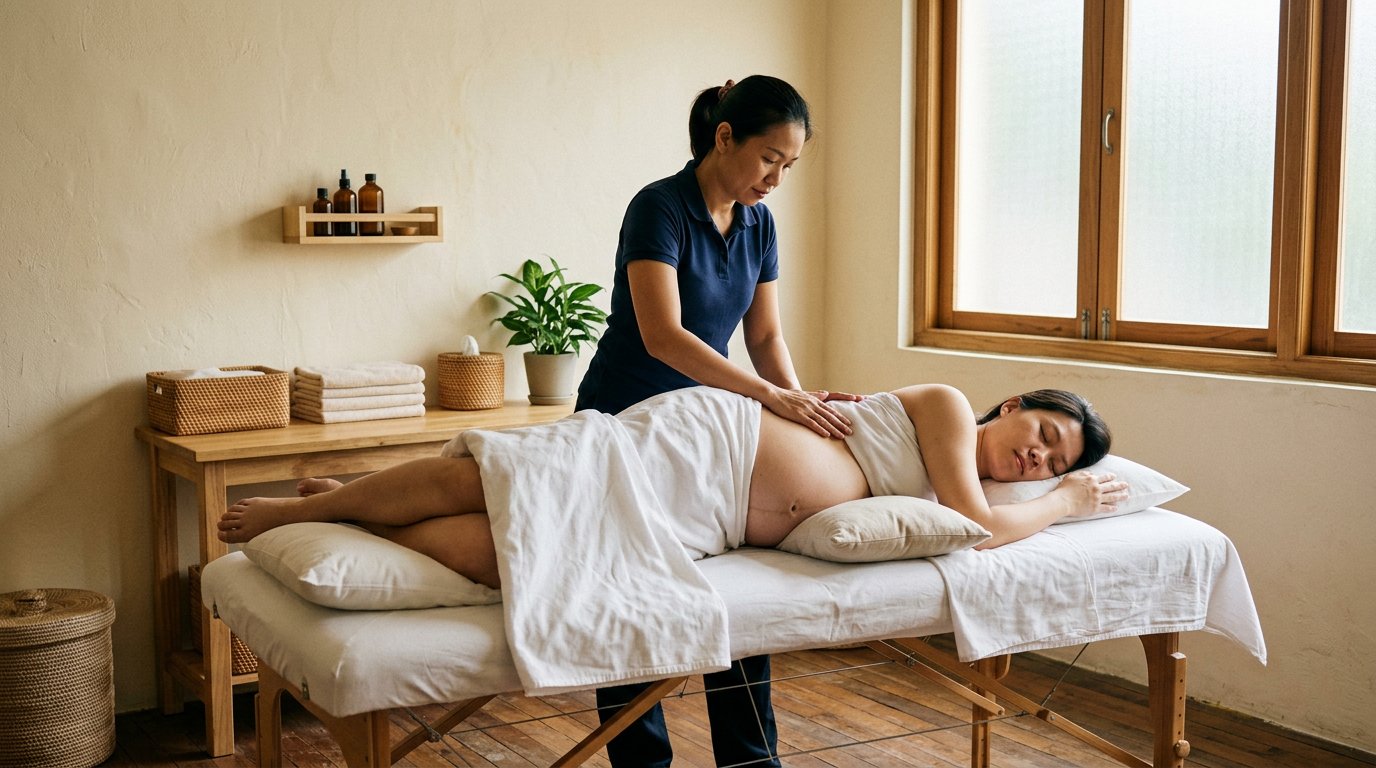
Lie on your left side or sit for a pregnancy back massage, with a pillow under your knees if seated. Ask for cushions to support your body and reduce strain around your back and hips. The position should feel steady, without pressure on your abdomen. Tell the therapist if swelling, aches and pains, or discomfort make the support feel insufficient.
-
Adjust positioning during the massage
Change position when you need to, rather than holding one posture through the whole massage. After 20 weeks of pregnancy, avoid lying flat on your back, as this can restrict blood flow through blood vessels. Keep pressure gentle, and avoid deep tissue massage on the legs during pregnancy because it may dislodge a blood clot. At home, use pillows to support your knees when sitting.
-
Watch for warning signs and stop
Stop the massage immediately if you feel dizzy, nauseous, uncomfortable, or develop other symptoms. For severe or worsening back pain, sudden pain, rhythmic cramping pain, difficulty urinating, or sharp limb pain, seek immediate medical advice instead. At home, a cold compress on a sore spot for ten to fifteen minutes may lessen inflammation. After 2-3 days of cold therapy, you can switch to hot therapy, but don’t apply heat to your abdomen.
Change position as needed during a pregnancy back massage to stay comfortable.
The Hydrotherm system uses warm, water-filled cushions to support the body during massage.
If you are at risk of miscarriage or have other health concerns, consult a doctor before having a massage.
Is it safe to get a massage while pregnant?
Massage is generally considered safe after the first trimester when it uses pregnancy-appropriate techniques and has medical approval. Your prenatal care provider can help you decide whether it suits your health and pregnancy.
-
Choose a certified prenatal massage therapist
Choose a massage therapist with certified prenatal massage training and knowledge of pregnancy-safe techniques. Before the session, discuss your pregnancy and any health concerns with your prenatal care provider, then share relevant advice with the therapist. Gentle work should respect your comfort and avoid forceful pressure. A therapist familiar with prenatal care can adapt the approach to your needs, including whether lying, side-lying or sitting feels most comfortable.
-
Check when to start prenatal massage
Plan to start after the first trimester, the point from which massage is generally considered safe during pregnancy. Ask your doctor for medical approval before booking, especially if you have health concerns or have been advised to take extra care. This conversation also helps clarify what feels comfortable for you. A back massage session should last approximately 15-20 minutes, with gentle techniques rather than deep pressure.
-
Use safe back massage techniques
Tell the therapist where your back aches and which movements feel soothing, then speak up if pressure causes discomfort. Gentle massage may ease back and leg pain, and can support relaxation; NICE advises that massage therapy can help ease back pain during pregnancy. The therapist should adapt the techniques to your comfort, rather than pressing firmly around sensitive areas. If you’re looking for a calm, pregnancy-aware session, explore gentle prenatal massage care.
Circulation, swelling, muscle pain, and anxiety
Pregnancy can bring swelling, muscle tension and worry alongside back discomfort. Gentle massage may feel soothing and promote relaxation, but it does not replace medical care.
- Describe your discomfort before the massage begins. For example, explain whether your feet feel puffy, your shoulders feel tight or a muscle aches after sitting. This helps the therapist adapt their touch to your comfort rather than applying the same pressure everywhere. Ask for gentle strokes and speak up if an area feels tender or the pressure becomes uncomfortable.
- Keep leg and foot massage light and comfortable. Gentle touch may ease the feeling of tired, aching feet; firm pressure is not needed for a restorative session. Tell the therapist if swelling is uncomfortable or has changed, and don’t treat massage as a way to diagnose or resolve its cause. Comfort and a relaxed response are useful guides during the session.
- Notice how your body feels after sitting or standing for a while. Changes in pregnancy weight can affect posture and leave your lower back, shoulders or legs feeling tired. Gentle massage may help loosen tense muscles and promote relaxation, but it should not cause pain. Choose a supported position, and pause or adjust if pressure makes an ache worse.
- Use massage as one calming part of your wellbeing routine. Research has suggested that pregnancy massage may help reduce anxiety, depression, and leg and back pain. One study associated massage twice a week for five weeks with changes in hormones linked to stress, relaxation and mood. These findings describe possible benefits, not a guarantee. Notice whether a session leaves you feeling more settled and comfortable.
How massage may ease pregnancy-related back pain
Gentle massage may ease tension and make pregnancy-related back pain feel more manageable. Pregnancy massage for back pain prioritises comfort, adapting touch to your needs rather than using forceful pressure.
- Notice where tension gathers before the session. Prolonged sitting, for example, may leave your lower back tight, while physical strain can make your shoulders ache. Describe the sensation and what seems to aggravate it. This helps the therapist focus gentle, comfortable touch on tense muscles rather than pressing hard or treating every sore area the same way.
- Use gentle massage to address muscular tightness, not to force a change. Slow, light strokes across the back may help you relax and feel less physically tense. NICE, the UK National Institute for Health and Care Excellence, advises that massage therapy can help ease back pain during pregnancy. Comfort during the session matters more than strong pressure.
- Pay attention to how pain affects your rest and stress. Pregnancy-related discomfort can make it harder to settle, and massage may promote relaxation and sleep. Notice how your body feels afterwards, such as whether your back feels looser when standing or turning. Feeling calmer is useful, but sudden, severe or worsening pain needs medical advice, not massage alone.
- Keep the goal realistic and specific. Pregnancy massage for back pain may ease aches linked with muscle tension, but it doesn’t address every physical cause of pain during pregnancy. If you have concerns about miscarriage risk or another health issue, discuss massage with your prenatal care provider before a session. For gentle hands-on support, explore prenatal massage care.
Women’s Wellness Werkz
Women’s Wellness Werkz offers a Prenatal Massage Package for women seeking gentle support with pregnancy-related discomfort. A session can be a calming addition to your self-care when back tension or everyday aches make rest harder, but massage is separate from medical assessment or treatment. If pain is severe, sudden or worsening, seek medical advice rather than relying on massage.
Care is personalised, so you can describe where you feel discomfort and what pressure feels comfortable. This helps shape a considered experience around your needs during pregnancy, without promising a particular result. To explore whether prenatal massage feels right for you, contact Women’s Wellness Werkz.
Make space for comfort in your next step
Pregnancy massage for back pain can be a considered part of caring for yourself, alongside guidance from your prenatal care provider. Before arranging a session, think about what would help you feel at ease, such as sharing where you feel tension and asking for gentle pressure. Let your comfort guide the conversation and the experience.
Women’s Wellness Werkz offers a Prenatal Massage Package, as well as Postnatal Massage and Combo Massage Packages for other stages of your wellbeing journey. The next step is to discuss the support you’re looking for and whether a prenatal session feels right for you.
Contact Women’s Wellness Werkz to discuss your needs. You deserve care that meets you gently, one comfortable step at a time.
Frequently Asked Questions
Why Does Backache Happen in Pregnancy?
Pregnancy backache often starts in the second half of pregnancy, as your changing body places different demands on your back. A healthy pregnancy typically involves a weight gain of 11-16 kg, which can contribute to physical strain and altered posture. Long periods sitting or standing may make discomfort more noticeable. Gentle movement and comfortable support can help you manage everyday aches.
Is prenatal massage safe for back pain during pregnancy?
Prenatal massage is generally considered safe after the first trimester when it uses pregnancy-appropriate techniques and has medical approval. Speak with your prenatal care provider beforehand, particularly if you have health concerns or are at risk of miscarriage. Share relevant advice with the massage therapist and describe what feels comfortable. Massage may support comfort, but it does not replace medical assessment of pain.
What massage positions and techniques are safe during pregnancy?
Side-lying or seated positions can support a comfortable massage; cushions can help steady your body and reduce pressure. After 20 weeks, avoid lying flat on your back during massage because it can restrict blood flow. Choose gentle touch rather than deep pressure, especially on the legs. You can change position during the session if your body begins to feel strained or uncomfortable.
Can prenatal massage relieve lower back pain and sciatica?
Prenatal massage may ease pregnancy-related back pain by helping relax tense muscles and promoting a calmer, more comfortable feeling. NICE advises that massage therapy can help ease back pain during pregnancy. Sciatica can involve pain that travels from the lower back into the buttock or leg; massage is not a way to diagnose it. Discuss persistent or concerning symptoms with your prenatal care provider.
When should pregnant people avoid massage or consult a doctor first?
Speak with your doctor before massage if you are at risk of miscarriage or have another health concern. Stop the session if you feel dizzy, nauseous or uncomfortable, or experience other symptoms. Seek immediate medical advice for severe or worsening back pain, sudden pain, rhythmic cramping, difficulty urinating or sharp pain in your limbs. These symptoms need medical attention rather than massage.
How do I choose a qualified prenatal massage therapist in Singapore?
Look for a massage therapist with certified prenatal massage training and knowledge of pregnancy-safe techniques. Before your appointment, discuss massage with your prenatal care provider and share relevant guidance with the therapist. Explain your stage of pregnancy, areas of discomfort and preferred pressure. A suitable session should be adapted to your comfort, with positioning and touch adjusted if anything feels uncomfortable.
Gentle pregnancy massage for back pain is generally considered safe after the first trimester when it uses pregnancy-appropriate techniques and has medical approval. A careful session may provide a welcome pause from aching, but safety comes first: speak with your prenatal care provider before arranging a massage, especially if you have health concerns. The aim is comfort, not deep pressure or pushing through discomfort.
It’s understandable to want relief while also protecting your changing body. This guide explains how massage may ease pregnancy-related back discomfort, which positioning and pressure precautions matter, and when back pain calls for prompt medical attention rather than massage. You’ll also find practical steps to prepare for a gentler session and recognise when to stop. Small adjustments to your position and clear communication about how you feel can make the experience more comfortable.
Key Takeaways
- Discuss massage with your prenatal care provider first, particularly if you have health concerns, and choose a therapist trained in pregnancy-safe techniques.
- Use a supported side-lying or seated position; after 20 weeks, avoid lying flat on your back during a massage.
- Keep touch gentle and speak up if you feel uncomfortable. Stop the massage if you become dizzy or nauseous.
- Gentle massage may ease back and leg discomfort and help you relax, but severe, sudden or worsening back pain needs prompt medical advice.
Precautions for prenatal massage?
Use supported positions, gentle pressure and regular comfort checks throughout a prenatal massage. In Singapore, private insurance reimbursement depends on your policy terms; don’t assume MediSave covers prenatal massage.
-
Choose a supported side-lying position
Lie on your left side or sit for a pregnancy back massage, with a pillow under your knees if seated. Ask for cushions to support your body and reduce strain around your back and hips. The position should feel steady, without pressure on your abdomen. Tell the therapist if swelling, aches and pains, or discomfort make the support feel insufficient.
-
Adjust positioning during the massage
Change position when you need to, rather than holding one posture through the whole massage. After 20 weeks of pregnancy, avoid lying flat on your back, as this can restrict blood flow through blood vessels. Keep pressure gentle, and avoid deep tissue massage on the legs during pregnancy because it may dislodge a blood clot. At home, use pillows to support your knees when sitting.
-
Watch for warning signs and stop
Stop the massage immediately if you feel dizzy, nauseous, uncomfortable, or develop other symptoms. For severe or worsening back pain, sudden pain, rhythmic cramping pain, difficulty urinating, or sharp limb pain, seek immediate medical advice instead. At home, a cold compress on a sore spot for ten to fifteen minutes may lessen inflammation. After 2-3 days of cold therapy, you can switch to hot therapy, but don’t apply heat to your abdomen.
Change position as needed during a pregnancy back massage to stay comfortable.
The Hydrotherm system uses warm, water-filled cushions to support the body during massage.
If you are at risk of miscarriage or have other health concerns, consult a doctor before having a massage.
Is it safe to get a massage while pregnant?
Massage is generally considered safe after the first trimester when it uses pregnancy-appropriate techniques and has medical approval. Your prenatal care provider can help you decide whether it suits your health and pregnancy.
-
Choose a certified prenatal massage therapist
Choose a massage therapist with certified prenatal massage training and knowledge of pregnancy-safe techniques. Before the session, discuss your pregnancy and any health concerns with your prenatal care provider, then share relevant advice with the therapist. Gentle work should respect your comfort and avoid forceful pressure. A therapist familiar with prenatal care can adapt the approach to your needs, including whether lying, side-lying or sitting feels most comfortable.
-
Check when to start prenatal massage
Plan to start after the first trimester, the point from which massage is generally considered safe during pregnancy. Ask your doctor for medical approval before booking, especially if you have health concerns or have been advised to take extra care. This conversation also helps clarify what feels comfortable for you. A back massage session should last approximately 15-20 minutes, with gentle techniques rather than deep pressure.
-
Use safe back massage techniques
Tell the therapist where your back aches and which movements feel soothing, then speak up if pressure causes discomfort. Gentle massage may ease back and leg pain, and can support relaxation; NICE advises that massage therapy can help ease back pain during pregnancy. The therapist should adapt the techniques to your comfort, rather than pressing firmly around sensitive areas. If you’re looking for a calm, pregnancy-aware session, explore gentle prenatal massage care.
Circulation, swelling, muscle pain, and anxiety
Pregnancy can bring swelling, muscle tension and worry alongside back discomfort. Gentle massage may feel soothing and promote relaxation, but it does not replace medical care.
- Describe your discomfort before the massage begins. For example, explain whether your feet feel puffy, your shoulders feel tight or a muscle aches after sitting. This helps the therapist adapt their touch to your comfort rather than applying the same pressure everywhere. Ask for gentle strokes and speak up if an area feels tender or the pressure becomes uncomfortable.
- Keep leg and foot massage light and comfortable. Gentle touch may ease the feeling of tired, aching feet; firm pressure is not needed for a restorative session. Tell the therapist if swelling is uncomfortable or has changed, and don’t treat massage as a way to diagnose or resolve its cause. Comfort and a relaxed response are useful guides during the session.
- Notice how your body feels after sitting or standing for a while. Changes in pregnancy weight can affect posture and leave your lower back, shoulders or legs feeling tired. Gentle massage may help loosen tense muscles and promote relaxation, but it should not cause pain. Choose a supported position, and pause or adjust if pressure makes an ache worse.
- Use massage as one calming part of your wellbeing routine. Research has suggested that pregnancy massage may help reduce anxiety, depression, and leg and back pain. One study associated massage twice a week for five weeks with changes in hormones linked to stress, relaxation and mood. These findings describe possible benefits, not a guarantee. Notice whether a session leaves you feeling more settled and comfortable.
How massage may ease pregnancy-related back pain
Gentle massage may ease tension and make pregnancy-related back pain feel more manageable. Pregnancy massage for back pain prioritises comfort, adapting touch to your needs rather than using forceful pressure.
- Notice where tension gathers before the session. Prolonged sitting, for example, may leave your lower back tight, while physical strain can make your shoulders ache. Describe the sensation and what seems to aggravate it. This helps the therapist focus gentle, comfortable touch on tense muscles rather than pressing hard or treating every sore area the same way.
- Use gentle massage to address muscular tightness, not to force a change. Slow, light strokes across the back may help you relax and feel less physically tense. NICE, the UK National Institute for Health and Care Excellence, advises that massage therapy can help ease back pain during pregnancy. Comfort during the session matters more than strong pressure.
- Pay attention to how pain affects your rest and stress. Pregnancy-related discomfort can make it harder to settle, and massage may promote relaxation and sleep. Notice how your body feels afterwards, such as whether your back feels looser when standing or turning. Feeling calmer is useful, but sudden, severe or worsening pain needs medical advice, not massage alone.
- Keep the goal realistic and specific. Pregnancy massage for back pain may ease aches linked with muscle tension, but it doesn’t address every physical cause of pain during pregnancy. If you have concerns about miscarriage risk or another health issue, discuss massage with your prenatal care provider before a session. For gentle hands-on support, explore prenatal massage care.
Women’s Wellness Werkz
Women’s Wellness Werkz offers a Prenatal Massage Package for women seeking gentle support with pregnancy-related discomfort. A session can be a calming addition to your self-care when back tension or everyday aches make rest harder, but massage is separate from medical assessment or treatment. If pain is severe, sudden or worsening, seek medical advice rather than relying on massage.
Care is personalised, so you can describe where you feel discomfort and what pressure feels comfortable. This helps shape a considered experience around your needs during pregnancy, without promising a particular result. To explore whether prenatal massage feels right for you, contact Women’s Wellness Werkz.
Make space for comfort in your next step
Pregnancy massage for back pain can be a considered part of caring for yourself, alongside guidance from your prenatal care provider. Before arranging a session, think about what would help you feel at ease, such as sharing where you feel tension and asking for gentle pressure. Let your comfort guide the conversation and the experience.
Women’s Wellness Werkz offers a Prenatal Massage Package, as well as Postnatal Massage and Combo Massage Packages for other stages of your wellbeing journey. The next step is to discuss the support you’re looking for and whether a prenatal session feels right for you.
Contact Women’s Wellness Werkz to discuss your needs. You deserve care that meets you gently, one comfortable step at a time.
Frequently Asked Questions
Why Does Backache Happen in Pregnancy?
Pregnancy backache often starts in the second half of pregnancy, as your changing body places different demands on your back. A healthy pregnancy typically involves a weight gain of 11-16 kg, which can contribute to physical strain and altered posture. Long periods sitting or standing may make discomfort more noticeable. Gentle movement and comfortable support can help you manage everyday aches.
Is prenatal massage safe for back pain during pregnancy?
Prenatal massage is generally considered safe after the first trimester when it uses pregnancy-appropriate techniques and has medical approval. Speak with your prenatal care provider beforehand, particularly if you have health concerns or are at risk of miscarriage. Share relevant advice with the massage therapist and describe what feels comfortable. Massage may support comfort, but it does not replace medical assessment of pain.
What massage positions and techniques are safe during pregnancy?
Side-lying or seated positions can support a comfortable massage; cushions can help steady your body and reduce pressure. After 20 weeks, avoid lying flat on your back during massage because it can restrict blood flow. Choose gentle touch rather than deep pressure, especially on the legs. You can change position during the session if your body begins to feel strained or uncomfortable.
Can prenatal massage relieve lower back pain and sciatica?
Prenatal massage may ease pregnancy-related back pain by helping relax tense muscles and promoting a calmer, more comfortable feeling. NICE advises that massage therapy can help ease back pain during pregnancy. Sciatica can involve pain that travels from the lower back into the buttock or leg; massage is not a way to diagnose it. Discuss persistent or concerning symptoms with your prenatal care provider.
When should pregnant people avoid massage or consult a doctor first?
Speak with your doctor before massage if you are at risk of miscarriage or have another health concern. Stop the session if you feel dizzy, nauseous or uncomfortable, or experience other symptoms. Seek immediate medical advice for severe or worsening back pain, sudden pain, rhythmic cramping, difficulty urinating or sharp pain in your limbs. These symptoms need medical attention rather than massage.
How do I choose a qualified prenatal massage therapist in Singapore?
Look for a massage therapist with certified prenatal massage training and knowledge of pregnancy-safe techniques. Before your appointment, discuss massage with your prenatal care provider and share relevant guidance with the therapist. Explain your stage of pregnancy, areas of discomfort and preferred pressure. A suitable session should be adapted to your comfort, with positioning and touch adjusted if anything feels uncomfortable.