How to Massage Swollen Feet Safely During Pregnancy
Gentle massage may ease pregnancy-related swelling, but swollen legs are not always safe to rub. Prenatal massage for swollen feet should use light, short strokes towards the heart when swelling is mild. Sudden or one-sided swelling, pain, redness or heat calls for medical attention instead of massage. A calm, careful approach can offer soothing relief while keeping you alert to symptoms that need prompt care.
It is understandable to want your feet and ankles to feel lighter, especially after a long day in Singapore’s heat. This guide explains how to massage swollen legs gently, which ankle and foot pressure points to avoid, and how to raise your limbs for a restful pause. You will also learn what to look for in a pregnancy-trained massage therapist, so you can choose an approach that feels comfortable and reassuring.
Key Takeaways
- Keep any massage gentle, and pause if it feels uncomfortable; some swelling needs medical attention rather than massage.
- Learn which sensitive areas around the feet and ankles call for extra care during pregnancy.
- Raise your legs comfortably to give tired, swollen feet a chance to feel lighter.
- Choose a therapist trained in pregnancy massage and share how far along you are and how you’re feeling that day.
Is it safe to massage swollen legs in pregnancy?
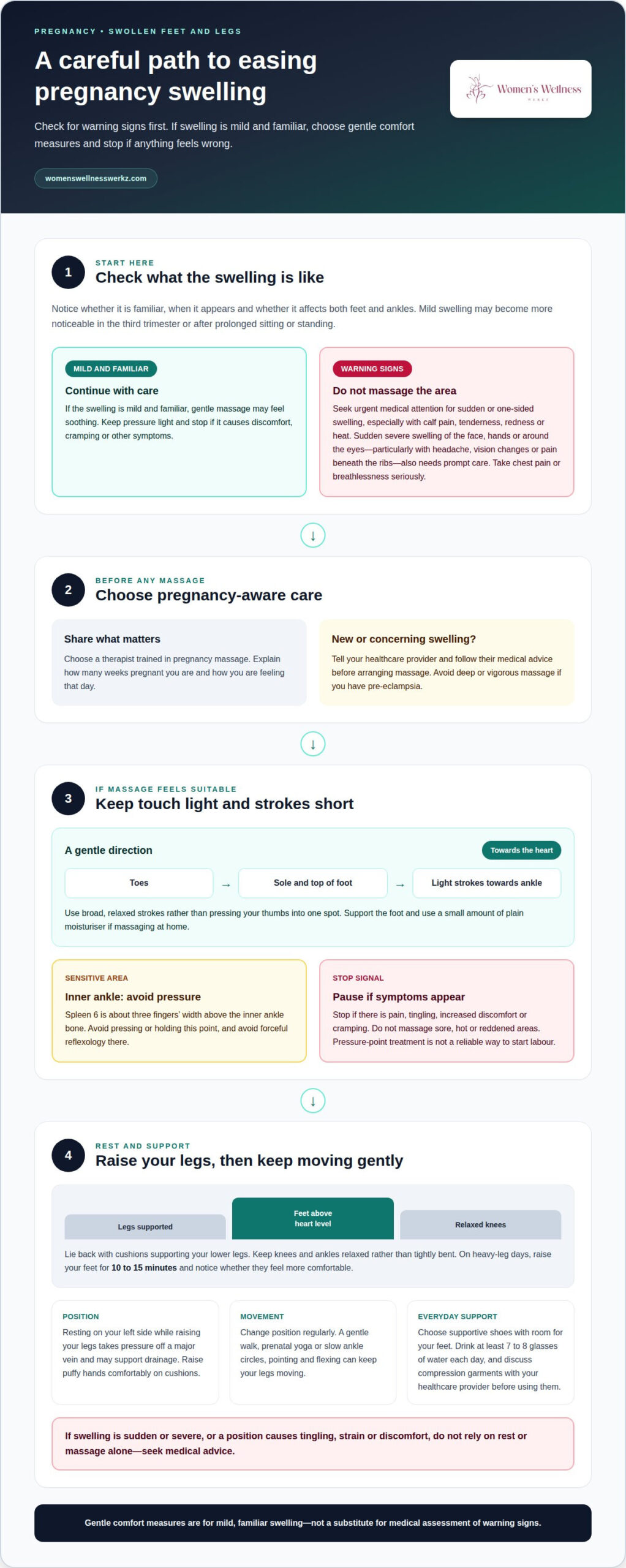
Gentle pregnancy massage may ease mild, familiar swelling, using light strokes towards the heart. Seek urgent medical care for sudden or one-sided swelling, a painful, red or hot leg, or severe swelling with headache or vision changes.
-
Recognise pregnancy-related swelling
Notice when swelling appears and whether it affects both feet and ankles. Mild oedema often becomes more noticeable in the third trimester and after prolonged standing or sitting. Oedema means fluid has collected in the body’s tissues. In Singapore’s heat, feet may feel especially puffy by evening. Use only gentle pressure, and stop if massage causes discomfort, cramping or other symptoms.
Research offers some context, not a promise of relief. The authors of the systematic review included 1,189 participants in pregnancy massage research. The authors of the study observed reduced lower-leg swelling after daily foot massages for five days in late pregnancy. These findings don’t establish that massage is suitable for every pregnancy or every type of swelling.
-
Consider causes and affected areas
Consider how the swelling is changing before choosing bodywork. During pregnancy, increased blood volume and fluid, relaxed blood vessels, and pressure from the growing uterus on major veins can contribute to swelling. It may affect the feet, ankles and lower legs, and some swelling in the hands can also occur. Sudden or severe swelling of the face needs a different response.
For pregnancy massage in Singapore, choose a therapist trained in pregnancy massage and explain how many weeks pregnant you are, along with your symptoms that day. Keep pressure light and strokes short, moving towards the heart. Avoid deep or vigorous massage if you have preeclampsia. Tell your healthcare provider about swelling and follow their medical advice before arranging massage if the swelling is new or concerning.
-
Check for urgent symptoms
Seek urgent medical attention for sudden swelling in one leg, especially with calf pain, tenderness, redness or heat. Do not massage that area. Sudden, severe swelling of the face, hands or around the eyes also needs prompt care, particularly with headache, vision changes or pain beneath the ribs, as these can signal pre-eclampsia.
Chest pain or breathlessness during pregnancy can be concerning and should be taken seriously. A 2015 study involving 132 women past their delivery dates found that acupressure did not induce labour, but this finding doesn’t establish that pressure-point treatment is safe for every person. If massage brings discomfort or cramping, stop the session and seek medical advice about concerning symptoms.
Sensitive ankle and foot pressure points to avoid
- Keep pressure light around the inner ankles. Spleen 6, a pregnancy acupressure point, sits about three fingers’ width above the inner ankle bone. Avoid pressing or holding this point during foot massage, and don’t use forceful reflexology techniques there. A trained pregnancy massage therapist can adapt the touch around sensitive areas rather than trying to trigger a response.
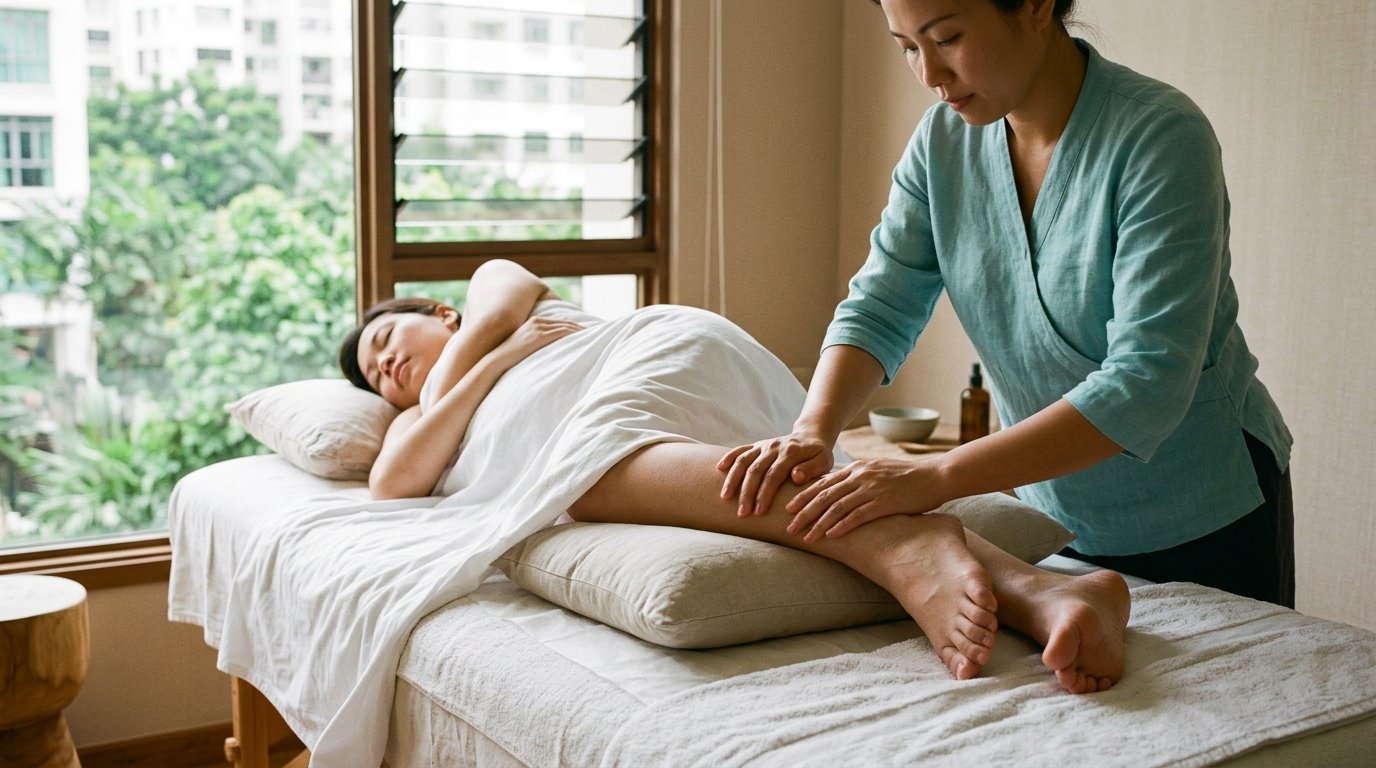
- Use broad, gentle strokes over the foot instead of pressing your thumbs into one spot. Begin at the toes, move across the sole and top of the foot, then stroke lightly towards the ankle. Gentle strokes may feel soothing, but stop if they cause pain, tingling or increased discomfort. Stop if any of these symptoms appear.
- Remember that foot massage is not a reliable way to start labour. Claims that pressing a particular ankle point will induce labour are no reason to test it at home. Pressure-point treatment is different from gentle comfort massage. If you have concerns about blood pressure, pregnancy symptoms or labour, speak with your doctor rather than using stronger pressure.
- For an at-home massage, sit comfortably and support your foot before applying a small amount of plain moisturiser. Use relaxed hands and light strokes, avoiding sore, hot or reddened areas. If swelling is one-sided or painful, leave the area untouched and seek medical advice, as massage may be unsuitable.
- A warm foot soak with salt water may feel soothing. Peppermint or eucalyptus oil is also sometimes added to soak water, but essential oils can irritate skin; avoid them if they cause a reaction and discuss their use with your doctor during pregnancy. For calm, pregnancy-aware touch, explore pregnancy massage support.
Elevating feet and hands to help reduce swelling
For swollen feet, rest with your legs raised above heart level. Gentle movement and regular changes of position can also help. The steps below offer practical ways to ease fluid pooling, including a comfortable way to support puffy hands.
- Lie back and support your lower legs with cushions, so your feet sit above heart level. Keep your knees and ankles relaxed rather than tightly bent. On heavy-leg days, elevate your feet for 10 to 15 minutes, then notice whether they feel more comfortable. Raise them before or after massage to encourage fluid movement towards the heart.
- Try resting on your left side while raising your legs. This position takes pressure off a major vein and may support drainage. For puffy hands, rest your forearms on cushions with your hands comfortably raised. Avoid any position that causes tingling, strain or discomfort. If swelling is sudden or severe, contact your healthcare provider rather than relying on rest alone.
- Break up long spells of sitting or standing by changing position regularly. A gentle walk, prenatal yoga or ankle rotations can keep your legs moving. To rotate your ankles, circle each foot slowly, then point and flex it. These small movements are practical during a desk break or after a meal, especially in Singapore’s warm weather.
- Choose shoes that support your arches and allow your feet room. Avoid staying barefoot for long periods if your feet feel sore or swollen. Drink at least 7 to 8 glasses of water each day, and discuss compression garments with your healthcare provider before using them. A provider can consider your pregnancy, symptoms and overall condition when discussing suitable support.
- Notice how swelling responds to rest and movement. Mild swelling may ease after raising your legs and sleeping overnight, but persistent, sudden or worsening swelling needs medical attention. If you are unsure what is normal for your pregnancy, share the changes with your healthcare provider and follow their advice.
Choosing a prenatal massage therapist
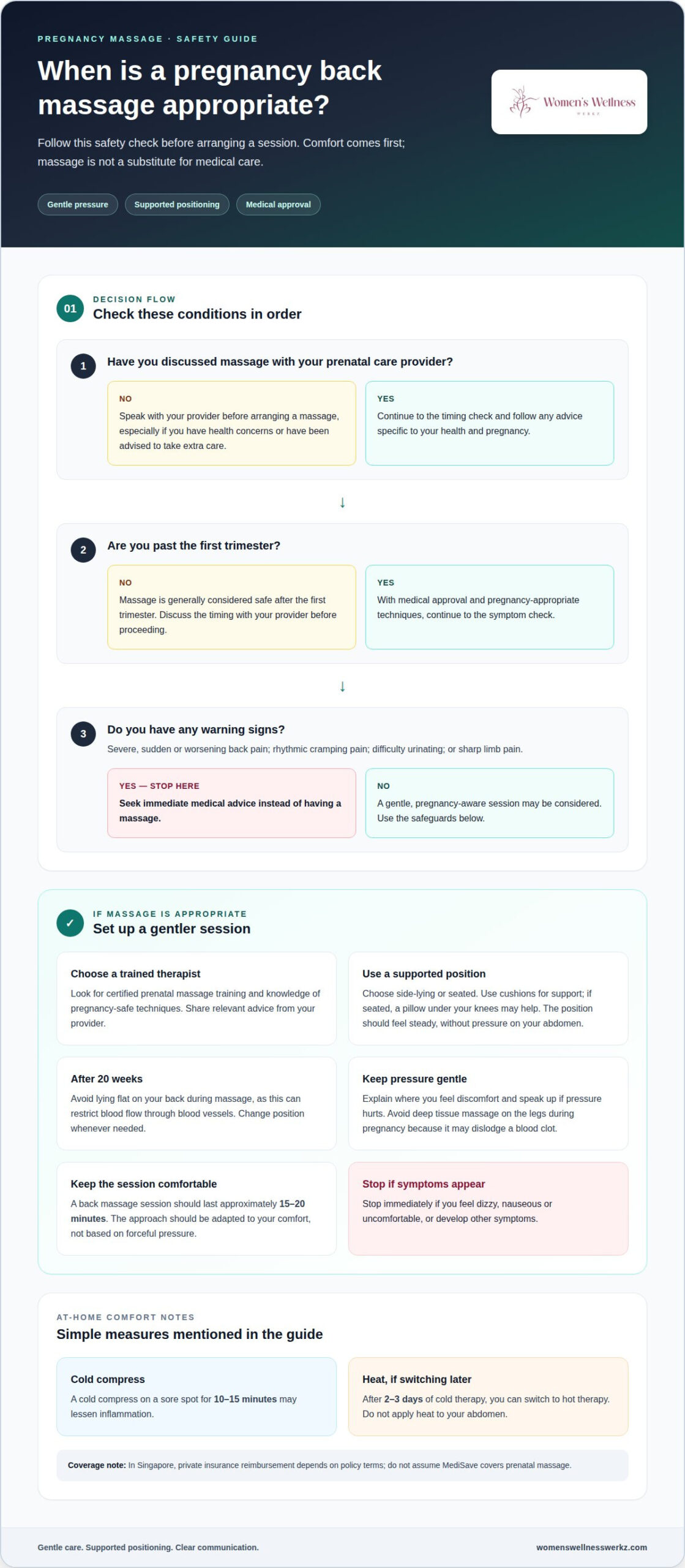
- Choose a registered massage therapist who is comfortable providing pregnancy massage. Ask about pregnancy-specific training and experience adapting sessions as comfort needs change. Many providers offer prenatal massage from the second trimester, depending on the pregnancy. Timing also depends on your health and symptoms. Follow your doctor’s advice if swelling is new or concerning.
- Before your session, tell the therapist how many weeks pregnant you are and how you feel that day. Mention whether swelling affects both feet or just one, and whether standing makes your legs feel heavier. Share any tenderness, cramping or other discomfort, along with advice from your doctor. These details help the therapist choose a suitable technique for you.
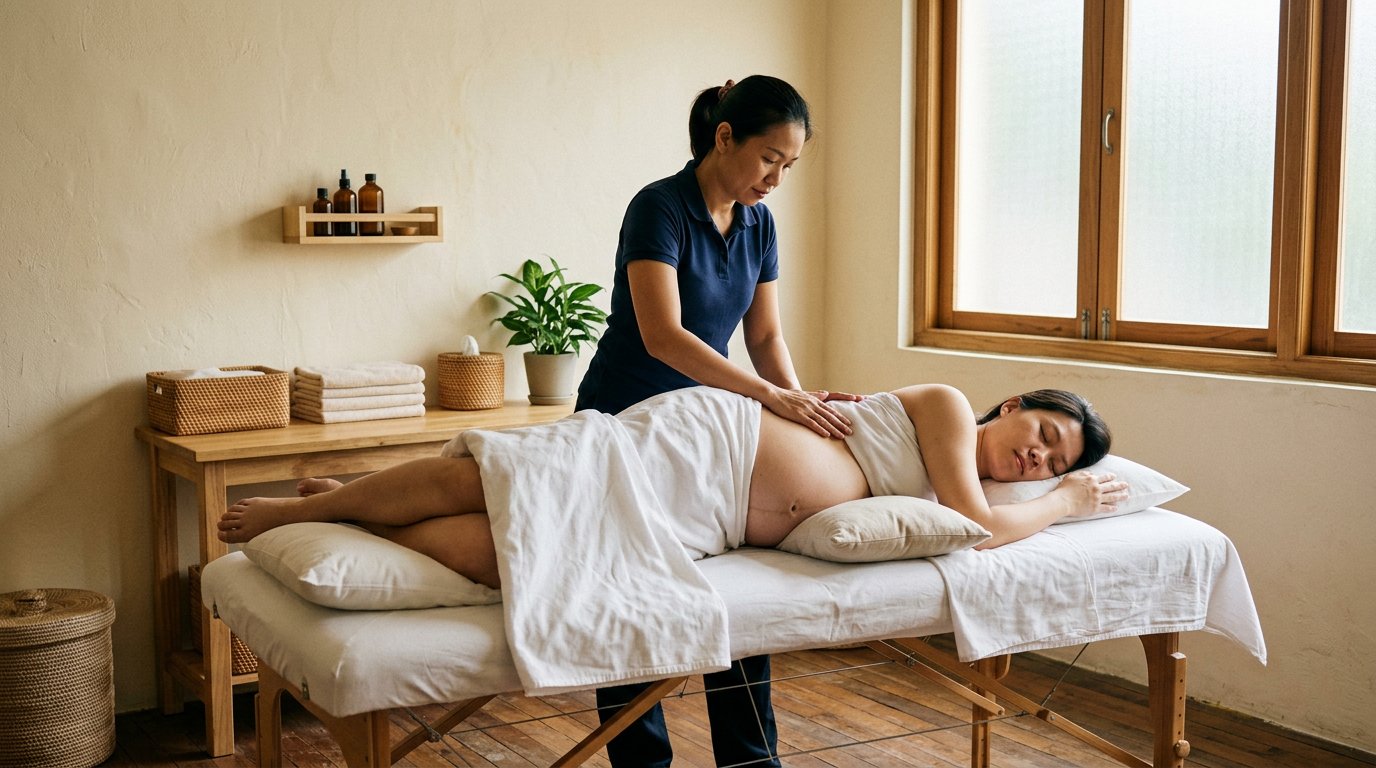
- Discuss positioning and pressure before the massage begins. Pregnancy massage can be performed in a supported side-lying position to avoid straining your bump. For prenatal massage for swollen feet, the therapist should use comfortable, light strokes rather than deep pressure over puffy areas. Ask for an adjustment or pause if a movement feels uncomfortable, and speak up if your symptoms change.
- Agree on a simple plan for your feet and lower legs. Gentle strokes towards the heart may support circulation, while raising your legs before or after treatment can encourage fluid drainage. Prenatal massage for swollen feet is about comfort, not a promise that swelling will disappear or blood flow will improve in every case. Stop if you feel discomfort, cramping or unwell.
- Choose a session for familiar, mild swelling, not sudden or painful symptoms. Massage isn’t a substitute for medical assessment when symptoms raise concern. For a pregnancy-focused session, explore prenatal massage options as a gentle next step.
Women’s Wellness Werkz: Prenatal Massage Package
Women’s Wellness Werkz offers the Prenatal Massage Package for expectant mothers seeking a soothing, pregnancy-focused massage. It may be a natural next step when familiar swelling or tired feet leave you wanting gentle support and time to relax. Share how far along you are and how you’re feeling, so the therapist can attend to your comfort during the session.
Massage is for comfort, not for assessing sudden or severe swelling. If you have concerning symptoms, seek medical advice before arranging bodywork. For pregnancy-related relaxation, the Prenatal Massage Package is the relevant offering. The Postnatal Massage Package is available after birth. Contact Women’s Wellness Werkz to discuss the Prenatal Massage Package.
Make space for gentler support
Pregnancy can change how your body feels from one day to the next, so let comfort guide your next step. Prenatal massage for swollen feet can be part of a restful routine when swelling is familiar and mild, while new or worrying symptoms need medical attention first. Your wellbeing comes before any bodywork.
Women’s Wellness Werkz offers a Prenatal Massage Package for pregnancy-focused care, alongside a Combo Massage Package and a Postnatal Massage Package for support across different stages. A session gives you dedicated time to share what feels tender, what helps you relax and how you would like the therapist to adapt the touch.
If you’d like to explore a gentle next step, contact Women’s Wellness Werkz about its prenatal massage offering. You deserve care that meets you with patience, and small moments of comfort can help you feel more supported through this changing season.
Frequently Asked Questions
Does prenatal massage really help with swollen feet?
Massage may ease the heavy, tight feeling of mild pregnancy swelling, but it cannot treat the underlying cause or replace medical care. It uses gentle touch, not a promise that swelling will disappear. For example, if your shoes feel snug after a day on your feet, a comfortable session may help you relax. Sudden or painful swelling needs medical assessment, not massage.
How can I keep my feet healthy during pregnancy?
Choose shoes that still feel comfortable later in the day, when feet may be more swollen. Good arch support can help as pregnancy changes how weight is carried; orthotics may offer extra support and distribute weight more evenly. Check for rubbing, pressure marks or sore spots after wearing shoes. If a foot problem persists or affects walking, discuss it with your healthcare provider.
How often should I come for leg symptoms?
There isn’t one visit schedule that suits every pattern of leg symptoms. For pregnancy-related swelling, one recommendation for manual lymphatic drainage is 1 to 2 sessions weekly; this isn’t a general schedule for every massage or every pregnancy. Frequency depends on your symptoms and health. If swelling changes suddenly, becomes painful or affects one leg, seek medical advice instead of arranging another session.
What are the benefits of foot massage during pregnancy?
A gentle foot massage can encourage blood flow and offer a soothing pause when tired feet feel tense. Some people also find that relaxing the surrounding muscles eases discomfort after walking or standing. Keep the touch comfortable, and stop if it causes pain or cramping. Massage is for comfort, not a treatment for a medical cause of swelling or a substitute for assessment.
What foot problems can arise during pregnancy?
Changes in weight distribution can contribute to over-pronation, where the arch flattens and the foot rolls inward. Some pregnant people also experience sore, swollen feet, calf cramps or discomfort associated with sciatica. Supportive footwear may make walking more comfortable. A new, painful or worsening problem, particularly swelling with redness or warmth, needs medical advice rather than pressure or massage.
When in pregnancy can I start?
Many providers offer pregnancy massage from the second trimester, depending on the pregnancy. The right time also depends on how you feel and whether symptoms need medical assessment first. Before arranging a session, discuss massage with your healthcare provider, especially if your pregnancy has complications or swelling is new. Tell the therapist your stage of pregnancy and how you feel that day.
Gentle massage may ease pregnancy-related swelling, but swollen legs are not always safe to rub. Prenatal massage for swollen feet should use light, short strokes towards the heart when swelling is mild. Sudden or one-sided swelling, pain, redness or heat calls for medical attention instead of massage. A calm, careful approach can offer soothing relief while keeping you alert to symptoms that need prompt care.
It is understandable to want your feet and ankles to feel lighter, especially after a long day in Singapore’s heat. This guide explains how to massage swollen legs gently, which ankle and foot pressure points to avoid, and how to raise your limbs for a restful pause. You will also learn what to look for in a pregnancy-trained massage therapist, so you can choose an approach that feels comfortable and reassuring.
Key Takeaways
- Keep any massage gentle, and pause if it feels uncomfortable; some swelling needs medical attention rather than massage.
- Learn which sensitive areas around the feet and ankles call for extra care during pregnancy.
- Raise your legs comfortably to give tired, swollen feet a chance to feel lighter.
- Choose a therapist trained in pregnancy massage and share how far along you are and how you’re feeling that day.
Is it safe to massage swollen legs in pregnancy?
Gentle pregnancy massage may ease mild, familiar swelling, using light strokes towards the heart. Seek urgent medical care for sudden or one-sided swelling, a painful, red or hot leg, or severe swelling with headache or vision changes.
-
Recognise pregnancy-related swelling
Notice when swelling appears and whether it affects both feet and ankles. Mild oedema often becomes more noticeable in the third trimester and after prolonged standing or sitting. Oedema means fluid has collected in the body’s tissues. In Singapore’s heat, feet may feel especially puffy by evening. Use only gentle pressure, and stop if massage causes discomfort, cramping or other symptoms.
Research offers some context, not a promise of relief. The authors of the systematic review included 1,189 participants in pregnancy massage research. The authors of the study observed reduced lower-leg swelling after daily foot massages for five days in late pregnancy. These findings don’t establish that massage is suitable for every pregnancy or every type of swelling.
-
Consider causes and affected areas
Consider how the swelling is changing before choosing bodywork. During pregnancy, increased blood volume and fluid, relaxed blood vessels, and pressure from the growing uterus on major veins can contribute to swelling. It may affect the feet, ankles and lower legs, and some swelling in the hands can also occur. Sudden or severe swelling of the face needs a different response.
For pregnancy massage in Singapore, choose a therapist trained in pregnancy massage and explain how many weeks pregnant you are, along with your symptoms that day. Keep pressure light and strokes short, moving towards the heart. Avoid deep or vigorous massage if you have preeclampsia. Tell your healthcare provider about swelling and follow their medical advice before arranging massage if the swelling is new or concerning.
-
Check for urgent symptoms
Seek urgent medical attention for sudden swelling in one leg, especially with calf pain, tenderness, redness or heat. Do not massage that area. Sudden, severe swelling of the face, hands or around the eyes also needs prompt care, particularly with headache, vision changes or pain beneath the ribs, as these can signal pre-eclampsia.
Chest pain or breathlessness during pregnancy can be concerning and should be taken seriously. A 2015 study involving 132 women past their delivery dates found that acupressure did not induce labour, but this finding doesn’t establish that pressure-point treatment is safe for every person. If massage brings discomfort or cramping, stop the session and seek medical advice about concerning symptoms.
Sensitive ankle and foot pressure points to avoid
- Keep pressure light around the inner ankles. Spleen 6, a pregnancy acupressure point, sits about three fingers’ width above the inner ankle bone. Avoid pressing or holding this point during foot massage, and don’t use forceful reflexology techniques there. A trained pregnancy massage therapist can adapt the touch around sensitive areas rather than trying to trigger a response.
- Use broad, gentle strokes over the foot instead of pressing your thumbs into one spot. Begin at the toes, move across the sole and top of the foot, then stroke lightly towards the ankle. Gentle strokes may feel soothing, but stop if they cause pain, tingling or increased discomfort. Stop if any of these symptoms appear.
- Remember that foot massage is not a reliable way to start labour. Claims that pressing a particular ankle point will induce labour are no reason to test it at home. Pressure-point treatment is different from gentle comfort massage. If you have concerns about blood pressure, pregnancy symptoms or labour, speak with your doctor rather than using stronger pressure.
- For an at-home massage, sit comfortably and support your foot before applying a small amount of plain moisturiser. Use relaxed hands and light strokes, avoiding sore, hot or reddened areas. If swelling is one-sided or painful, leave the area untouched and seek medical advice, as massage may be unsuitable.
- A warm foot soak with salt water may feel soothing. Peppermint or eucalyptus oil is also sometimes added to soak water, but essential oils can irritate skin; avoid them if they cause a reaction and discuss their use with your doctor during pregnancy. For calm, pregnancy-aware touch, explore pregnancy massage support.
Elevating feet and hands to help reduce swelling
For swollen feet, rest with your legs raised above heart level. Gentle movement and regular changes of position can also help. The steps below offer practical ways to ease fluid pooling, including a comfortable way to support puffy hands.
- Lie back and support your lower legs with cushions, so your feet sit above heart level. Keep your knees and ankles relaxed rather than tightly bent. On heavy-leg days, elevate your feet for 10 to 15 minutes, then notice whether they feel more comfortable. Raise them before or after massage to encourage fluid movement towards the heart.
- Try resting on your left side while raising your legs. This position takes pressure off a major vein and may support drainage. For puffy hands, rest your forearms on cushions with your hands comfortably raised. Avoid any position that causes tingling, strain or discomfort. If swelling is sudden or severe, contact your healthcare provider rather than relying on rest alone.
- Break up long spells of sitting or standing by changing position regularly. A gentle walk, prenatal yoga or ankle rotations can keep your legs moving. To rotate your ankles, circle each foot slowly, then point and flex it. These small movements are practical during a desk break or after a meal, especially in Singapore’s warm weather.
- Choose shoes that support your arches and allow your feet room. Avoid staying barefoot for long periods if your feet feel sore or swollen. Drink at least 7 to 8 glasses of water each day, and discuss compression garments with your healthcare provider before using them. A provider can consider your pregnancy, symptoms and overall condition when discussing suitable support.
- Notice how swelling responds to rest and movement. Mild swelling may ease after raising your legs and sleeping overnight, but persistent, sudden or worsening swelling needs medical attention. If you are unsure what is normal for your pregnancy, share the changes with your healthcare provider and follow their advice.
Choosing a prenatal massage therapist
- Choose a registered massage therapist who is comfortable providing pregnancy massage. Ask about pregnancy-specific training and experience adapting sessions as comfort needs change. Many providers offer prenatal massage from the second trimester, depending on the pregnancy. Timing also depends on your health and symptoms. Follow your doctor’s advice if swelling is new or concerning.
- Before your session, tell the therapist how many weeks pregnant you are and how you feel that day. Mention whether swelling affects both feet or just one, and whether standing makes your legs feel heavier. Share any tenderness, cramping or other discomfort, along with advice from your doctor. These details help the therapist choose a suitable technique for you.
- Discuss positioning and pressure before the massage begins. Pregnancy massage can be performed in a supported side-lying position to avoid straining your bump. For prenatal massage for swollen feet, the therapist should use comfortable, light strokes rather than deep pressure over puffy areas. Ask for an adjustment or pause if a movement feels uncomfortable, and speak up if your symptoms change.
- Agree on a simple plan for your feet and lower legs. Gentle strokes towards the heart may support circulation, while raising your legs before or after treatment can encourage fluid drainage. Prenatal massage for swollen feet is about comfort, not a promise that swelling will disappear or blood flow will improve in every case. Stop if you feel discomfort, cramping or unwell.
- Choose a session for familiar, mild swelling, not sudden or painful symptoms. Massage isn’t a substitute for medical assessment when symptoms raise concern. For a pregnancy-focused session, explore prenatal massage options as a gentle next step.
Women’s Wellness Werkz: Prenatal Massage Package
Women’s Wellness Werkz offers the Prenatal Massage Package for expectant mothers seeking a soothing, pregnancy-focused massage. It may be a natural next step when familiar swelling or tired feet leave you wanting gentle support and time to relax. Share how far along you are and how you’re feeling, so the therapist can attend to your comfort during the session.
Massage is for comfort, not for assessing sudden or severe swelling. If you have concerning symptoms, seek medical advice before arranging bodywork. For pregnancy-related relaxation, the Prenatal Massage Package is the relevant offering. The Postnatal Massage Package is available after birth. Contact Women’s Wellness Werkz to discuss the Prenatal Massage Package.
Make space for gentler support
Pregnancy can change how your body feels from one day to the next, so let comfort guide your next step. Prenatal massage for swollen feet can be part of a restful routine when swelling is familiar and mild, while new or worrying symptoms need medical attention first. Your wellbeing comes before any bodywork.
Women’s Wellness Werkz offers a Prenatal Massage Package for pregnancy-focused care, alongside a Combo Massage Package and a Postnatal Massage Package for support across different stages. A session gives you dedicated time to share what feels tender, what helps you relax and how you would like the therapist to adapt the touch.
If you’d like to explore a gentle next step, contact Women’s Wellness Werkz about its prenatal massage offering. You deserve care that meets you with patience, and small moments of comfort can help you feel more supported through this changing season.
Frequently Asked Questions
Does prenatal massage really help with swollen feet?
Massage may ease the heavy, tight feeling of mild pregnancy swelling, but it cannot treat the underlying cause or replace medical care. It uses gentle touch, not a promise that swelling will disappear. For example, if your shoes feel snug after a day on your feet, a comfortable session may help you relax. Sudden or painful swelling needs medical assessment, not massage.
How can I keep my feet healthy during pregnancy?
Choose shoes that still feel comfortable later in the day, when feet may be more swollen. Good arch support can help as pregnancy changes how weight is carried; orthotics may offer extra support and distribute weight more evenly. Check for rubbing, pressure marks or sore spots after wearing shoes. If a foot problem persists or affects walking, discuss it with your healthcare provider.
How often should I come for leg symptoms?
There isn’t one visit schedule that suits every pattern of leg symptoms. For pregnancy-related swelling, one recommendation for manual lymphatic drainage is 1 to 2 sessions weekly; this isn’t a general schedule for every massage or every pregnancy. Frequency depends on your symptoms and health. If swelling changes suddenly, becomes painful or affects one leg, seek medical advice instead of arranging another session.
What are the benefits of foot massage during pregnancy?
A gentle foot massage can encourage blood flow and offer a soothing pause when tired feet feel tense. Some people also find that relaxing the surrounding muscles eases discomfort after walking or standing. Keep the touch comfortable, and stop if it causes pain or cramping. Massage is for comfort, not a treatment for a medical cause of swelling or a substitute for assessment.
What foot problems can arise during pregnancy?
Changes in weight distribution can contribute to over-pronation, where the arch flattens and the foot rolls inward. Some pregnant people also experience sore, swollen feet, calf cramps or discomfort associated with sciatica. Supportive footwear may make walking more comfortable. A new, painful or worsening problem, particularly swelling with redness or warmth, needs medical advice rather than pressure or massage.
When in pregnancy can I start?
Many providers offer pregnancy massage from the second trimester, depending on the pregnancy. The right time also depends on how you feel and whether symptoms need medical assessment first. Before arranging a session, discuss massage with your healthcare provider, especially if your pregnancy has complications or swelling is new. Tell the therapist your stage of pregnancy and how you feel that day.