Lymphatic Drainage for Fluid Retention: Benefits and Risks

Lymphatic Drainage for Fluid Retention: Benefits and Risks

Lymphatic drainage for fluid retention is a gentle, light-pressure massage that uses slow, rhythmic movements to encourage lymph fluid to move. It may help ease swelling, but it is not a guaranteed solution for every cause of fluid build-up, nor is it a detox or weight-loss treatment.

Because the strokes are light rather than deep, the treatment should feel gentle. An initial appointment generally includes a discussion of your health history and why you are seeking care. Massage may be used on its own or alongside other care. If lymphoedema is suspected or diagnosed, seek support from an appropriately trained healthcare professional.

This article explains what a session involves, how it may support swelling and circulation, when treatments such as compression matter, and what to know about discomfort and possible side effects. Sudden swelling in one limb, especially with pain, warmth, redness or tenderness, needs prompt medical assessment. Chest pain or shortness of breath requires emergency medical attention.

Key Takeaways

  • Understand how gentle, rhythmic strokes encourage lymph fluid to move through the body.
  • Learn why massage may be combined with compression and movement, rather than used as a replacement for them.
  • See what realistic support for swelling and circulation can look like, and why results vary with its cause.
  • Recognise health conditions and symptoms that call for medical advice before massage.

What is lymphatic drainage massage?

Lymphatic drainage massage uses light, deliberate movements to encourage lymph fluid to move through the body. How often you need it depends on the cause and care plan; intensive decongestive treatment for lymphoedema may involve daily sessions for several weeks.

The lymphatic system and drainage treatment

The lymphatic system helps regulate fluid levels, filters bacteria and contains types of white blood cells. If drainage is disrupted, lymph can collect in tissues and cause swelling. Massage uses gentle pressure and specific techniques to encourage fluid movement. Because swelling has different possible causes, suspected lymphoedema needs assessment to determine suitable care.

Massage techniques and treatment areas

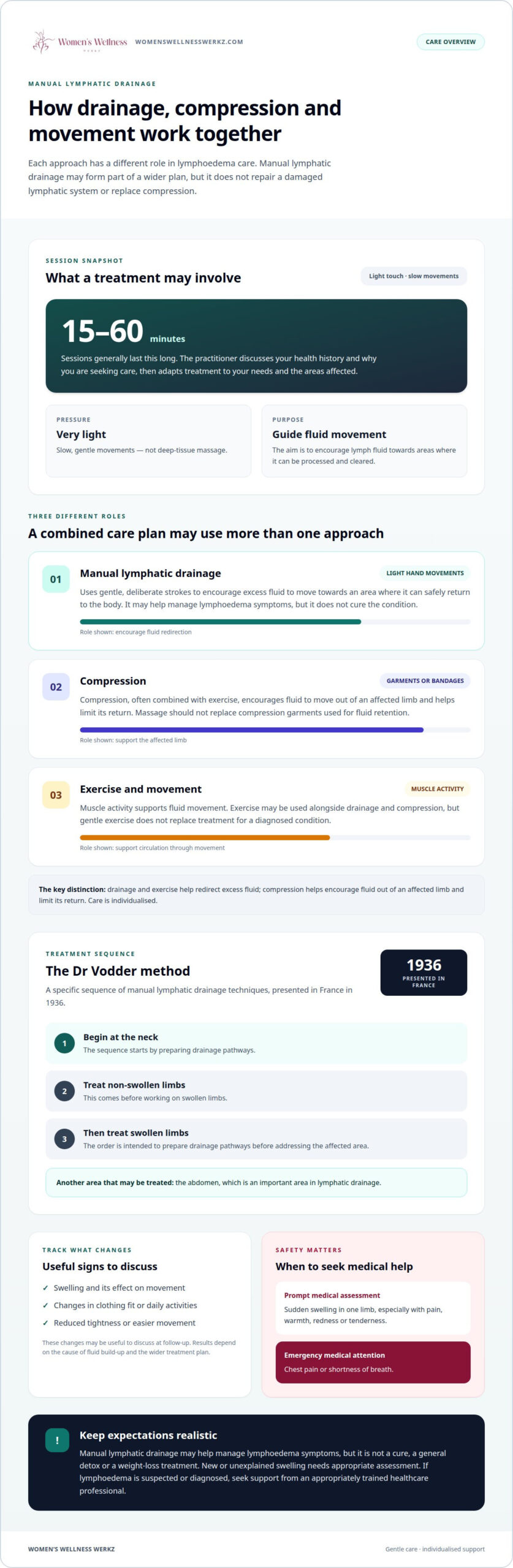
Manual lymphatic drainage uses gentle, rhythmic movements to encourage lymph fluid towards areas where it can be processed and cleared. Unlike deep-tissue massage, the touch is light. A session may include the neck and armpits, and the groin area with your consent. These techniques and treatment areas are intended to guide fluid movement, and the pressure should feel comfortable, not forceful.

The Dr Vodder treatment sequence

The Dr Vodder method is a specific sequence of manual lymphatic drainage techniques, presented in France by Dr Emil and Astrid Vodder in 1936. It begins at the neck, then treats non-swollen limbs before swollen ones. This order prepares drainage pathways before addressing the affected area. The abdomen may also be treated, as it is an important area in lymphatic drainage.

To assess whether treatment is helping, track swelling and its effect on movement, clothing or daily activities. Reduced tightness or easier movement may be useful changes to discuss at follow-up. Gentle exercise can also support circulation, but it does not replace treatment for a diagnosed condition.

For lymphoedema, surgery may remove fat from an affected limb or restore fluid flow around the damaged part of the lymphatic system. These are different approaches, selected according to the problem being treated.

Using manual lymphatic drainage alone or with other treatments

Manual lymphatic drainage may be used alone or as part of a wider care plan. Unlike compression garments, it uses light hand movements. Exercise supports fluid movement through muscle activity. Cleveland Clinic advises that massage should not replace compression garments used for fluid retention.

Conditions treated with manual lymphatic drainage

Manual lymphatic drainage may be used for lymphoedema and swelling associated with chronic venous insufficiency, fibromyalgia, injury, lipedema or rheumatoid arthritis. For example, healthcare providers may use it to help manage lymphoedema after breast cancer surgery. The cause matters: swelling after an injury differs from fluid build-up linked to a longer-term condition. An individualised plan can account for the affected area, symptoms and other treatments, rather than applying the same routine to everyone.

How manual lymphatic drainage is performed

A session uses very light, slow movements directed towards the torso to encourage fluid movement. The pressure is often compared with stroking a newborn’s head, rather than deep-tissue massage. Sessions generally last 15 to 60 minutes. At an initial appointment, the practitioner discusses your health history and reason for seeking care, helping shape the treatment around your needs and the areas affected.

Comparing drainage, compression and exercise

Manual lymphatic drainage, compression and exercise have different roles in lymphoedema care. UT MD Anderson explains that drainage and exercise both redirect excess fluid towards an area where it can safely return to the body. Compression garments or bandages, combined with exercise, encourage fluid to move out of an affected limb. Care is individualised, and manual drainage does not repair a damaged lymphatic system.

If you have a condition affecting circulation or fluid balance, seek appropriate guidance before starting compression, self-massage or a new exercise programme. A lymphoedema therapist can teach you or a carer simple drainage techniques for ongoing maintenance.
Lymphatic Drainage for Fluid Retention: Benefits and Risks

Potential benefits for swelling and circulation

Manual lymphatic drainage is used to help manage swelling linked with lymphoedema. What it can offer depends on the cause of the fluid build-up and the wider treatment plan.

Potential benefits for swelling

For lymphoedema, decongestive lymphatic therapy is a recommended approach to controlling symptoms, not a cure. Gentle drainage techniques aim to move excess fluid away from an affected area. If an arm feels heavy or a leg looks swollen, reducing fluid build-up may ease some discomfort and support everyday movement. The goal is symptom management, not reversing damage to lymphatic vessels.

Circulation and possible benefits

Manual lymphatic drainage focuses on lymph circulation, which is distinct from blood flow. Its gentle movements encourage lymph fluid towards areas where the body can process and return it. For example, someone with swelling after breast cancer surgery may have drainage included in a broader lymphoedema plan. Exercise and compression can also support fluid movement, so a therapist considers how these approaches fit together.

Evidence for oedema and fluid retention

The clearest treatment role described here is lymphoedema management: decongestive lymphatic therapy can help control symptoms, but cannot cure the condition. Drainage and exercise are used to redirect excess fluid, while compression helps limit its return to an affected limb. These approaches address a diagnosed swelling problem; they do not mean that every instance of fluid retention will respond to massage.

This distinction matters if your swelling is new or unexplained. Lymphatic drainage massage is not a general detox or weight-loss treatment, and it does not replace a doctor’s assessment when lymphoedema is suspected. A treatment plan can account for the cause, affected area and symptoms, with progress considered alongside compression, exercise and other care.

Pain and risks of lymphatic drainage

Manual lymphatic drainage uses light pressure, so it should not feel like deep-tissue massage. If a stroke feels uncomfortable, particularly around the underarm, less pressure is appropriate. Tell the practitioner if touch causes discomfort, and pause rather than pushing through pain.

Some effects may appear after treatment. Increased urination is the most common side effect of manual lymph drainage and lymphoedema exercises, particularly during the first 24-48 hours. Fatigue, headaches and nausea are also possible. These effects can affect how you feel after a session, so allow time to notice changes and seek medical advice if symptoms concern you.

Some health conditions make lymphatic massage unsuitable or mean you should seek medical guidance first. Avoid treatment if you have blood clots, deep vein thrombosis, cellulitis, fever, infection, heart disease, kidney failure or stroke. Cancer in the massage area, or skin damaged by radiation therapy, also calls for particular caution. If you have had recent surgery or have an unhealed wound, ask your healthcare provider for advice before massage.

Pay attention to the pattern of swelling in your tissues and limbs. Sudden swelling in one arm or leg, especially with pain, warmth, redness or tenderness, needs prompt medical assessment. Chest pain or shortness of breath requires emergency medical attention. If diagnosed lymphoedema worsens, including increasing swelling in your arms or legs, contact your healthcare provider.

Lymphatic drainage for fluid retention cannot address every cause of swelling, and massage is not a substitute for medical assessment. The lymphatic system and bloodstream are connected, so moving fluid may not be appropriate when infection or a clot is present. A doctor can assess the cause before you begin treatment, particularly if symptoms are unexplained or changing quickly.

If you’re considering a gentle session, explore manual lymphatic drainage massage as a women’s wellness treatment, and discuss any relevant health concerns before proceeding.

Women’s Wellness Werkz: Manual Lymphatic Drainage Massage

Women’s Wellness Werkz offers Manual Lymphatic Drainage Massage for women seeking a gentle massage focused on lymphatic drainage. It may suit you if you want supportive wellness care for a feeling of fluid retention, including during postpartum recovery. It is not a substitute for assessment or treatment of diagnosed lymphoedema or unexplained swelling.

Qualified therapists are trained in Women’s Wellness Werkz massage protocols and travel to clients’ locations. Your health history and reason for seeking care can help guide whether massage is appropriate. If you have sudden swelling, an infection, a blood clot, significant heart or kidney concerns, or recent surgery, seek medical advice before arranging a massage.

If this service suits your wellness needs, book a Manual Lymphatic Drainage Massage with Women’s Wellness Werkz.

Choose support that fits your next step

Start by considering what would make daily life feel more manageable, whether that means greater ease with rest, movement or postpartum routines. If you are considering lymphatic drainage for fluid retention, keep your expectations grounded in the cause of the swelling and the care that suits it. Unexplained swelling needs medical assessment before you choose massage.

Women’s Wellness Werkz supports women at different stages with its Postnatal Massage Package, Combo Massage Package and Prenatal Massage Package. Its therapists are trained to deliver the company’s massage protocols. These options address different stages and needs, helping you focus on the kind of support that suits your circumstances rather than choosing a treatment simply because it is familiar.

When you’re ready to discuss your needs, Contact Women’s Wellness Werkz. A considered conversation can help you take a calm next step towards care that feels right for you.

Frequently Asked Questions

What Is the Lymphatic System?

The lymphatic system is a network that moves lymph fluid through your body. Unlike the heart, it has no central pump; movement in surrounding muscles helps propel fluid along. This is one reason gentle movement features in lymphoedema care. Lymph nodes sit along the network, including in the neck, armpits and groin, and help filter material from lymph.

How does MLD work?

Manual lymphatic drainage (MLD) redirects excess fluid from a swollen limb towards an unaffected area, where it can be processed and excreted. For diagnosed lymphoedema, it forms part of care tailored to the affected area and your needs. The aim is to manage swelling, not to repair damage to the lymphatic system or reverse lymphoedema.

How long will it take for me to feel better?

There is no reliable timeframe for feeling better after MLD. For lymphoedema, intensive decongestive treatment may involve daily sessions for several weeks, followed by reviews every few months to assess progress. Your care team can use these reviews to consider changes in symptoms and whether your management plan needs adjustment.

Is there anything I shouldn’t do with lymphoedema?

Avoid having lymphatic drainage performed directly over cancerous tissue or skin damaged by radiation therapy. This area-specific precaution does not mean avoiding all treatment: the location and condition of your skin matter. If cancer treatment or radiation has affected the area you want treated, discuss the proposed massage with your healthcare team before proceeding.

Is there anything else I should know about managing lymphoedema?

Drinking water does not make lymphoedema worse, and adequate hydration remains important. You do not need to restrict fluids simply because you have swelling. Follow any personal fluid guidance you have received for another health condition, and mention changing symptoms at your regular lymphoedema review so your care plan can account for them.

What Can You Do Between Appointments?

Keep your affected limb elevated whenever possible, as this may help manage swelling. If you take part in athletics and have been advised to wear a compression garment, use it during activity. These measures can complement your prescribed care between appointments. Follow the guidance for your condition rather than adding unfamiliar techniques to your routine.
Lymphatic drainage for fluid retention is a gentle, light-pressure massage that uses slow, rhythmic movements to encourage lymph fluid to move. It may help ease swelling, but it is not a guaranteed solution for every cause of fluid build-up, nor is it a detox or weight-loss treatment.

Because the strokes are light rather than deep, the treatment should feel gentle. An initial appointment generally includes a discussion of your health history and why you are seeking care. Massage may be used on its own or alongside other care. If lymphoedema is suspected or diagnosed, seek support from an appropriately trained healthcare professional.

This article explains what a session involves, how it may support swelling and circulation, when treatments such as compression matter, and what to know about discomfort and possible side effects. Sudden swelling in one limb, especially with pain, warmth, redness or tenderness, needs prompt medical assessment. Chest pain or shortness of breath requires emergency medical attention.

Key Takeaways

  • Understand how gentle, rhythmic strokes encourage lymph fluid to move through the body.
  • Learn why massage may be combined with compression and movement, rather than used as a replacement for them.
  • See what realistic support for swelling and circulation can look like, and why results vary with its cause.
  • Recognise health conditions and symptoms that call for medical advice before massage.

What is lymphatic drainage massage?

Lymphatic drainage massage uses light, deliberate movements to encourage lymph fluid to move through the body. How often you need it depends on the cause and care plan; intensive decongestive treatment for lymphoedema may involve daily sessions for several weeks.

The lymphatic system and drainage treatment

The lymphatic system helps regulate fluid levels, filters bacteria and contains types of white blood cells. If drainage is disrupted, lymph can collect in tissues and cause swelling. Massage uses gentle pressure and specific techniques to encourage fluid movement. Because swelling has different possible causes, suspected lymphoedema needs assessment to determine suitable care.

Massage techniques and treatment areas

Manual lymphatic drainage uses gentle, rhythmic movements to encourage lymph fluid towards areas where it can be processed and cleared. Unlike deep-tissue massage, the touch is light. A session may include the neck and armpits, and the groin area with your consent. These techniques and treatment areas are intended to guide fluid movement, and the pressure should feel comfortable, not forceful.

The Dr Vodder treatment sequence

The Dr Vodder method is a specific sequence of manual lymphatic drainage techniques, presented in France by Dr Emil and Astrid Vodder in 1936. It begins at the neck, then treats non-swollen limbs before swollen ones. This order prepares drainage pathways before addressing the affected area. The abdomen may also be treated, as it is an important area in lymphatic drainage.

To assess whether treatment is helping, track swelling and its effect on movement, clothing or daily activities. Reduced tightness or easier movement may be useful changes to discuss at follow-up. Gentle exercise can also support circulation, but it does not replace treatment for a diagnosed condition.

For lymphoedema, surgery may remove fat from an affected limb or restore fluid flow around the damaged part of the lymphatic system. These are different approaches, selected according to the problem being treated.

Using manual lymphatic drainage alone or with other treatments

Manual lymphatic drainage may be used alone or as part of a wider care plan. Unlike compression garments, it uses light hand movements. Exercise supports fluid movement through muscle activity. Cleveland Clinic advises that massage should not replace compression garments used for fluid retention.

Conditions treated with manual lymphatic drainage

Manual lymphatic drainage may be used for lymphoedema and swelling associated with chronic venous insufficiency, fibromyalgia, injury, lipedema or rheumatoid arthritis. For example, healthcare providers may use it to help manage lymphoedema after breast cancer surgery. The cause matters: swelling after an injury differs from fluid build-up linked to a longer-term condition. An individualised plan can account for the affected area, symptoms and other treatments, rather than applying the same routine to everyone.

How manual lymphatic drainage is performed

A session uses very light, slow movements directed towards the torso to encourage fluid movement. The pressure is often compared with stroking a newborn’s head, rather than deep-tissue massage. Sessions generally last 15 to 60 minutes. At an initial appointment, the practitioner discusses your health history and reason for seeking care, helping shape the treatment around your needs and the areas affected.

Comparing drainage, compression and exercise

Manual lymphatic drainage, compression and exercise have different roles in lymphoedema care. UT MD Anderson explains that drainage and exercise both redirect excess fluid towards an area where it can safely return to the body. Compression garments or bandages, combined with exercise, encourage fluid to move out of an affected limb. Care is individualised, and manual drainage does not repair a damaged lymphatic system.

If you have a condition affecting circulation or fluid balance, seek appropriate guidance before starting compression, self-massage or a new exercise programme. A lymphoedema therapist can teach you or a carer simple drainage techniques for ongoing maintenance.

Lymphatic Drainage for Fluid Retention: Benefits and Risks

Potential benefits for swelling and circulation

Manual lymphatic drainage is used to help manage swelling linked with lymphoedema. What it can offer depends on the cause of the fluid build-up and the wider treatment plan.

Potential benefits for swelling

For lymphoedema, decongestive lymphatic therapy is a recommended approach to controlling symptoms, not a cure. Gentle drainage techniques aim to move excess fluid away from an affected area. If an arm feels heavy or a leg looks swollen, reducing fluid build-up may ease some discomfort and support everyday movement. The goal is symptom management, not reversing damage to lymphatic vessels.

Circulation and possible benefits

Manual lymphatic drainage focuses on lymph circulation, which is distinct from blood flow. Its gentle movements encourage lymph fluid towards areas where the body can process and return it. For example, someone with swelling after breast cancer surgery may have drainage included in a broader lymphoedema plan. Exercise and compression can also support fluid movement, so a therapist considers how these approaches fit together.

Evidence for oedema and fluid retention

The clearest treatment role described here is lymphoedema management: decongestive lymphatic therapy can help control symptoms, but cannot cure the condition. Drainage and exercise are used to redirect excess fluid, while compression helps limit its return to an affected limb. These approaches address a diagnosed swelling problem; they do not mean that every instance of fluid retention will respond to massage.

This distinction matters if your swelling is new or unexplained. Lymphatic drainage massage is not a general detox or weight-loss treatment, and it does not replace a doctor’s assessment when lymphoedema is suspected. A treatment plan can account for the cause, affected area and symptoms, with progress considered alongside compression, exercise and other care.

Pain and risks of lymphatic drainage

Manual lymphatic drainage uses light pressure, so it should not feel like deep-tissue massage. If a stroke feels uncomfortable, particularly around the underarm, less pressure is appropriate. Tell the practitioner if touch causes discomfort, and pause rather than pushing through pain.

Some effects may appear after treatment. Increased urination is the most common side effect of manual lymph drainage and lymphoedema exercises, particularly during the first 24-48 hours. Fatigue, headaches and nausea are also possible. These effects can affect how you feel after a session, so allow time to notice changes and seek medical advice if symptoms concern you.

Some health conditions make lymphatic massage unsuitable or mean you should seek medical guidance first. Avoid treatment if you have blood clots, deep vein thrombosis, cellulitis, fever, infection, heart disease, kidney failure or stroke. Cancer in the massage area, or skin damaged by radiation therapy, also calls for particular caution. If you have had recent surgery or have an unhealed wound, ask your healthcare provider for advice before massage.

Pay attention to the pattern of swelling in your tissues and limbs. Sudden swelling in one arm or leg, especially with pain, warmth, redness or tenderness, needs prompt medical assessment. Chest pain or shortness of breath requires emergency medical attention. If diagnosed lymphoedema worsens, including increasing swelling in your arms or legs, contact your healthcare provider.

Lymphatic drainage for fluid retention cannot address every cause of swelling, and massage is not a substitute for medical assessment. The lymphatic system and bloodstream are connected, so moving fluid may not be appropriate when infection or a clot is present. A doctor can assess the cause before you begin treatment, particularly if symptoms are unexplained or changing quickly.

If you’re considering a gentle session, explore manual lymphatic drainage massage as a women’s wellness treatment, and discuss any relevant health concerns before proceeding.

Women’s Wellness Werkz: Manual Lymphatic Drainage Massage

Women’s Wellness Werkz offers Manual Lymphatic Drainage Massage for women seeking a gentle massage focused on lymphatic drainage. It may suit you if you want supportive wellness care for a feeling of fluid retention, including during postpartum recovery. It is not a substitute for assessment or treatment of diagnosed lymphoedema or unexplained swelling.

Qualified therapists are trained in Women’s Wellness Werkz massage protocols and travel to clients’ locations. Your health history and reason for seeking care can help guide whether massage is appropriate. If you have sudden swelling, an infection, a blood clot, significant heart or kidney concerns, or recent surgery, seek medical advice before arranging a massage.

If this service suits your wellness needs, book a Manual Lymphatic Drainage Massage with Women’s Wellness Werkz.

Choose support that fits your next step

Start by considering what would make daily life feel more manageable, whether that means greater ease with rest, movement or postpartum routines. If you are considering lymphatic drainage for fluid retention, keep your expectations grounded in the cause of the swelling and the care that suits it. Unexplained swelling needs medical assessment before you choose massage.

Women’s Wellness Werkz supports women at different stages with its Postnatal Massage Package, Combo Massage Package and Prenatal Massage Package. Its therapists are trained to deliver the company’s massage protocols. These options address different stages and needs, helping you focus on the kind of support that suits your circumstances rather than choosing a treatment simply because it is familiar.

When you’re ready to discuss your needs, Contact Women’s Wellness Werkz. A considered conversation can help you take a calm next step towards care that feels right for you.

Frequently Asked Questions

What Is the Lymphatic System?

The lymphatic system is a network that moves lymph fluid through your body. Unlike the heart, it has no central pump; movement in surrounding muscles helps propel fluid along. This is one reason gentle movement features in lymphoedema care. Lymph nodes sit along the network, including in the neck, armpits and groin, and help filter material from lymph.

How does MLD work?

Manual lymphatic drainage (MLD) redirects excess fluid from a swollen limb towards an unaffected area, where it can be processed and excreted. For diagnosed lymphoedema, it forms part of care tailored to the affected area and your needs. The aim is to manage swelling, not to repair damage to the lymphatic system or reverse lymphoedema.

How long will it take for me to feel better?

There is no reliable timeframe for feeling better after MLD. For lymphoedema, intensive decongestive treatment may involve daily sessions for several weeks, followed by reviews every few months to assess progress. Your care team can use these reviews to consider changes in symptoms and whether your management plan needs adjustment.

Is there anything I shouldn’t do with lymphoedema?

Avoid having lymphatic drainage performed directly over cancerous tissue or skin damaged by radiation therapy. This area-specific precaution does not mean avoiding all treatment: the location and condition of your skin matter. If cancer treatment or radiation has affected the area you want treated, discuss the proposed massage with your healthcare team before proceeding.

Is there anything else I should know about managing lymphoedema?

Drinking water does not make lymphoedema worse, and adequate hydration remains important. You do not need to restrict fluids simply because you have swelling. Follow any personal fluid guidance you have received for another health condition, and mention changing symptoms at your regular lymphoedema review so your care plan can account for them.

What Can You Do Between Appointments?

Keep your affected limb elevated whenever possible, as this may help manage swelling. If you take part in athletics and have been advised to wear a compression garment, use it during activity. These measures can complement your prescribed care between appointments. Follow the guidance for your condition rather than adding unfamiliar techniques to your routine.
Manual Lymphatic Drainage in Malaysia for Swelling Care

Manual Lymphatic Drainage in Malaysia for Swelling Care

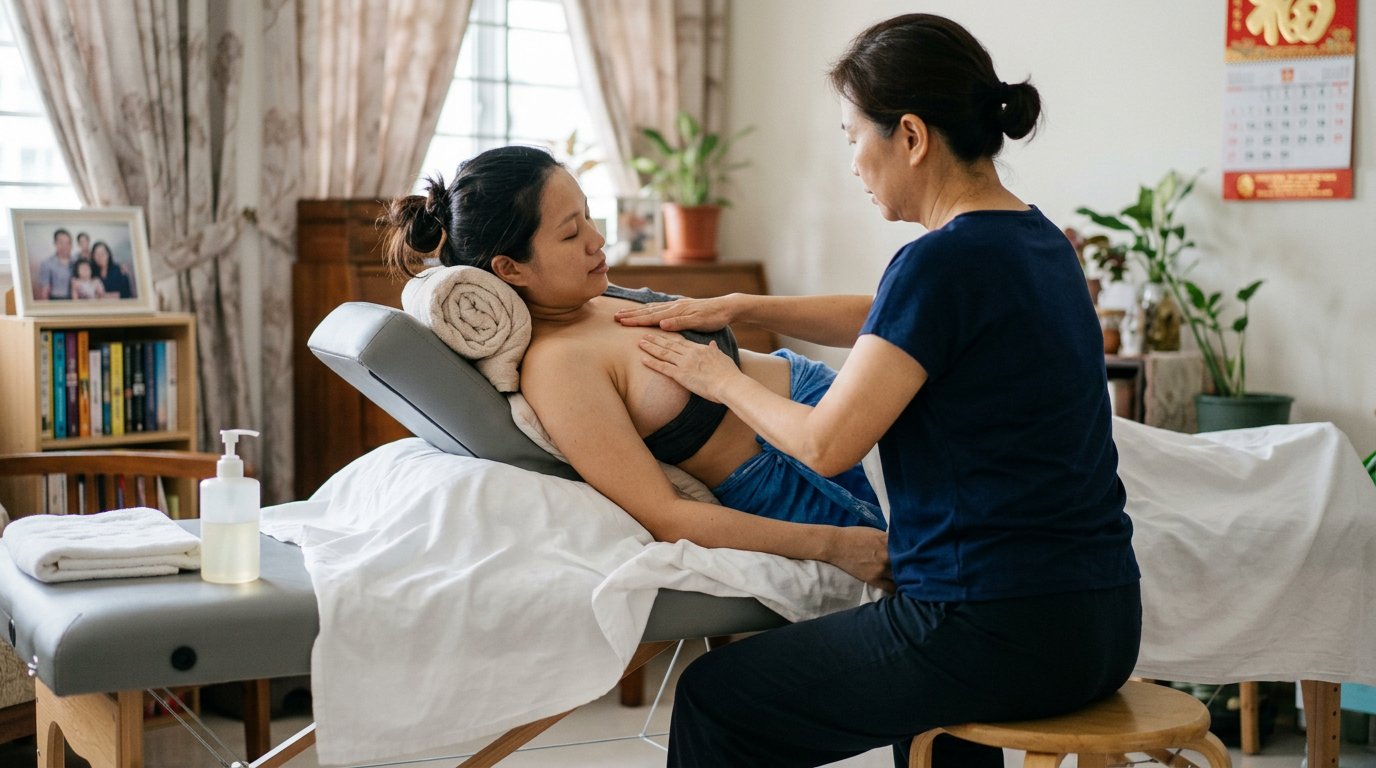
Manual lymphatic drainage Singapore searches often lead to general guidance, but treatment suitability depends on the cause of swelling and your health. At Women’s Wellness Werkz, manual lymphatic drainage is provided as a gentle massage technique using light pressure and rhythmic movements. After surgery, the procedure, healing stage and your surgeon’s clearance also matter.

It should feel light rather than forceful. This guide explains how the technique works, when it may be considered for swelling, what affects session timing and when to seek medical advice, so you can decide on a suitable next step.

Key Takeaways

  • Understand how light pressure and rhythmic movements distinguish this gentle technique from deeper massage.
  • Learn that manual lymphatic drainage is a massage technique offered to address lymphatic drainage.
  • Ask your healthcare professional whether massage is suitable after surgery or for your individual needs.
  • Seek healthcare advice before massage for sudden or unexplained swelling, infection, fever or other health concerns.

What is Manual Lymphatic Drainage (MLD) Massage?

Manual lymphatic drainage is a light-pressure massage intended to encourage lymph flow. In Singapore, assessment and session planning depend on the swelling’s cause and your health history.

Conditions treated with lymphatic drainage

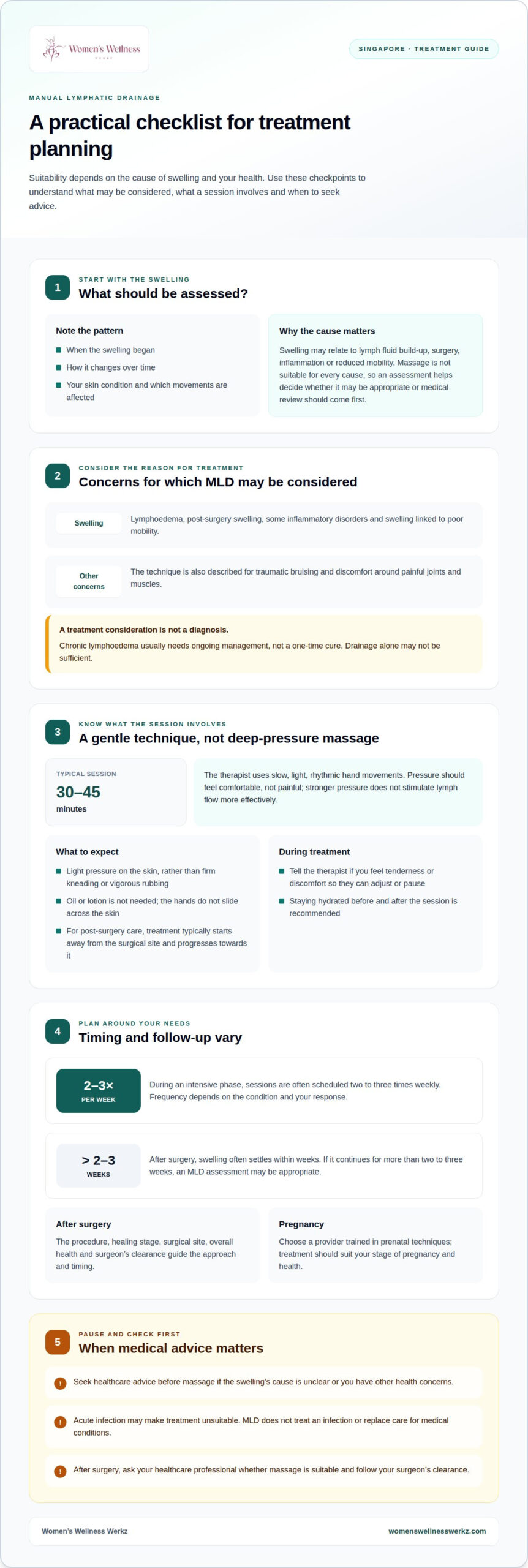
Lymphatic drainage may be considered for lymphoedema, post-surgery swelling, some inflammatory disorders and swelling linked to poor mobility. Lymphoedema develops when lymph fluid builds up in body tissues, often causing swelling in an arm or leg. The technique is also described for traumatic bruising and discomfort around painful joints and muscles.

The cause matters: swelling can have different origins, and massage is not suitable for every one. An assessment considers when swelling began, how it changes, your skin condition and which movements are affected. These details help determine whether lymphatic drainage may be appropriate or medical review should come first.

Treatment procedures and session planning

A typical manual lymphatic drainage session in Singapore lasts 30 to 45 minutes. The therapist uses gentle, rhythmic movements, with pressure light enough to avoid discomfort. Session frequency depends on the condition and your response; during an intensive phase, sessions are often scheduled 2 to 3 times weekly. A course syllabus describes training, while your treatment plan should reflect your assessment and needs.

Before treatment, an assessment reviews your health history, swelling and skin. After surgery, the surgical site, overall health and recovery needs guide the approach; timing depends on the procedure, healing stage and surgeon’s clearance. Ask the practitioner to explain their relevant MLD training and qualifications. In Singapore, post-surgery drainage is typically performed by a trained therapist or certified practitioner.

Insurance coverage depends on your policy and circumstances. Ask your insurer whether your plan covers manual lymphatic drainage and what documents it requires. To find a suitable therapist in Singapore, your healthcare professional can help you consider whether massage is appropriate and what training is relevant to your needs.

Manual lymphatic drainage technique and how it works

Manual lymphatic drainage uses slow, gentle hand movements rather than deep pressure or vigorous rubbing. The technique aims to support lymph flow through the lymphatic system without forcing movement through tender tissue.

Manual lymphatic drainage techniques

A therapist applies light, rhythmic movements to the skin, working with the lymphatic system’s pathways. The touch is gentle, not firm kneading, and the therapist adapts the approach to the area being treated. For post-surgery care, treatment typically begins away from the surgical site and progresses towards it.

Oil or lotion isn’t needed: the hands use light pressure without sliding across the skin. This distinguishes the technique from massage styles that rely on gliding strokes. If you feel tenderness or discomfort, tell the therapist so they can adjust their touch or pause.

Pressure and lymphatic flow

Pressure should remain light, and the movements should feel comfortable, not painful. Stronger pressure does not stimulate lymph flow more effectively; deep or forceful rubbing is not part of this technique. Share how each area feels as the session progresses, particularly where skin is sensitive or recovering.

Manual lymphatic drainage is intended to encourage fluid movement, but it doesn’t treat an infection or replace care for medical conditions. Acute infection may make treatment unsuitable. A gentle approach may also support relaxation, though individual responses can differ.

Session process and duration

A typical manual lymphatic drainage session in Singapore lasts 30 to 45 minutes. The therapist applies gentle movements to the relevant areas, adjusting the treatment to your comfort. For post-surgery care, the procedure and healing stage shape how the session is approached.

Tell the therapist if a movement feels uncomfortable; treatment should not cause pain. Staying hydrated before and after the session is recommended. These steps help you know what to expect, while the therapist can respond to your comfort throughout the treatment.

Swelling, bruising and oedema management

Swelling can reflect lymph fluid building up in tissues, but its cause matters. Manual lymphatic drainage is one part of care for selected swelling concerns.

Swelling symptoms and fluid balance

Lymphoedema occurs when lymph fluid builds up in body tissues, often causing swelling in an arm or leg. Notice where swelling appears, when it began and whether it changes; these details help describe the pattern during an assessment. Fluid balance is not the only consideration, as swelling can also relate to surgery, inflammation or reduced mobility.

A physiotherapy assessment can review swelling changes, skin condition and affected movements to help decide whether lymphatic drainage is appropriate. For example, swelling that affects how comfortably you move calls for an assessment of both the affected area and its impact on daily movement. This helps distinguish a treatment consideration from a symptom that needs medical review first.

Bruising, oedema and lymphoedema

Manual lymphatic drainage may be used for lymphoedema, post-surgery swelling and some inflammatory disorders. It is also described for traumatic bruising, painful joints or muscles, and oedema associated with arthritis or poor mobility. The therapist’s assessment should account for the affected area and your health, rather than treating every kind of swelling alike.

After surgery, swelling often settles within weeks. If it continues for more than 2 to 3 weeks, an MLD assessment may be appropriate. Chronic lymphoedema usually needs ongoing management, not a one-time cure; drainage alone may not be sufficient. A wider plan can include compression, skin care and appropriate movement, guided by your condition and medical instructions.

Pregnancy and postpartum swelling

Pregnancy-related swelling needs care suited to your stage of pregnancy and health. If you’re considering lymphatic drainage massage during pregnancy, choose a provider trained in prenatal techniques. Pregnancy changes how treatment should be approached, so the person providing it needs to adapt the session accordingly.

Postpartum swelling also deserves attention to its cause and recovery context. For example, swelling after a procedure differs from ongoing lymphoedema, so timing and care should reflect your healing progress. Gentle, rhythmic movement and light pressure are features of the technique, but assessment determines whether they suit your circumstances and help you remain comfortable.

Manual Lymphatic Drainage in Malaysia for Swelling Care

Contraindications and healthcare consultation

Manual lymphatic drainage isn’t suitable for every health concern. Avoid treatment during acute cellulitis, an ongoing infection or fever, and seek healthcare advice first if you have health concerns. Your Physio identifies acute cellulitis, acute infection and congestive heart failure as conditions that may make manual lymphatic drainage unsuitable. These precautions help ensure assessment or medical care comes first when needed.

Sudden or unexplained swelling needs assessment before massage, because its cause may need prompt attention. Swelling linked to cardiac, renal or vascular causes may require medical clearance before manual therapy. Tell the healthcare professional when the swelling began, how its appearance has changed, and whether you have an infection or fever. These details help them decide whether massage is appropriate or medical review should come first.

After surgery, timing depends on the procedure, your healing stage and your surgeon’s clearance. A therapist should assess the surgical site, your overall health and individual needs before treatment begins. If the area is still healing, the treatment plan needs to account for that. Gentle strokes should not cause pain; tell the therapist if you feel discomfort, so they can pause rather than work over a sensitive area.

For a safe referral, share relevant medical conditions, recent surgery and any prescribed compression plan with the healthcare professional assessing you. Avoid massage during an acute infection, including cellulitis, until the infection is addressed. If your care team has prescribed compression, follow its instructions and don’t change the plan without medical guidance. This helps align treatment decisions with your health and recovery.

If you’re unsure whether swelling needs medical assessment before massage, speak with a healthcare professional before arranging treatment.

Women’s Wellness Werkz: Manual Lymphatic Drainage Massage

Women’s Wellness Werkz offers Manual Lymphatic Drainage Massage for women seeking gentle massage care to support lymphatic drainage. It may suit those considering this technique for swelling after they have addressed whether massage is appropriate for their circumstances.

Therapists are trained to deliver the business’s massage protocols, and treatment is adapted to your needs. If your swelling is sudden or unexplained, or you’re recovering from surgery, seek healthcare advice before arranging massage. Medical assessment and clearance take priority when the cause of swelling or your stage of healing needs attention.

For pregnancy or postpartum recovery, you can also explore the Prenatal Massage Package or Post-natal Massage Package according to your needs. The Combo Massage Package is another available option.

For a gentle next step, book Manual Lymphatic Drainage Massage with Women’s Wellness Werkz online.

Choose a next step that feels right for you

If you’re considering manual lymphatic drainage in Singapore, let your health needs and comfort guide the conversation. Describe what you hope to address and discuss whether this type of massage suits your circumstances. If you’re pregnant or recovering after childbirth, Women’s Wellness Werkz also offers a Prenatal Massage Package, Post-natal Massage Package and Combo Massage Package.

Women’s Wellness Werkz’s therapists are trained to deliver its massage protocols. A conversation about your priorities can help you understand which massage option may suit your women’s wellness needs. If swelling needs medical assessment, healthcare advice remains the right first step before massage.

When you’re ready to discuss your needs, contact Women’s Wellness Werkz. Take the next step at a pace that feels comfortable for you.

Frequently Asked Questions

Any advice on what should I do before and after treatment?

The treatment description does not provide advice about hydration, clothing or what to do before or after a session. It also does not give guidance about prescribed compression garments or discussing health changes with your therapist. Ask your healthcare team about any care instructions relevant to you.

Contraindications for MLD?

The treatment description does not list contraindications for manual lymphatic drainage (MLD) or explain when to seek healthcare advice. It does not provide guidance about infections, fever, deep vein thrombosis, cancer, heart or kidney conditions, unexplained swelling or treatment after surgery. Ask your healthcare team if you have concerns about whether treatment is suitable for you.

How MLD Works?

Manual lymphatic drainage is a massage technique offered by the business to address lymphatic drainage. The treatment description does not explain the technique, how it works, the pressure used or whether oil or lotion is used. It also does not describe its purpose beyond addressing lymphatic drainage.

How does MLD work?

The treatment description does not explain whether MLD is used alone or as part of a broader management plan. It does not give details about compression, skin care, movement, exercises or self-massage between sessions. Follow your care team’s instructions about any care or activities recommended for you.

How long does a MLD session last?

The treatment description does not state how long a manual lymphatic drainage session lasts. It does not specify whether a session in Singapore takes 30 to 45 minutes, or whether session length varies after surgery. Contact the business to ask about session length and discuss any individual needs with your healthcare team.

How many sessions are usually recommended for MLD?

The treatment description does not specify a recommended number or frequency of MLD sessions. It does not say whether sessions are scheduled 2 to 3 times weekly, or how treatment frequency may relate to a condition, surgery or recovery progress. Ask the business about its treatment plan and your healthcare team for advice relevant to your care.

Manual lymphatic drainage Singapore searches often lead to general guidance, but treatment suitability depends on the cause of swelling and your health. At Women’s Wellness Werkz, manual lymphatic drainage is provided as a gentle massage technique using light pressure and rhythmic movements. After surgery, the procedure, healing stage and your surgeon’s clearance also matter.

It should feel light rather than forceful. This guide explains how the technique works, when it may be considered for swelling, what affects session timing and when to seek medical advice, so you can decide on a suitable next step.

Key Takeaways

  • Understand how light pressure and rhythmic movements distinguish this gentle technique from deeper massage.
  • Learn that manual lymphatic drainage is a massage technique offered to address lymphatic drainage.
  • Ask your healthcare professional whether massage is suitable after surgery or for your individual needs.
  • Seek healthcare advice before massage for sudden or unexplained swelling, infection, fever or other health concerns.

What is Manual Lymphatic Drainage (MLD) Massage?

Manual lymphatic drainage is a light-pressure massage intended to encourage lymph flow. In Singapore, assessment and session planning depend on the swelling’s cause and your health history.

Conditions treated with lymphatic drainage

Lymphatic drainage may be considered for lymphoedema, post-surgery swelling, some inflammatory disorders and swelling linked to poor mobility. Lymphoedema develops when lymph fluid builds up in body tissues, often causing swelling in an arm or leg. The technique is also described for traumatic bruising and discomfort around painful joints and muscles.

The cause matters: swelling can have different origins, and massage is not suitable for every one. An assessment considers when swelling began, how it changes, your skin condition and which movements are affected. These details help determine whether lymphatic drainage may be appropriate or medical review should come first.

Treatment procedures and session planning

A typical manual lymphatic drainage session in Singapore lasts 30 to 45 minutes. The therapist uses gentle, rhythmic movements, with pressure light enough to avoid discomfort. Session frequency depends on the condition and your response; during an intensive phase, sessions are often scheduled 2 to 3 times weekly. A course syllabus describes training, while your treatment plan should reflect your assessment and needs.

Before treatment, an assessment reviews your health history, swelling and skin. After surgery, the surgical site, overall health and recovery needs guide the approach; timing depends on the procedure, healing stage and surgeon’s clearance. Ask the practitioner to explain their relevant MLD training and qualifications. In Singapore, post-surgery drainage is typically performed by a trained therapist or certified practitioner.

Insurance coverage depends on your policy and circumstances. Ask your insurer whether your plan covers manual lymphatic drainage and what documents it requires. To find a suitable therapist in Singapore, your healthcare professional can help you consider whether massage is appropriate and what training is relevant to your needs.

Manual lymphatic drainage technique and how it works

Manual lymphatic drainage uses slow, gentle hand movements rather than deep pressure or vigorous rubbing. The technique aims to support lymph flow through the lymphatic system without forcing movement through tender tissue.

Manual lymphatic drainage techniques

A therapist applies light, rhythmic movements to the skin, working with the lymphatic system’s pathways. The touch is gentle, not firm kneading, and the therapist adapts the approach to the area being treated. For post-surgery care, treatment typically begins away from the surgical site and progresses towards it.

Oil or lotion isn’t needed: the hands use light pressure without sliding across the skin. This distinguishes the technique from massage styles that rely on gliding strokes. If you feel tenderness or discomfort, tell the therapist so they can adjust their touch or pause.

Pressure and lymphatic flow

Pressure should remain light, and the movements should feel comfortable, not painful. Stronger pressure does not stimulate lymph flow more effectively; deep or forceful rubbing is not part of this technique. Share how each area feels as the session progresses, particularly where skin is sensitive or recovering.

Manual lymphatic drainage is intended to encourage fluid movement, but it doesn’t treat an infection or replace care for medical conditions. Acute infection may make treatment unsuitable. A gentle approach may also support relaxation, though individual responses can differ.

Session process and duration

A typical manual lymphatic drainage session in Singapore lasts 30 to 45 minutes. The therapist applies gentle movements to the relevant areas, adjusting the treatment to your comfort. For post-surgery care, the procedure and healing stage shape how the session is approached.

Tell the therapist if a movement feels uncomfortable; treatment should not cause pain. Staying hydrated before and after the session is recommended. These steps help you know what to expect, while the therapist can respond to your comfort throughout the treatment.

Manual Lymphatic Drainage in Malaysia for Swelling Care

Swelling, bruising and oedema management

Swelling can reflect lymph fluid building up in tissues, but its cause matters. Lymphatic drainage for fluid retention is one part of care for selected swelling concerns.

Swelling symptoms and fluid balance

Lymphoedema occurs when lymph fluid builds up in body tissues, often causing swelling in an arm or leg. Notice where swelling appears, when it began and whether it changes; these details help describe the pattern during an assessment. Fluid balance is not the only consideration, as swelling can also relate to surgery, inflammation or reduced mobility.

A physiotherapy assessment can review swelling changes, skin condition and affected movements to help decide whether lymphatic drainage is appropriate. For example, swelling that affects how comfortably you move calls for an assessment of both the affected area and its impact on daily movement. This helps distinguish a treatment consideration from a symptom that needs medical review first.

Bruising, oedema and lymphoedema

Manual lymphatic drainage may be used for lymphoedema, post-surgery swelling and some inflammatory disorders. It is also described for traumatic bruising, painful joints or muscles, and oedema associated with arthritis or poor mobility. The therapist’s assessment should account for the affected area and your health, rather than treating every kind of swelling alike.

After surgery, swelling often settles within weeks. If it continues for more than 2 to 3 weeks, an MLD assessment may be appropriate. Chronic lymphoedema usually needs ongoing management, not a one-time cure; drainage alone may not be sufficient. A wider plan can include compression, skin care and appropriate movement, guided by your condition and medical instructions.

Pregnancy and postpartum swelling

Pregnancy-related swelling needs care suited to your stage of pregnancy and health. If you’re considering lymphatic drainage massage during pregnancy, choose a provider trained in prenatal techniques. Pregnancy changes how treatment should be approached, so the person providing it needs to adapt the session accordingly.

Postpartum swelling also deserves attention to its cause and recovery context. For example, swelling after a procedure differs from ongoing lymphoedema, so timing and care should reflect your healing progress. Gentle, rhythmic movement and light pressure are features of the technique, but assessment determines whether they suit your circumstances and help you remain comfortable.

Contraindications and healthcare consultation

Manual lymphatic drainage isn’t suitable for every health concern. Avoid treatment during acute cellulitis, an ongoing infection or fever, and seek healthcare advice first if you have health concerns. Your Physio identifies acute cellulitis, acute infection and congestive heart failure as conditions that may make manual lymphatic drainage unsuitable. These precautions help ensure assessment or medical care comes first when needed.

Sudden or unexplained swelling needs assessment before massage, because its cause may need prompt attention. Swelling linked to cardiac, renal or vascular causes may require medical clearance before manual therapy. Tell the healthcare professional when the swelling began, how its appearance has changed, and whether you have an infection or fever. These details help them decide whether massage is appropriate or medical review should come first.

After surgery, timing depends on the procedure, your healing stage and your surgeon’s clearance. A therapist should assess the surgical site, your overall health and individual needs before treatment begins. If the area is still healing, the treatment plan needs to account for that. Gentle strokes should not cause pain; tell the therapist if you feel discomfort, so they can pause rather than work over a sensitive area.

For a safe referral, share relevant medical conditions, recent surgery and any prescribed compression plan with the healthcare professional assessing you. Avoid massage during an acute infection, including cellulitis, until the infection is addressed. If your care team has prescribed compression, follow its instructions and don’t change the plan without medical guidance. This helps align treatment decisions with your health and recovery.

If you’re unsure whether swelling needs medical assessment before massage, speak with a healthcare professional before arranging treatment.

Women’s Wellness Werkz: Manual Lymphatic Drainage Massage

Women’s Wellness Werkz offers Manual Lymphatic Drainage Massage for women seeking gentle massage care to support lymphatic drainage. It may suit those considering this technique for swelling after they have addressed whether massage is appropriate for their circumstances.

Therapists are trained to deliver the business’s massage protocols, and treatment is adapted to your needs. If your swelling is sudden or unexplained, or you’re recovering from surgery, seek healthcare advice before arranging massage. Medical assessment and clearance take priority when the cause of swelling or your stage of healing needs attention.

For pregnancy or postpartum recovery, you can also explore the Prenatal Massage Package or Post-natal Massage Package according to your needs. The Combo Massage Package is another available option.

For a gentle next step, book Manual Lymphatic Drainage Massage with Women’s Wellness Werkz online.

Choose a next step that feels right for you

If you’re considering manual lymphatic drainage in Singapore, let your health needs and comfort guide the conversation. Describe what you hope to address and discuss whether this type of massage suits your circumstances. If you’re pregnant or recovering after childbirth, Women’s Wellness Werkz also offers a Prenatal Massage Package, Post-natal Massage Package and Combo Massage Package.

Women’s Wellness Werkz’s therapists are trained to deliver its massage protocols. A conversation about your priorities can help you understand which massage option may suit your women’s wellness needs. If swelling needs medical assessment, healthcare advice remains the right first step before massage.

When you’re ready to discuss your needs, contact Women’s Wellness Werkz. Take the next step at a pace that feels comfortable for you.

Frequently Asked Questions

Any advice on what should I do before and after treatment?

The treatment description does not provide advice about hydration, clothing or what to do before or after a session. It also does not give guidance about prescribed compression garments or discussing health changes with your therapist. Ask your healthcare team about any care instructions relevant to you.

Contraindications for MLD?

The treatment description does not list contraindications for manual lymphatic drainage (MLD) or explain when to seek healthcare advice. It does not provide guidance about infections, fever, deep vein thrombosis, cancer, heart or kidney conditions, unexplained swelling or treatment after surgery. Ask your healthcare team if you have concerns about whether treatment is suitable for you.

How MLD Works?

Manual lymphatic drainage is a massage technique offered by the business to address lymphatic drainage. The treatment description does not explain the technique, how it works, the pressure used or whether oil or lotion is used. It also does not describe its purpose beyond addressing lymphatic drainage.

How does MLD work?

The treatment description does not explain whether MLD is used alone or as part of a broader management plan. It does not give details about compression, skin care, movement, exercises or self-massage between sessions. Follow your care team’s instructions about any care or activities recommended for you.

How long does a MLD session last?

The treatment description does not state how long a manual lymphatic drainage session lasts. It does not specify whether a session in Singapore takes 30 to 45 minutes, or whether session length varies after surgery. Contact the business to ask about session length and discuss any individual needs with your healthcare team.

How many sessions are usually recommended for MLD?

The treatment description does not specify a recommended number or frequency of MLD sessions. It does not say whether sessions are scheduled 2 to 3 times weekly, or how treatment frequency may relate to a condition, surgery or recovery progress. Ask the business about its treatment plan and your healthcare team for advice relevant to your care.

Lactation Massage in Malaysia for Engorgement and Milk Flow

Lactation Massage in Malaysia for Engorgement and Milk Flow

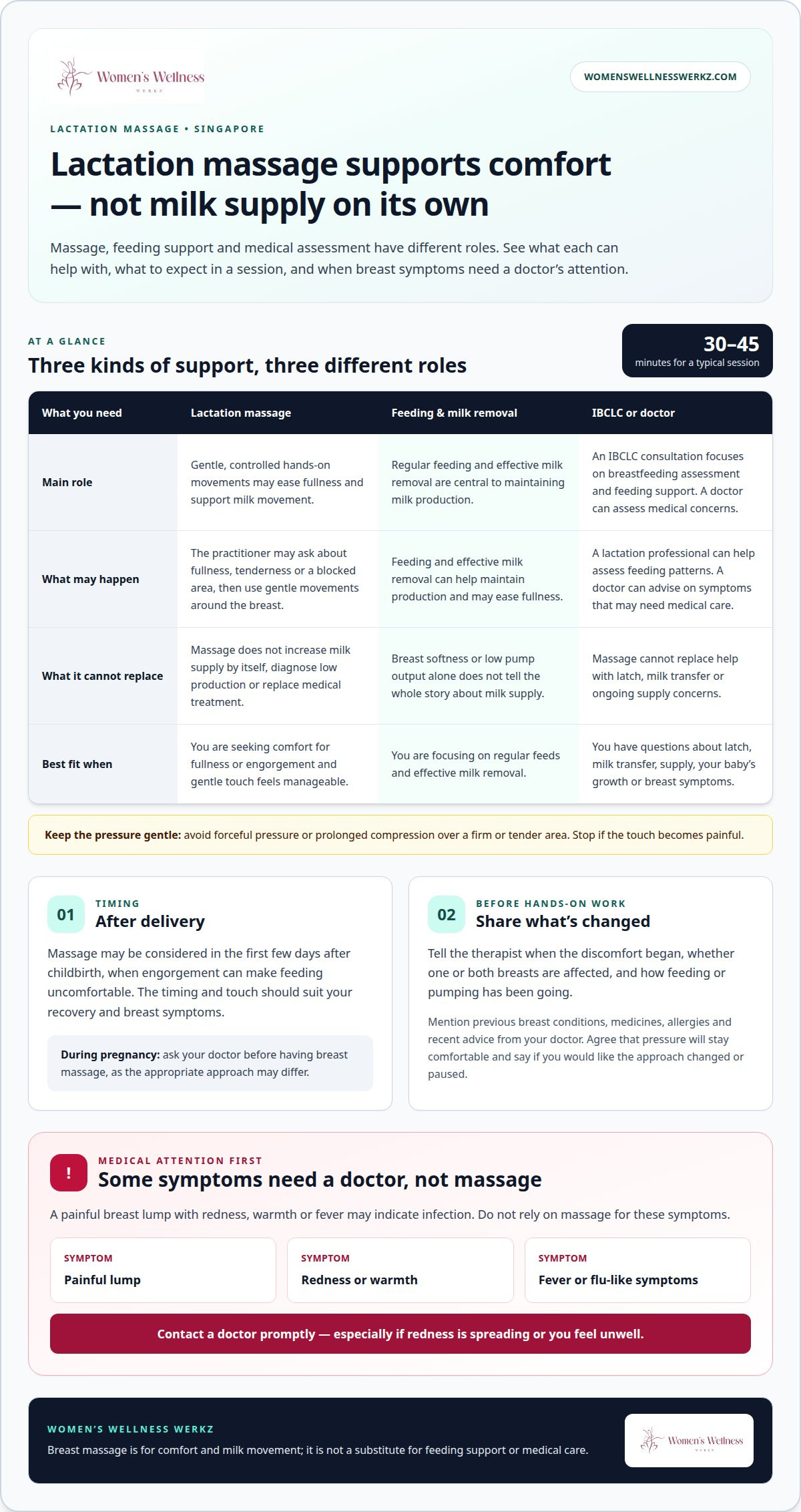
Lactation massage uses gentle, controlled hands-on movements to ease the feeling of fullness and support milk movement; it doesn’t increase milk supply on its own or replace regular feeding and effective breast emptying. If you’re looking into lactation massage in Singapore, this guide explains what the treatment involves, how it may help with engorgement, and when you might book after delivery, including why breast massage should feel gentle rather than forceful. You’ll also learn what to expect during a session with Women’s Wellness Werkz and when breast symptoms call for medical attention instead, so you can make a calm, informed choice about the support that feels right for you.

Key Takeaways

  • Understand how gentle breast massage may ease fullness, and why it cannot replace regular feeding and effective milk removal.
  • Learn when massage may be considered after delivery and what to keep in mind when preparing for breastfeeding.
  • Recognise symptoms that need medical attention before massage is considered for breast discomfort.
  • See how a session can be adapted to your recovery needs and which Women’s Wellness Werkz massage options may be relevant.

Can Breast Massage Help Increase Milk Supply?

Breast massage may support comfort, but it should not be relied on by itself to address milk-supply concerns. Regular feeding and effective milk removal are central to maintaining production. If your supply feels low, consider whether your baby is latching well and transferring milk during feeds. Milk transfer and your baby’s weight gain offer useful context; breast softness or low output from a pump alone does not tell the whole story. A doctor or lactation professional can assess feeding patterns and your baby’s growth.

For a plugged duct or firm area, gentle, controlled movements may support milk movement. Avoid forceful pressure or prolonged compression. Pressure can compress milk ducts, while prolonged compression may contribute to milk stasis and blocked ducts. Radiofrequency therapy is device-based, not massage. Don’t rely on it to clear plugged ducts or improve milk supply without discussing it with a doctor.

Massage during breastfeeding should remain gentle and should not replace feeding or medical care. During pregnancy, ask your doctor before having breast massage, as the appropriate approach may differ. A painful breast lump with redness, warmth or fever needs medical attention, as these signs may indicate infection. Spreading redness or flu-like symptoms also warrant prompt medical advice.

When choosing a lactation massage therapist, look for recognised training, breastfeeding experience and a gentle approach. The therapist should explain the session, respect your comfort and refer concerns such as possible infection to a doctor. Massage may support comfort, but it cannot replace help with latch, milk transfer or ongoing supply concerns.

How soon after delivery can I book a breast massage for engorgement?

Breast massage may be considered in the first few days after childbirth, when engorgement can make feeding uncomfortable. The timing and touch should suit your recovery and breast symptoms.

Engorgement and Blocked-Duct Support

Engorgement can occur as milk supply rises, leaving breasts overly full or tight. Gentle techniques may ease discomfort and support milk movement, but massage does not increase production by itself. Traditional Malay breast massage may be considered as part of breastfeeding preparation or postpartum care. Ask what movements and pressure will be used, and stop if the touch becomes painful.

Engorgement Prevention and Treatment

Regular feeding and effective milk removal help maintain milk production and may ease fullness. Massage can be used before or during feeding when milk does not release easily. The let-down reflex is the body’s response that releases milk; stress may hinder it. Gentle touch may help you relax, but avoid forceful pressure on a firm area.

Choose a therapist with recognised training in breastfeeding support and gentle breast techniques. Women’s Wellness Werkz offers breast massage for postpartum engorgement in Singapore. Massage is not a substitute for medical assessment when symptoms suggest infection.

Whether Singapore insurance or postnatal care benefits cover lactation massage depends on your policy wording. Review the relevant benefit terms and exclusions, including any requirements for documentation. Coverage cannot be assumed from the treatment name alone.

If a breast becomes red, hot and painful, or you develop a fever or flu-like symptoms, contact a doctor promptly. These signs may need medical attention rather than massage. For a plugged duct, notice whether discomfort changes after feeding and avoid deep pressure that may worsen tenderness.

Pre-session consultation and medical history

Before a session, discuss your postpartum recovery and breast symptoms so the therapist can tailor the touch. Explain when the discomfort began, whether one or both breasts are affected, and how feeding or pumping has been going. Mention previous breast conditions, medicines, allergies and any recent advice from your doctor. These details help shape the session around your needs.

A lactation massage session focuses on hands-on comfort and milk movement; an IBCLC lactation consultation focuses on breastfeeding assessment and feeding support. Massage does not diagnose low milk production, assess your baby’s milk transfer or replace medical treatment. If those are your concerns, a lactation consultation or doctor’s assessment can address needs beyond massage.

A painful lump with redness, warmth or fever can indicate mastitis or infection and needs medical attention. Fever, flu-like symptoms or spreading redness are reasons to see a doctor before relying on massage. Gentle touch may be unsuitable if it causes pain; avoid forceful pressure over blocked or tender areas. Tell the therapist about these symptoms before any hands-on work begins.

Before the session, note your feeding pattern, symptoms and questions about milk production. Tell the therapist if your breasts feel full, lumpy or painful, and agree that pressure should remain comfortable. Session length may vary, so ask the therapist what to expect when booking. Afterwards, notice how your breasts feel during feeding or pumping, and seek further help if symptoms worsen or persist.

Sessions can be adapted to your stage of postnatal recovery, so mention it before treatment begins. Describe what feels manageable today and whether you would prefer the therapist to avoid particular areas or types of touch. Ask how the planned approach can be adjusted for your comfort and agree on a clear way to pause or change it if needed.

Your needs may differ from one visit to another, so explain any changes in comfort or preference before hands-on work starts. A clear conversation about what feels acceptable helps you and the therapist set expectations and keep the approach aligned with your recovery stage.

Lactation Massage in Malaysia for Engorgement and Milk Flow

Lactation massage and hands-on treatment

A lactation massage session uses gentle, controlled touch to support comfort and milk movement. The approach should be tailored to your postpartum stage, feeding pattern and comfort.

Hands-On Treatment Components

A typical Singapore session lasts 30 to 45 minutes. The practitioner may discuss fullness, tenderness or a blocked area, then use gentle movements around the breast. The aim is comfort and easier milk movement, not forcefully pushing a blockage through. Pressure should remain comfortable, and you can ask for a pause or change at any point.

Massage may be used before or during feeding or pumping when milk does not release easily. If an area feels painful, avoid deep kneading, as pressure can compress milk ducts. A warm compress beforehand may help relax tissue, while feeding or pumping remains central to milk removal. Ask the practitioner to explain each technique before hands-on care begins.

Session Duration

The 30 to 45 minutes may include a brief discussion and hands-on care. Tell the practitioner whether you want support before a feed, during pumping or for general fullness. A certified title alone does not explain the techniques used, so ask how the approach will be adapted to your symptoms and comfort.

One session may not resolve every breastfeeding concern. Afterwards, notice whether your breast feels more comfortable and whether milk releases during the next feed or pumping session. Worsening pain, redness, fever or flu-like symptoms call for medical advice rather than further massage. This distinction helps keep hands-on support within its role.

If gentle, postpartum breast support suits your needs, book a Breast Massage for attentive hands-on care.

Women’s Wellness Werkz

Women’s Wellness Werkz offers massage support for women during pregnancy and postpartum recovery, including breast massage. You might consider breast massage when fullness feels uncomfortable or when you want hands-on care alongside your usual feeding routine. Massage may support comfort and milk movement, but it cannot increase milk supply on its own or replace effective feeding and medical care.

The right support depends on your needs at this stage. Breast Massage focuses on breast comfort, while the Postnatal Massage Package and Combo Massage Package offer other massage options during postpartum recovery. The Prenatal Massage Package is for pregnancy, not post-delivery engorgement. These services address different stages and needs, so choose according to your situation.

Therapists are qualified and trained to deliver the business’s massage protocols. Their on-the-job training lasts 3-10 sessions before they are assigned clients. Therapists perform massages at clients’ locations, which can make receiving care at home more convenient during a demanding recovery period. The approach can be personalised to your needs and comfort.

Before a session, describe concerns such as tightness, tenderness or difficulty feeling milk release. Explain whether you are breastfeeding or pumping and what kind of touch feels comfortable. Gentle massage may support comfort, but it does not assess milk transfer or diagnose infection. A painful lump with redness, warmth or fever needs medical attention, not massage alone.

If you’re looking for massage support suited to your pregnancy or postpartum needs, Women’s Wellness Werkz offers several relevant options. Discuss your needs with the team to choose a suitable service.

Choose support that fits your next step

If you’re considering lactation massage in Singapore, choose support that suits your stage of recovery. Women’s Wellness Werkz offers Breast Massage alongside the Postnatal Massage Package, Combo Massage Package and Prenatal Massage Package. Its women’s wellness experience can help you consider which option fits your needs and preferences.

Before arranging care, think about what would make a session feel comfortable and useful for you. You might want to discuss your postpartum stage, preferred pressure or how hands-on care fits around feeding. A clear conversation can help you make a considered choice, without adding pressure to an already full season of life. Take the next step at your own pace. Contact Women’s Wellness Werkz to discuss your care options.

Frequently Asked Questions

What is a lactation massage?

Lactation massage is gentle, breast-focused touch intended to support comfort and milk movement during breastfeeding or pumping. For example, a practitioner may adjust the touch if one area feels fuller than the rest. Massage does not increase milk production on its own and does not replace feeding support or medical assessment when symptoms are concerning.

Is engorgement the same as a blocked milk duct?

No. Engorgement usually means broader breast fullness or tightness, while a blocked duct may feel like a more localised firm or lumpy area. The two can be uncomfortable and may overlap. Notice whether the feeling is widespread or concentrated in one spot, but seek medical advice for a painful lump with redness, warmth, fever or flu-like symptoms.

What is lactation massage and how does it work?

It involves gentle, controlled movements around the breasts, sometimes before or during feeding or pumping. Gentle breast massage may help ease discomfort when breasts feel overly full, but it is not a way to increase milk production on its own. The let-down reflex releases milk, and feeling tense can make release harder. A warm compress before feeding may help the breast tissue relax, while effective milk removal remains central.

How do I choose a qualified lactation massage therapist in Singapore?

Look for recognised training, breastfeeding experience and a gentle approach. The therapist should explain the techniques, respect your comfort and refer symptoms that may indicate infection to a doctor.